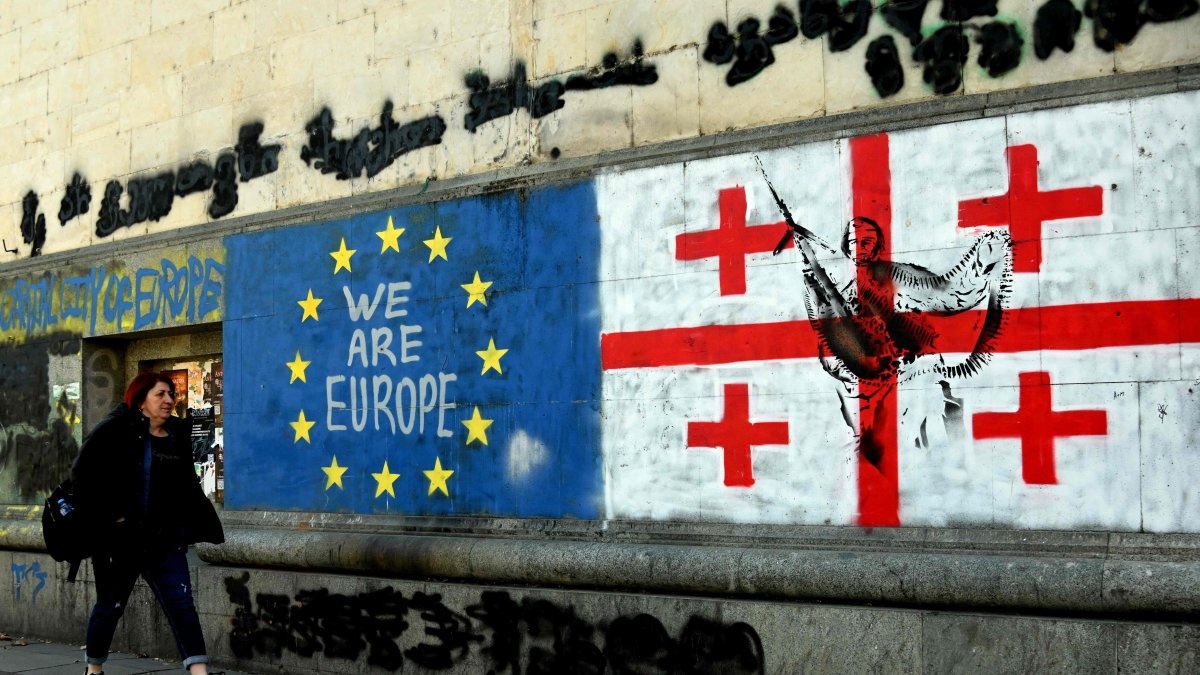
The idea that Georgian Dream may be exploring a possible confederation-style arrangement between Georgia and the Russian-occupied regions of Abkhazia and South Ossetia entered public debate through leaked discussions, subsequent reporting, and the party’s own constitutional messaging. What is really going on?
By Gocha Gogsadze
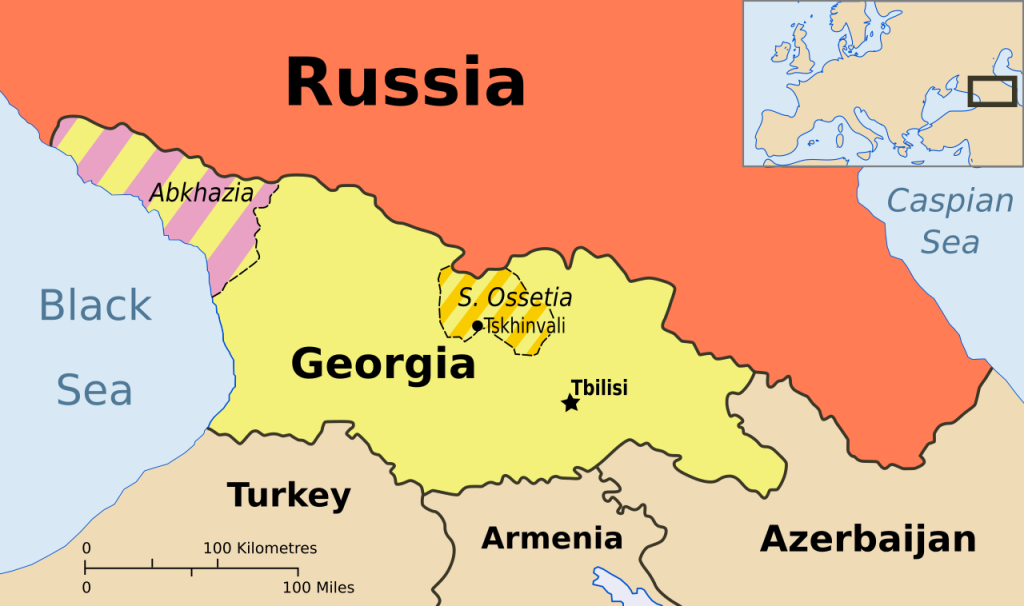
While Georgian Dream has not publicly released a formal confederation plan, the Jamestown Foundation and OC Media wrote in 2024 that a leaked conversation between businessman David Khidasheli and Georgian Dream figure Giorgi Volski included discussion of a “confederate republic within Georgia” comprising Abkhazia and South Ossetia, allegedly with Moscow’s assistance.
In August 2024, Georgian Dream then said it wanted a constitutional majority to adapt Georgia’s territorial arrangement to a “new reality” by peaceful means, before publicly denying confederation plans in October. Taken together, the leaked discussions, repeated reporting, and Georgian Dream’s own constitutional language are enough to show that this idea was not invented out of thin air.
In practice, such an arrangement would leave Tbilisi with formal sovereignty over the country’s internationally recognised territory while giving Abkhaz and South Ossetian authorities enough autonomy and political leverage to shape — and potentially obstruct — decisions taken at the centre.
Such a model places Georgia’s Western future under a Russian-backed veto. Georgia cannot join NATO — Article 5 rests on collective defence, and NATO members must control the borders they commit to defend. But Georgia does not fully control its own security policy when Abkhaz and South Ossetian authorities, acting under Russian influence, can block defence decisions from within.
The same problem applies to the EU. Membership requires a state to carry out common obligations and align its policies as a functioning whole. But Georgia cannot do that when Russian-backed actors inside the state can obstruct major decisions.
For most Georgians, Abkhazia and South Ossetia are not abstract. They are lost homes, broken families, occupied land, and an unhealed national trauma. That is exactly why the language of “peaceful reunification” is so politically powerful — and so easy to manipulate.
In his September 2024 speech in Gori, a city bombed by Russia during the 2008 war, Bidzina Ivanishvili said Georgians should find the “strength to apologise” to Ossetians. Presented as reconciliation, the message did something dangerous: it shifted part of the moral and political burden away from Russia and back onto Georgia.
In that way, the emotional appeal of reunification becomes a tool for selling a Moscow-brokered settlement.
Proponents of confederation would argue that it offers three immediate advantages. It could lower tensions by replacing permanent confrontation with a framework for coexistence.
In addition, it could reopen trade, transport links, and economic ties cut off by years of conflict. While at the same time, it could be presented as a symbolic victory for territorial integrity — proof that Georgia had brought Abkhazia and South Ossetia back into a common state.
The European Court of Human Rights has already found that Russia exercises “effective control” over Abkhazia and South Ossetia. The confederation plan repeats the pattern: Russia imposes “compromise” arrangements that formalise its control. The 1783 Treaty of Georgievsk promised protection and ultimately led to Russian annexation.
A serious confederation plan would have to answer three basic questions. First, do all displaced Georgians return to their homes, and who guarantees that in practice? Second, is confederal status final, or does it leave room for future referendums on separation? Third, do Russian military bases and troops remain in Abkhazia and South Ossetia, or does any settlement require their withdrawal?
If these questions remain unanswered, a confederation does not settle the conflict. Bosnia is the clearest warning because its post-war system built vetoes into the state itself. Power was divided among rival political centres, and each had enough leverage to block major national decisions.
As a result, the state became slow, fragmented, and often unable to act coherently. The same logic applies here. A confederal arrangement with Abkhazia and South Ossetia embeds obstruction into Georgia's constitutional order. It gives actors under strong Russian influence the power to block foreign policy, defence policy, constitutional reform, and movement toward the EU and NATO. That makes Georgia formally reunified but politically immobilised.
Bosnia shows what veto-based power-sharing does to a state. Georgia’s case is worse because the potential veto-holders are not just domestic actors with competing interests; they operate under Russian influence.
The military dimension makes the problem even clearer. If Russian troops remain in Abkhazia and South Ossetia under a confederal arrangement, Georgia will, in effect, accept Russian military power inside a supposedly reunited state. That would weaken sovereignty at home and credibility abroad.
Georgia controls transit routes carrying Azerbaijani gas to Europe and the Middle Corridor connecting the EU to Central Asia - infrastructure that the West spent billions developing precisely to bypass Russian control. A Russian-shaped confederation would make Georgia less stable, less predictable, and less useful to the regional architecture that depends on it.
The alternative is a sovereignty-first strategy. Moldova’s current approach to Transnistria points in the right direction: Chisinau and its European partners frame reintegration as a gradual process built on one basic rule — sovereignty stays at the centre, Russian troops leave, and confidence-building comes before any final status settlement.
In 2025, the EU and Moldova jointly reaffirmed support for Moldova’s reintegration within its internationally recognised borders and explicitly called for the withdrawal of Russian military personnel and ammunition from Transnistria.
Moldova’s own 2026 reintegration priorities then focused on practical measures: support for human rights, public services, education, energy resilience, and confidence-building on both banks of the Nistru, not a deal that gives vetoes to a Russian-backed enclave.
Georgia needs the same logic. Russian troops leave first. The Georgian state then strengthens itself where it is weakest — institutions, elections, rule of law, defence, and public credibility. Reintegration policy then focuses on people: freedom of movement, access to education and healthcare, economic links, language rights, and clear guarantees of safety.
The return of displaced persons cannot remain vague or symbolic; a serious plan must state plainly that return is a right, define who guarantees security, and establish who enforces that right in practice. Any future settlement must also block permanent vetoes at the centre and exclude any mechanism that turns broad autonomy into a platform for future separation. International actors can supervise a transition; Russia cannot.
A stronger Georgian state must negotiate reintegration from an equal position, not under the pressure of Russia.
Georgian Dream may frame confederation as a matter of pragmatism. But sovereignty, once bargained away, is rarely recovered. The question is not whether Georgia should pursue reunification — but whether it will do so from a position of strength, or surrender that strength in exchange for the illusion of unity.
Gocha Gogsadze is a political analyst and civil rights activist from Tbilisi, Georgia, based in London, the United Kingdom. This is his first contribution to The Liberum.