The ancient Greeks had the decency to admit something we modern people still struggle with: time is not one thing. They gave it different names because they understood that not all time feels the same, not all time behaves the same, and certainly not all time wounds the same.
First, there is Chronos.
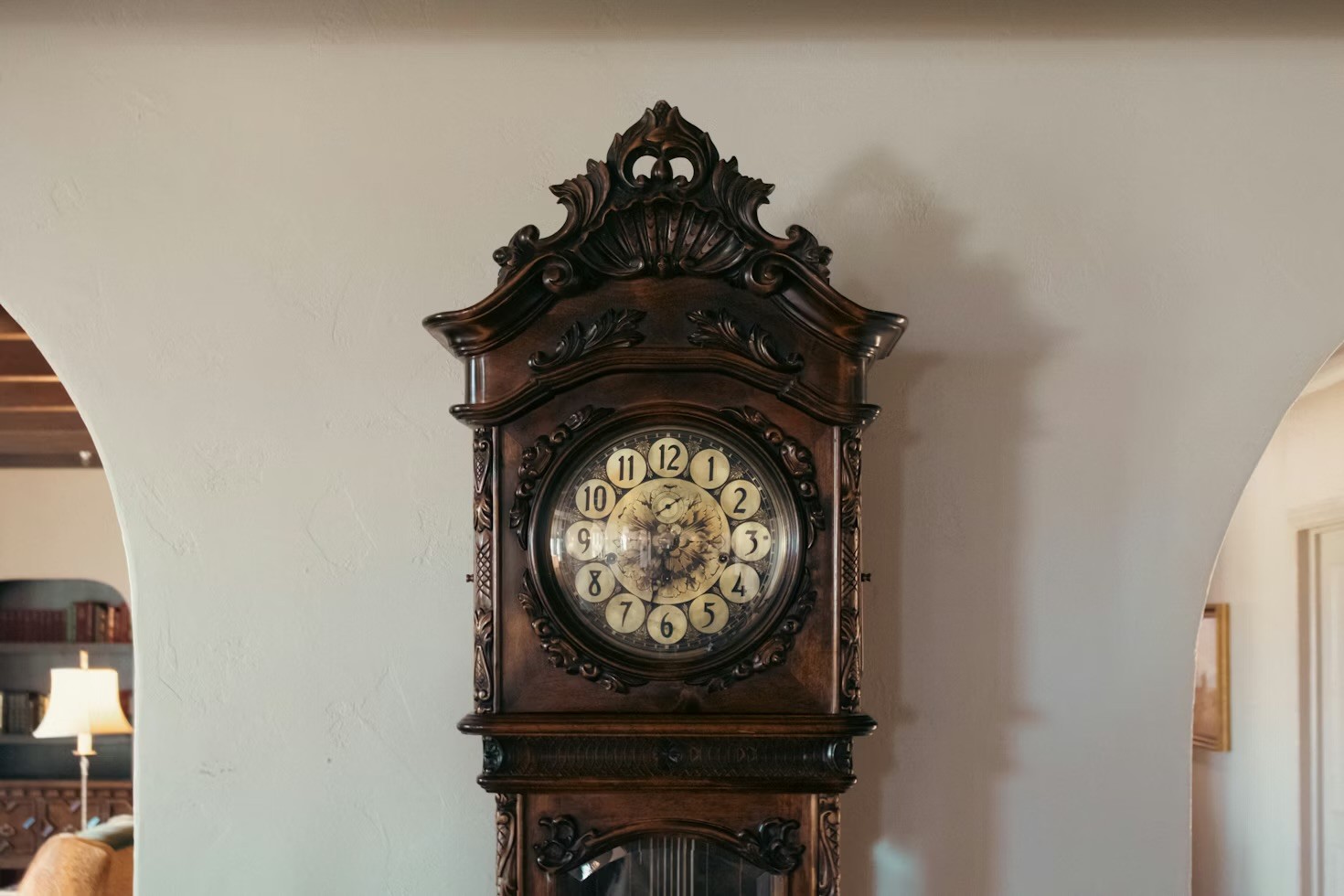
Chronos is the time of clocks. The time that moves forward with indifferent precision: seconds, hours, years. It is linear, measurable, and obedient to calendars and deadlines. Chronos is what history books record and what bureaucracies manage. It is the time of ageing bodies, political terms, and economic cycles. It marches forward without asking permission.
Then there is Kairos.
Kairos is not measured; it is felt. It is the decisive moment, the opening when something becomes possible. The Greeks described it as the precise instant when the archer releases the arrow, the instant where action meets opportunity. It is qualitative rather than quantitative, the “right time” rather than the counted time.
Chronos counts, and Kairos reveals.
Chronos tells you how long something lasts and Kairos tells you when it truly matters.
A lifetime can pass in Chronos without anything meaningful happening. Yet a single minute of Kairos can change the trajectory of a life, a nation, or a civilisation.
History is often written in Chronos, but it is decided in Kairos.
And then there is Lebanon.
Lebanon lives in a third form of time. A time the Greeks never named. Beyond the linear march of Chronos, above the decisive opening of Kairos.
Something else, something heavier. In Lebanon, time does not move forward. It circles back. War returns like a season that refuses to end.
Chronos says decades have passed, but Lebanese memory disagrees.
For those who live here, wars do not belong to the past. They exist in a strange temporal loop where childhood memories, current headlines, and ancestral fears coexist in the same emotional moment.
You can be thirty years old and still hear the same siren your parents heard.
This is not Chronos. Chronos believes in progress.
And it is not Kairos either. Kairos is about decisive moments that open a future.
War in Lebanon rarely opens anything. It resets.
I guess the closest description is what philosophers might call suspended time, a temporal condition where history refuses to conclude.
A country waiting. A society living between explosions.
If Chronos is the ticking clock, and Kairos is the decisive moment, Lebanon inhabits something closer to eternal interruption.
Time interrupted. Lives interrupted. History interrupted.
In Chronos, the future unfolds. In Kairos, destiny reveals itself.
But in this third time, the time of recurring war, the future struggles to arrive at all.
Children grow up not asking what they will become, but when the next escalation will come. Families build homes with the quiet understanding that the walls may one day collapse again.
This is a strange metaphysics of time. A country caught between memory and anticipation, but rarely allowed the luxury of continuity.
In Lebanon, war is not a tragic event; it is a climate, and climates have their own time.
A cyclical, atmospheric temporality, one that seeps into language, humour, architecture, politics, even love itself.
People here learn to schedule weddings between crises. They plan vacations around geopolitical forecasts. They measure life not only in years but in wars.
Before the war.
After the war.
The war before that.
Chronos keeps counting. Kairos keeps waiting.
And Lebanon keeps enduring a third form of time, a time that philosophers might one day name but that its people already know by heart—the slow, circular time of wounds that history refuses to close.