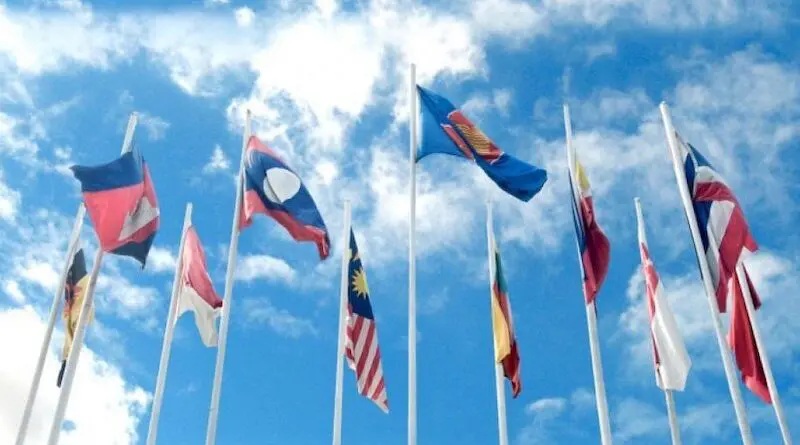
The Philippines aims to boost its role in Southeast Asian tourism, using it not just to grow the economy but also to promote diplomacy and cooperation within the Association of Southeast Asian Nations (ASEAN). As the world's fourteenth-most-populous country prepares to host the 45th ASEAN Tourism Forum (ATF 2026) – the biggest annual gathering of tourism leaders in the region – the funds it has allocated for the event are widely seen as an investment in the local economy, benefiting businesses from hotels and restaurants to farmers and artisans.
By Nikola Mikovic
The ATF – a regional initiative aimed at promoting ASEAN countries as attractive destinations for individual, group, and business tourism – is scheduled for January 27 to February 4 in Mactan, Cebu. It will bring together tourism officials from the 11 ASEAN member states – Brunei, Cambodia, Indonesia, Lao PDR, Malaysia, Myanmar, the Philippines, Singapore, Thailand, Timor-Leste, and Vietnam. In addition, Russia, a non-ASEAN member, is expected to join the event for the first time.
Besides Russia, delegations from countries such as Australia, Japan, South Korea, and China are also set to participate in the forum, which includes the ASEAN Travel Exchange (TRAVEX) – a business-to-business event, scheduled for January 28–30, where tourism professionals meet to network, promote destinations, and explore partnership opportunities.
“As a key meeting point for the travel industry in Southeast Asia, TRAVEX plays an important role in strengthening partnerships and driving growth,” said Maria Margarita Montemayor Nograles, Chief Operating Officer of the Tourism Promotions Board (TPB).
“Hosting this event is a responsibility we value highly, and we are committed to creating a dynamic platform that highlights the depth, connectivity, and momentum of tourism across ASEAN,” she emphasised.
The event is designed to promote ASEAN as a single destination while celebrating the diversity of its member countries. TRAVEX, for its part, will serve as a platform linking international buyers with local tourism players, creating opportunities for tourism spots across the Philippines.
According to reports, 597 foreign buyers had already signed up for business-to-business meetings with the local suppliers, including hotels, resorts, travel and tour operators, transport providers, and other players in the tourism value chain.
There is no doubt that thousands of foreign and local delegates will inject revenue into hotels, airlines, transport services, and tourism jobs, while also benefiting agriculture, retail, and the creative industries in Cebu City, recently hit by a destructive earthquake and two powerful tropical cyclones.
“The forum presents a premier opportunity for the Philippines to highlight its destinations, culture, heritage, and world-class hospitality, while supporting Cebu’s tourism recovery and long-term economic growth,” said Philippine Tourism Secretary Christina Garcia Frasco.
For the Philippines and Cebu, the upcoming event is a chance to combine resilience, hospitality, and strategic foresight, proving that the country can lead not only in service excellence but also in regional tourism diplomacy. For business leaders, the forum could be a chance to boost trade between Cebu and other ASEAN cities, opening new markets for local manufacturers, furniture makers, and tech firms.
Across Southeast Asia, governments see tourism as part of a broader strategy that connects travel, trade, cultural exchange, and closer ties between people. From a geopolitical perspective, it has become a soft-power instrument that reinforces ASEAN’s relevance amid shifting dynamics in the Indo-Pacific. The participation of non-ASEAN countries in the upcoming events undoubtedly reflects this broader shift.
The ATF 2026 comes at a time when ASEAN tourism is recalibrating after years of disruption caused by the COVID-19 pandemic. While some destinations – particularly Vietnam, Thailand, and Malaysia – have seen strong returns in visitor numbers, others are rebuilding more slowly, prompting a focus on coordination rather than competition. But if all ASEAN members work together, the region could strengthen its overall appeal on the global tourism stage.
Ultimately, ATF 2026 could demonstrate that tourism, when strategically leveraged, can unite nations, stimulate economies, and create lasting partnerships.