Iran redesigning Arak nuclear reactor

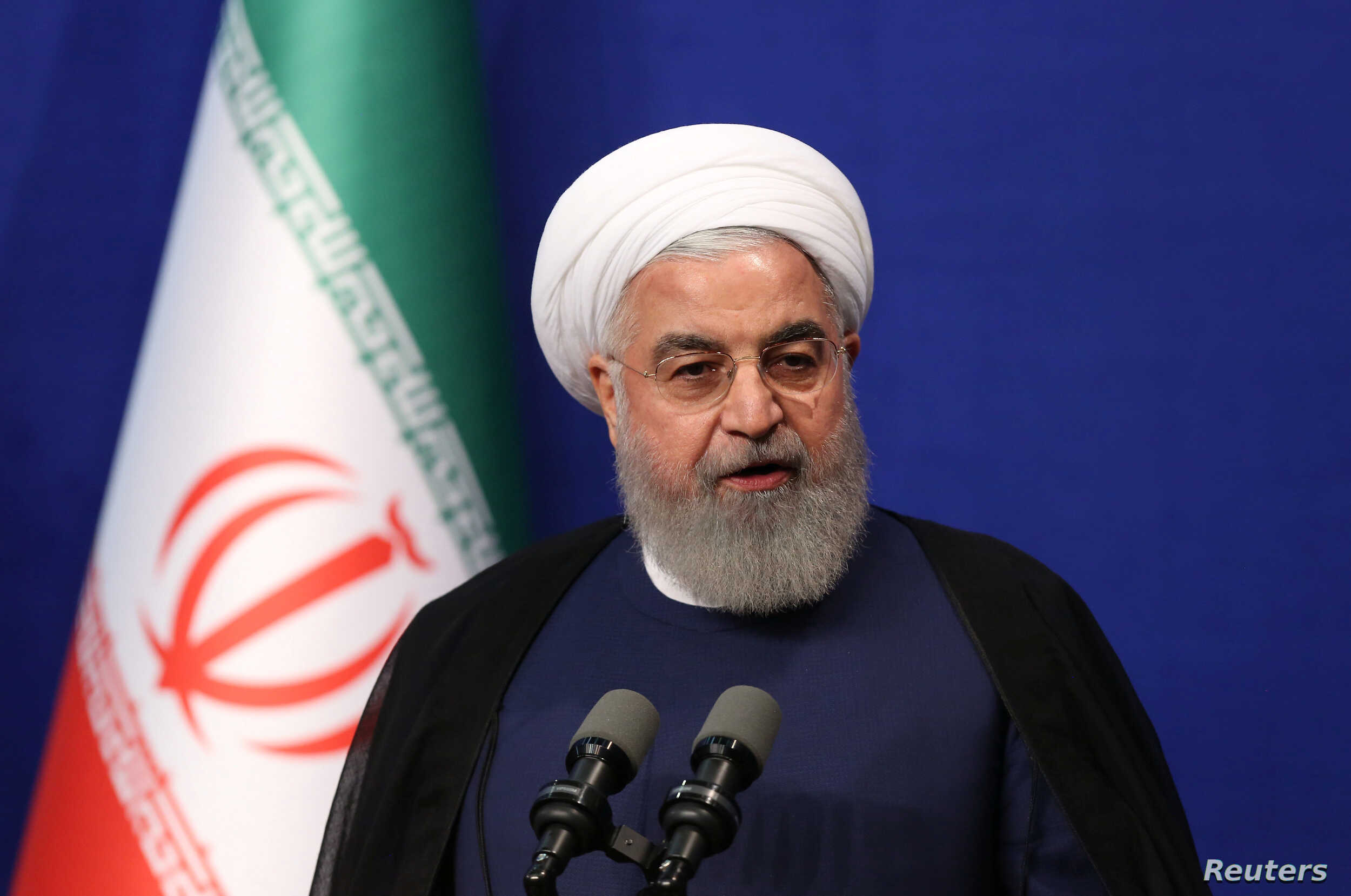
Image credits: Iranian President Hassan Rouhani speaks during a meeting with a group of Iranian athletes, in Tehran, Iran, June 1, 2019. Official President website.

Iran will cold test its redesigned Arak nuclear reactor as prelude to fully commissioning it later in the year, Iran’s Atomic Energy Organization said on Friday.

Spokesman Behrouz Kamalvandi was quoted by local media as saying the cold testing, which usually include the initial startup of fluid systems and support systems, will take place early in the Iranian new year that begins this Sunday.

“In other words, we have advanced work in the field of fuel, storage, etc,” Kamalvandi said.

Iran has recently accelerated its breaches of the 2015 international nuclear deal in an apparent bid to pressure U.S. President Joe Biden to reverse his predecessor’s abandonment of the agreement. Both sides are locked in a standoff over who should move first to save the deal.

Iran agreed to shut down the reactor at Arak - about 250 km (155 miles) southwest of Tehran - under the 2015 deal. It was allowed to produce a limited amount of heavy water and Tehran has been working on redesigning the reactor. It says it plans to make isotopes for medical and agricultural use.

The International Atomic Energy Agency said in a report to member states earlier this week that Iran has started enriching uranium at its underground Natanz plant with a second type of advanced centrifuge, the IR-4, in a further breach of the deal.

Last year Iran started moving three cascades, or clusters, of different advanced models of centrifuge from an above-ground plant at Natanz to its below-ground Fuel Enrichment Plant (FEP). It is already enriching underground with IR-2m centrifuges. The deal only lets it enrich there with first-generation IR-1 machines.

Iran is enriching up to 20% purity at another plant, Fordow.

Source: Reuters

 

The Liberum

The subtitle of The Liberum ("the voice of the people is the voice of God") reflects the concept that the collective opinions and will of the people carry divine importance. They embody truth and wisdom, particularly in a non-partisan arena that profiles itself as a marketplace of free ideas and thoughts.
See full bio >
The Liberum runs on your donation. Fight with us for a free society.
Donation Form (#6)

More articles you might like

A US attack on Iran's capital, Tehran. Photo courtesy FOX News.

Democracy can not be imposed from the sky

When the United States and Israel struck Iran on Saturday, 28 February, they did not […]

The day after the supreme leader died: A Post-Westphalian Levant

Empires rarely announce their endings; they fracture. The assassination of Iran’s Supreme Leader Ali Khamenei […]

The killing of Iran’s Supreme Leader caused a geopolitical earthquake in the Middle East

A dramatic escalation in Middle East tensions transformed into outright war when U.S. and Israeli […]

Is the world’s reaction really helping Iranians?

Extremely disturbing reports came again from Iran in recent days. Scattered and fragmented, but more […]
- by Nadia Ahmad on 17/02/2026

Why Arab monarchies thrive, and Arab republics fail

The 20th century was a period of political fragmentation between monarchies and republics in the […]

Russian-Armenian relations & U.S. Vice President J.D. Vance’s visit to the South Caucasus

Armenia has become the stage for intense diplomatic activity and symbolic statements ahead of this […]