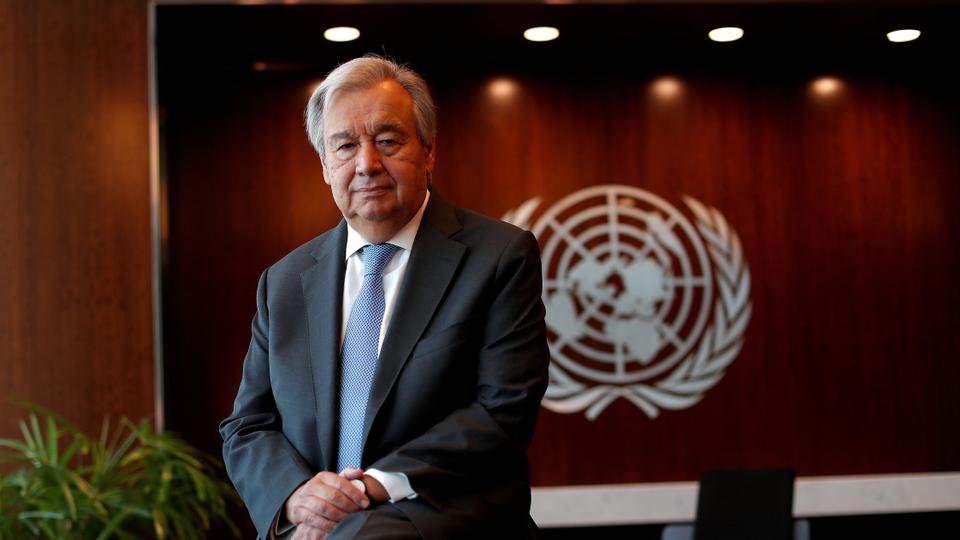
United Nations Secretary-General Antonio Guterres said on Sunday the international community has not done enough to support Lebanon, grappling with a dire economic crisis and home to over 1 million Syrian refugees. The U.N. leader urged more support at the start of a three-day visit to the small country.
Guterres arrived on the high profile visit earlier Sunday, and spoke after his meeting with Lebanon's President Michel Aoun.
At the outset of his visit, Guterres said the visit will focus on supporting the people of the crisis-stricken country. But he pressed the political leadership to overcome their differences to find ways to resolve the crisis.
International donors, including traditional supporters of Lebanon, have extended humanitarian assistance to the country to deal with the crisis, but have declined to offer support to the government before a plan for reform is agreed upon.
Lebanese are facing a deteriorating economic crisis that began in late 2019 and is rooted in years of mismanagement and corruption. The crisis, including a serious collapse of the national currency and deepening poverty, has since only been compounded by the pandemic, bickering among rival political groups and a massive explosion at the port of Beirut in August 2020 that left over 216 people killed and thousands injured. It also destroyed major parts of the capital.
"I believe the international community has not done enough to support Lebanon... and other countries in the world that have opened their borders, doors and hearts to refugees when unfortunately some much more richer and much more powerful close their borders," Guterres said, speaking to the press as he stood next to Aoun.
He said a 12-month U.N. emergency response plan launched in August -- which is asking for $383 million to support 1.1 million people -- is only 11% funded so far, urging more support.
Lebanon's population of 6 million includes over 1 million Syrian refugees. "If there is a word to characterize my visit, that word is solidarity," he said.
Lebanon's crisis has been made worse by a political leadership deeply divided over key issues leading to a paralysis of the government and parliament. The divisions have delayed reforms and negotiations with the International Monetary Fund over a recovery plan.
Guterres said he urges the country's politicians to work together to resolve this crisis.
"Seeing the suffering of the people of Lebanon, Lebanese political leaders don't have the right to be divided and paralyze the country," he said, calling Aoun the symbol of unity.
The political class is also divided over the domestic probe into the Beirut Port explosion. Guterres is planning to visit the port to pay a tribute to those killed in the explosion and meet with families of the victims.
The economic collapse in Lebanon has been described as one of the worst in the world in over 150 years. Inflation and prices of basic goods have skyrocketed in Lebanon, which imports more than 80% of its basic goods.
Shortages of basic supplies, including fuel and medicine, and restrictions on bank withdrawals and transfers, particularly in foreign currency, have increased the desperation of the Lebanese in the once middle-class country.
Guterres also stressed that next year's elections will be key for laying the foundations for a better future. "The elections next year will be key," he added.
Politicians have disagreed on the date and details of holding the elections, expected next spring. A decision by the country's constitutional council is expected to settle the dispute.