Hassan Nasrallah admits defeat but says no majority evident

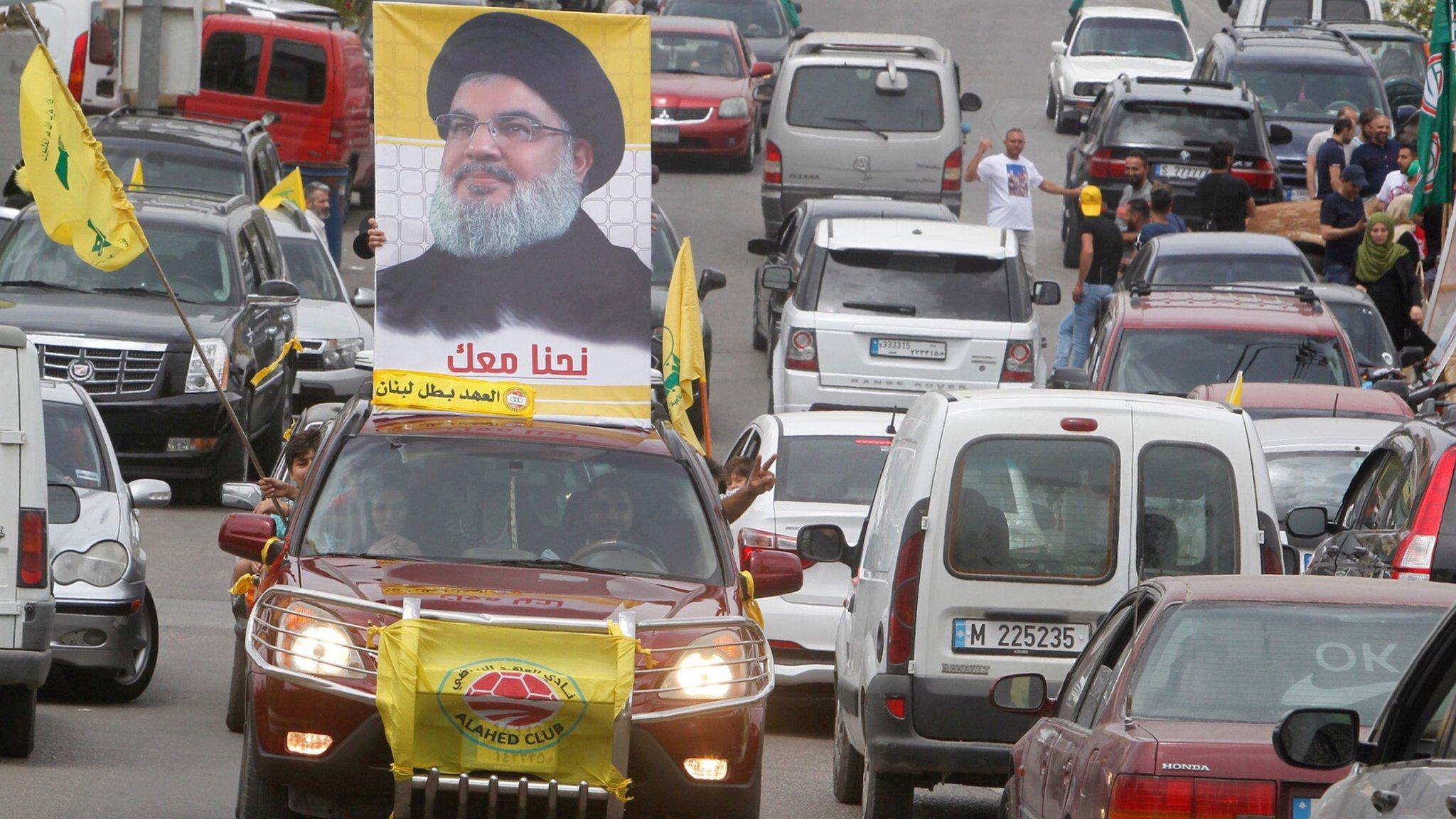
The leader of Lebanon's Iran-backed Hezbollah Sayyed Hassan Nasrallah acknowledged his party and its allies had lost their parliamentary majority in elections but said no single group had taken it, in his first televised speech since Sunday's election

"Unlike the situation in parliament in 2018, no political group can claim a majority," he said.

Hezbollah and its allies scored 62 seats during Sunday polls, according to a Reuters tally, losing a majority they secured in 2018, when they and their allies won 71 seats.

Hezbollah and its ally Amal held on to all of parliament's Shi'ite seats. But some of its oldest allies, including Sunni, Druze and Christian politicians, lost theirs.

The elections saw gains by the anti-Hezbollah Lebanese Forces party and more than a dozen reform-minded newcomers, as well as a smattering of independents.

The results mark a blow for Hezbollah, though Nasrallah declared the results "a very big victory."

Nasrallah called for "cooperation" between political groups including newcomers, saying the alternative would be "chaos and vacuum."

The results have left parliament split into several camps, none of which have a majority, raising the prospect of political paralysis and tensions that could delay badly needed reforms to steer Lebanon out of its economic collapse.

Source: Newsbreak

 

The Liberum

The subtitle of The Liberum ("the voice of the people is the voice of God") reflects the concept that the collective opinions and will of the people carry divine importance. They embody truth and wisdom, particularly in a non-partisan arena that profiles itself as a marketplace of free ideas and thoughts.
See full bio >
The Liberum runs on your donation. Fight with us for a free society.
Donation Form (#6)

More articles you might like

King Charles, Trump, and the Anglo-Saxon rift: Britain’s quiet break from Washington on Iran

There is a moment in every alliance when something shifts—not with a declaration, not with […]

Pakistan in the Iran–Israel War: How a nuclear state became an unexpected broker of peace

In the aftermath of the Iran–Israel war, attention has largely remained fixed on the expected […]
- by Nadia Ahmad on 24/04/2026

The “Bad Kid” in the neighbourhood: Hezbollah and the language of conflict

It was a small phrase in a large diplomatic room, the kind of remark that […]

Thank you, even for this

Gratitude is beautiful when life is beautiful, when things arrive on time, when prayers are […]
- by Nadia Ahmad on 21/04/2026

The Strait that thinks: Hormuz and the Strait of Peace

There are places on Earth that behave less like geography and more like thought. The […]

The ceasefire between Lebanon and Israel does not end the war, but reorganises it

A ceasefire between Lebanon and Israel after forty-five days of war. An interruption of hostilities, […]