Tripoli MP won't cooperate over national unity government

Image credits: Ashraf Rifi

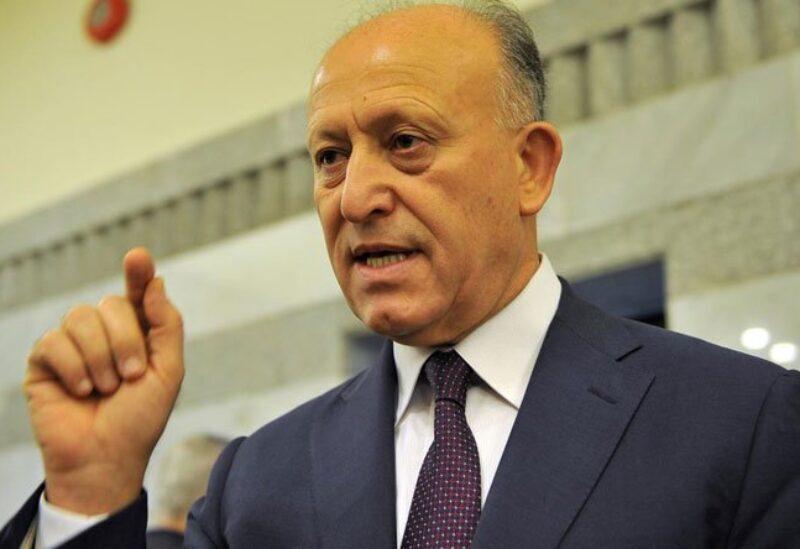
Tripoli MP and ex-minister Ashraf Rifi stressed Monday that he “will not agree to a national unity government.”

Hizbullah top lawmaker “Mohammed Raad should stop trying to intimidate us and we will impose the government that we want,” Rifi said in an interview on MTV.

Rifi has two other MPs in his bloc but he is allied with the Lebanese Forces bloc.

“We will not accept a national unity government, because it will be booby-trapped and impotent, especially like the governments that Hizbullah used to call for,” the MP added.

“Vacuum would be better than Hizbullah’s people being in charge of the government,” Rifi went on to say.

Rifi also noted that he has not nominated himself for the premier post and is “not seeking any post.”

As for the deputy speaker post, Rifi said he will support the LF’s nomination of Ghassan Hasbani should he be nominated for the post.

“I’m with choosing new and sovereign figures for the premiership and I do not see Najib Miqati as a change figure,” Rifi added.

Asked whether he will vote for Speaker Nabih Berri for the speaker post, Rifi said: “We are against all political forces, and we will cast blank votes because we are a change bloc.”

Rifi also said that the parliamentary elections “were remarkable in the Sunni community.”

“Those who bet on boycott do not know the Sunnis, who voted heavily for the camp of sovereignty and change, and we have returned to the multiplicity of Sunni leaders,” Rifi added.

Source: Naharnet.com

 

The Liberum

The subtitle of The Liberum ("the voice of the people is the voice of God") reflects the concept that the collective opinions and will of the people carry divine importance. They embody truth and wisdom, particularly in a non-partisan arena that profiles itself as a marketplace of free ideas and thoughts.
See full bio >
The Liberum runs on your donation. Fight with us for a free society.
Donation Form (#6)

More articles you might like

- by Nadia Ahmad on 24/04/2026

The “Bad Kid” in the neighbourhood: Hezbollah and the language of conflict

It was a small phrase in a large diplomatic room, the kind of remark that […]

Thank you, even for this

Gratitude is beautiful when life is beautiful, when things arrive on time, when prayers are […]

The ceasefire between Lebanon and Israel does not end the war, but reorganises it

A ceasefire between Lebanon and Israel after forty-five days of war. An interruption of hostilities, […]

Social media, wejbet, and presence

In bad times, in good times, and in all the times in between, there was […]
by Murielle Hebbo on 13/04/2026

The architecture of instant ruin: Lebanon’s 600-second war

Time, in the theatre of war, is traditionally elastic. It stretches through months of tense […]

The sequential strategy: How Iran's regional project reshapes itself through proxies

Iran's proxy network did not emerge by accident — it was built over decades to […]