The European Union does not need Serbia as its future full-fledged member. For the 27-nation bloc, the Balkan state could serve as a modern-day colony where multinational corporations seek to easily exploit natural resources and turn the country into a large dump. Why does it not?
By Nikola Mikovic
The resource curse is associated with abundant natural resources in countries with less economic growth, less democracy, or worse development outcomes than countries with fewer natural resources.
Although Serbia does not have vast reserves of oil and natural gas—the most important resources of our time—it does have lithium, the lightest metal in the world. Lithium is reportedly playing a crucial role in facilitating the EU’s green transition.
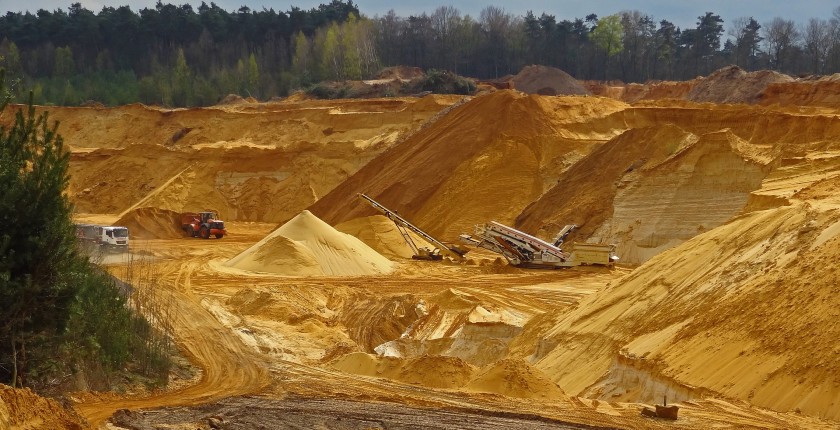
Rio Tinto—the Anglo-Australian mining company with a history of environmental pollution, dispossessing people of their lands, and destroying valuable cultural heritage—is eyeing developing Europe's largest lithium mine in western Serbia and beginning to exploit the mineral as early as 2028. The mine is expected to produce 58,000 tons of lithium per year, equating to 17% of European electric vehicle production or 1.1 million cars.
The Serbian government portrays such a project as a “historic chance” for the country’s economic prosperity. Most of the population, however, strongly opposes any lithium exploitation in Serbia, fearing that it could have enormous environmental consequences.
However, despite that, pro-government media and analysts have started labelling those who oppose Rio Tinto’s plan as “traitors”. There is no public debate on lithium exploitation whatsoever. Instead, the authorities in Belgrade act as Rio Tinto’s lobbyists. At the same time, various opposition groups hold pointless protests that can unlikely prevent the energy giant from turning Serbia into a mining colony.
Besides Rio Tinto’s Jadar project in western Serbia, dozens of other foreign companies reportedly plan to open mines all over the southeast European country. Critics warn that Serbia would have the same fate as energy-rich African nations that have been mercilessly robbed by European colonial powers for centuries. The government claims that the Balkan country will benefit from lithium exploitation, just as the Middle Eastern states benefit from oil production. As usual, the truth lies in the middle.
Given its proximity to the European Union, Serbia is unlikely ever to be treated the same way as African colonies. But because of the high level of corruption, lack of sovereignty, and the fact that foreign corporations already firmly control almost all sectors of the country’s economy, Serbia is unlikely ever to have the same level of economic development as oil-rich Gulf states. Instead, it can count on a miserable mineral resource rent tax of 3%.
Presently, Chinese corporations exploit Serbian copper and gold, while the Russian energy giant Gazprom remains responsible for oil and gas extraction in Serbia. Profit goes to Russia and China, while Belgrade gets only 3% (often even less than that). The time has now come for Western corporations to get their piece of the pie.
The Balkan state is expected to remain Europe’s “black hole”. Even though it has been a candidate for EU membership since 2012, Serbia is unlikely ever to join the bloc. Brussels, unwilling to give Belgrade the green light to become an EU member, can always state that Serbia does not meet standards in the field of environmental protection. However, that does not prevent the EU from getting Serbian lithium so that the bloc can implement its green agenda while Serbia can face ecological destruction.
Lithium extraction often involves intensive water use in the mining and extraction processes, which can impact local water resources. Since Serbia already suffers from a high level of air pollution, as neither local nor foreign companies operating in the southeast European country follow any ecological standards, Rio Tinto (whose operations in many countries have had adverse environmental impacts) will probably not comply with national and local environmental regulations.
Another problem is that the extraction and processing of lithium require considerable energy. Serbia may have to buy small modular reactors from France to support Rio Tinto’s operations. Rumours are flying that Belgrade will also begin to import nuclear waste from Paris, as it already imports large amounts of other sorts of waste from the EU. If that is true, it is evident why the air in the Balkan country is so polluted.
But if Rio Tinto and other companies turned Serbia into a mining colony, the air would remain polluted, and large parts of the country would become uninhabitable. Finally, given that the German and the British ambassadors to Serbia openly said that Europe needs Serbian lithium and that the US Assistant Secretary of State for Energy Resources Geoffrey Pyatt supported Rio Tinto’s ambitions, the Balkan country’s future looks bleak.