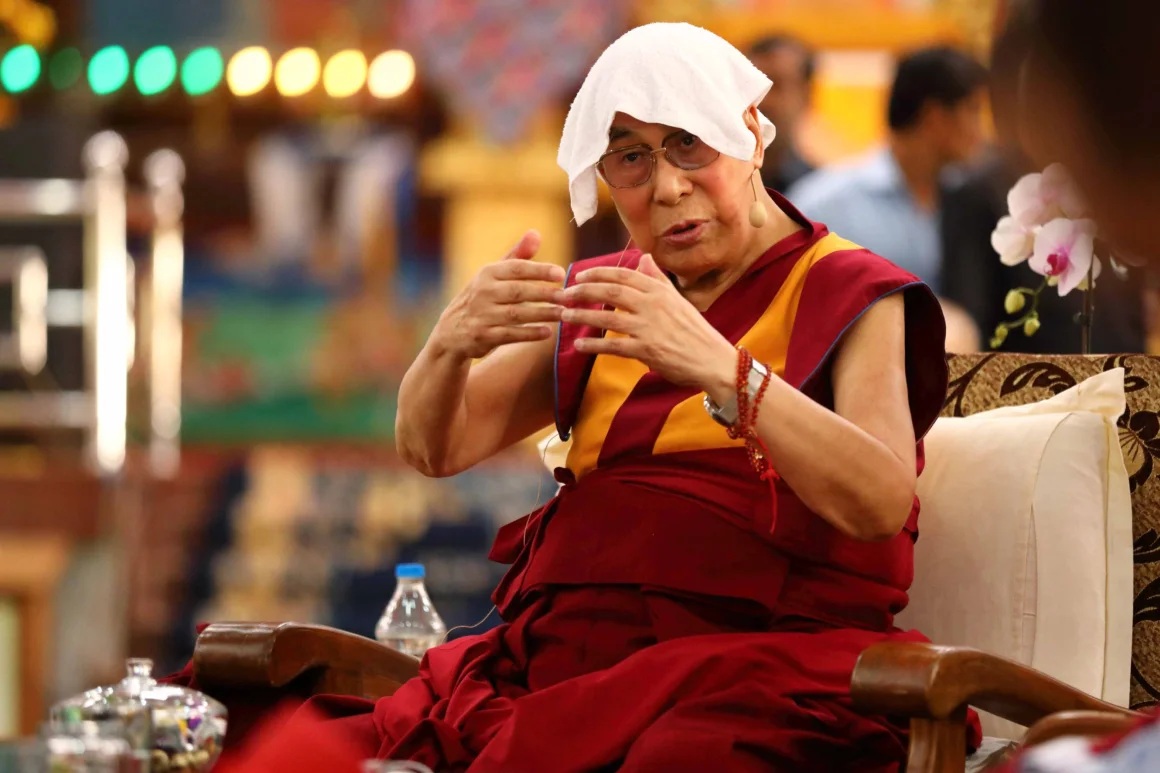
Over the last few decades, Indian shamans and gurus have exported Hindu and Buddhist ideas into the West, with the same commitment with which they export engineering programs and IT experts. Nothing coming out of India has been as successful as spirituality and yoga, the most successful East-to-West software export to date.
By Nadia Ahmad
The Western world's cultural fixation with Eastern spirituality has served a political agenda. The mainstream acceptance of Eastern spirituality and philosophies, and the widespread practice of yoga throughout the Western world, are successes of Indian foreign policy and the ultimate indicators of India’s soft power.
The current fascination with India, driven by overexposure to gurus, sages, and ancient Hindu wisdom, has led Westerners to view India as a Xanadu of spirituality, meditation, and relaxation. In reality, India is wrought with religious and social discrimination, high crime, and a caste system which rivals Britain in its hereditary hierarchical privilege.
The imagined Eden, which is India, is a fixture of the Western imagination, a result of a successful soft-power policy, resonating with people too busy with their morning yoga practice to check the news.
Since Brad Pitt starred in “Seven Years in Tibet,” the East has been all the rage. The surge of self-designated “yogis” travelling East to “find themselves” has risen exponentially. The unending number of yoga and meditation centres erupting across major Western cities rivals the number of churches.
This comparison is not made lightly, as yoga is, first and foremost, a prayer, an ancient religious practice. While it is inconceivable for non-Muslims to pray the Islamic prayer, or non-Christians to attend a mass service, millions across the Western world are regularly engaging in what is essentially a Hindu prayer, mixed with Buddhist chants.
Before the days of the Buddha, yoga was a traditional Hindu practice. According to the Vedanta, the practitioner of yoga reaches the end of knowledge through his practice, physically manifested through death.
To translate, the ultimate yogi is not the one with the broadest assortment of custom Lululemon, but he who succeeds in leaving his body through his prayers/yoga practice, i.e., death. To die before you die is the ultimate desire of the yogi.
A curated yoga wardrobe and an initialised yoga mat are essential to modern aesthetic living. A century ago, carrying a yoga mat would have been considered a sign of heresy and apostasy.
Now, yoga mats are the foremost accessory of the modern woman, and bringing one into a church for a traditional mass service would not be seen as a religious contradiction by anyone save a well-read Priest. The yoga mat is the Hindu version of the Islamic prayer mat, in both appearance and function.
The impact of the popularisation of yoga and spirituality across the West over the decades on the West and its perception towards India should not be underestimated. In the 19th century, India was colonised by Britain, considered a backwards nation and Hindus were deemed ‘pagan heathens’ by colonialists.
Today, an independent India is among the West’s foremost Eastern allies, and Indian culture has been embraced. The shift in perception towards Indians in the West cannot be attributed solely to the liberalism of the last century.
Other Eastern nations have not enjoyed the grace of Western tolerance, let alone the adoption and integration of its culture, to the extent of Hinduism and Buddhism. Credit must be awarded to the Indian gurus who have succeeded in framing their ancient religion in a way which appeals to the modern Western mind. India’s global influence has only increased as a result of its tremendous success and appeal.
Even India’s liberation from the British crown was mainly due to the mass support among Western populations for Mahatma Gandhi and his non-violent resistance, which was deeply rooted in Hindu tradition and belief. Satyagraha, the philosophy of nonviolent resistance rooted in Hinduism and Buddhism that Gandhi championed, won over the hearts and minds of Westerners who championed the Indian cause.
Influence is measured by the ability of ideas to mobilise masses and by people's willingness to implement them. The influence of Jesus Christ or the Prophet Muhammad on the modern world is marked by the number of adherents and practitioners of their religions. Those who pray and practice the tenets of Christianity and Islam are evidence of the influence these figures hold.
The ability to get people to adopt practices and beliefs, and to partake in rituals, is an influence in itself. In this case, India’s influence is apparent in the spread of yoga and meditation culture worldwide. Today, Ashrams across India are overbooked thanks to non-Indian spiritual seekers, and converting to Buddhism in the West is not only socially acceptable but trendy.
This influence has not contained itself to the masses. Yoga is practised in Hollywood, in DC A3 yoga studio on Downing Street would not turn any heads in 2025. The disenchanted Western bourgeoisie have embraced yoga while missing its deeper meaning. While Western yogis chase the drug of Nirvana, the Western mind has stretched so far East that its perception of India has been transformed.
To the average evolved American, New Delhi is the home of the spiritual guru Osho, which clouds their perception of an entire country and its population. If the common man in India incorporated the slogans of Osho and Krishnamurti into their daily lives, murder, sexual violence, and religious extremism would be non-existent in India.
Buddha and Krishna are the new Gods of the West, directly influencing Western society and politics. Why does the West support the independence of Tibet, while denying the citizens of Kashmir independence from their Indian overlord? Why is independence a question of human rights to the Western mind, where it concerns Tibetans, but not the people of Kashmir?
The Holy Father of Buddhism, the Dalai Lama, enjoys considerable Western support. Why would the leader of a foreign faith be such a popular figure among Westerners? What is the connection between the West’s acceptance of Buddhism, its support of the foremost Buddhist leader, and the independence of Tibet?
While many accuse the Dalai Lama of serving Western interests, it is he who has convinced the West to support his agenda, not the other way around. The impact of the Dalai Lama on non-Buddhist Western thinkers has contributed to the West's political and social support for these causes. The Tibetan monks are the reverends of the age; their words and movements are readily accepted, promoted, and supported by the West.
Whereas China, the world’s export epicentre, failed where India succeeded. The economic powerhouse has limited cultural influence, with human rights violations and restrictions on freedom often cited by Western observers as reasons to view Beijing negatively.
The Dao has not achieved the popularity of the Dharma. Chinese spirituality, and its millennia of tradition, has been merged with communism, and the Chinese regime in the Western Mind, resulting in a low appeal of Chinese spirituality, culture, and politics.
The Dalai Lama succeeded where Xi Jinping failed, and India succeeded where China failed in influencing Western minds. The openly racist and discriminatory political policies of India are mainly unknown to the public, who may view any Indian public figure as a successor of Gandhi, and his advisors as aligned with Osho or Sadhguru.
Is the West selectively highlighting the human rights violations of Eastern governments, based on how appealing their ideology and culture are?