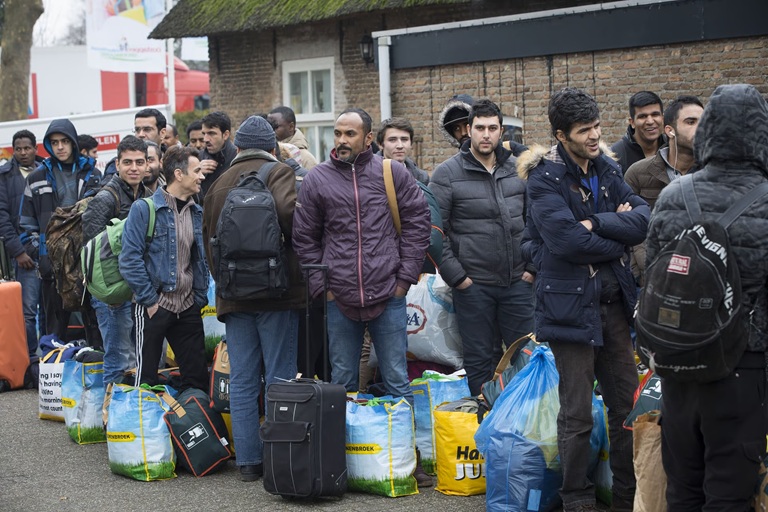
For years, the asylum debate in the Netherlands has been characterised by tension and moral tension. Those who advocate for consistent policy are quickly accused of being callous; those who advocate for generosity often fail to explain where the boundaries lie. Meanwhile, social unrest is growing, trust in the government is declining, and radical voices are gaining ground. This is no coincidence, but the result of a fundamental flaw in the policy.
By Oscar Hammerstein
Asylum was never intended as a permanent route to settlement. It's temporary protection for people fleeing war, violence, or persecution. This protection is unconditional as long as the danger exists—but it loses its legitimacy when temporary becomes de facto permanent. It is precisely this distinction that has become increasingly blurred in the Netherlands and its surrounding countries.
The core of the problem is not that the Netherlands offers protection, but that it fails to end that protection when the basis for it disappears. Procedures drag on forever, return policies are postponed, and political courage is lacking. The result is that asylum, in practice, becomes a back door to migration, without any open choice or democratic decision.
This undermines two things simultaneously. First, it undermines support for the right to asylum itself. Citizens see that rules are not being enforced and draw their own conclusions. Second, it harms the countries of origin. Structurally detaining people who are needed for reconstruction removes them from their own societies, while the same political parties often emphasise the importance of local responsibility and development.
The Netherlands is no exception in this regard, but it is exemplary. Reception capacity is creaking, municipalities are becoming overloaded, and it is repeatedly presented as a temporary peak. But that story has been told for ten years. The reality is that a temporary system is being structurally abused because no one dares to organise its finite nature.
All this doesn't mean that everyone must return, or that circumstances are always black and white. Some people will not be able to return; others have demonstrably become entrenched. But that requires clear criteria and rapid decision-making—not stagnation. Asylum is a right to protection, not a right to permanent residence.
Those who genuinely want to be humane must also dare to be consistent. Without enforcement, asylum law loses its moral force and becomes a source of social polarisation. History shows that this is precisely the breeding ground for radicalisation and political derailment, which can threaten social cohesion.
The Netherlands, therefore, faces a choice. Not between compassion and harshness, but between clarity that fosters trust and vagueness that erodes it. Between an asylum law that is respected because it is enforced, and a system that undermines itself by allowing everything and enforcing nothing.
Without consequences, there is no credibility. And without credibility, humanity ultimately cannot endure.