There is a particular kind of exhaustion that only shows up later. Not in your thirties, when the deadlines feel urgent, and the wins still taste sweet, but somewhere further down the road, when you finally have a quiet moment to ask what all of it was for.
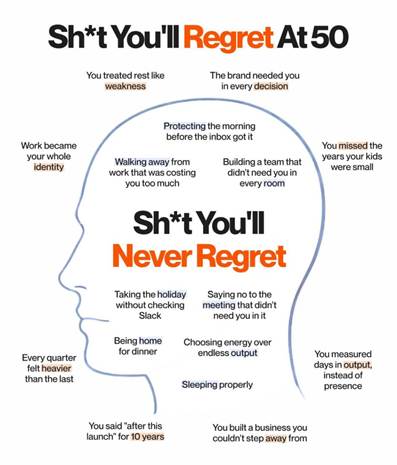
A simple infographic circulating online recently captured this idea with disarming clarity:
A list of things we will regret at fifty, set against a list of things we never will.
Missed dinners against protected mornings. Identity swallowed by work against energy chosen over endless output. It is blunt, even a little irreverent in its language, but underneath the humour sits a genuinely important question for anyone leading a team, a business, or a career: Are we building something we can actually live inside of?
This is not a new observation, but it is one that research keeps confirming rather than contradicting.
A Harvard Business Review survey of leaders across different countries found that those with more paid vacation time were not the ones falling behind. If anything, they worked at a faster pace and maintained a sharper focus on outcomes.
Harvard Business School faculty, including Professor Boris Groysberg, have written extensively on the state of an exhausted workforce, noting that sustained overwork erodes exactly the qualities- judgment, creativity, patience that leadership depends on most.
The evidence does not suggest that rest is the opposite of ambition. It suggests that rest is one of the conditions that makes ambition sustainable.
For those of us working across demanding, deadline-driven industries such as oil & gas, energy transition, engineering, construction, and project delivery, where schedules are unforgiving and client expectations even more so, this can feel like an uncomfortable message.
We are trained to equate presence with commitment, and commitment with worth. But three ideas from this conversation are worth sitting with:

None of this is an argument against effort. Anyone who has built something meaningful in this region knows that real progress asks for real sacrifice, particularly in the early, formative years of a career.
But sacrifice without discernment eventually becomes erosion of health, of relationships, of the very identity we told ourselves we were protecting by working so hard in the first place.
The honest question, then, is not whether we are working hard enough.
Most of us already are. It is whether, at fifty, we will look back and recognise the life we built or simply the hours we filled.
The good news is that this is not a question we are forced to answer only once, at the end.
It is one we get to answer again, quietly, every single week, in the choices we make about what truly deserves our presence.