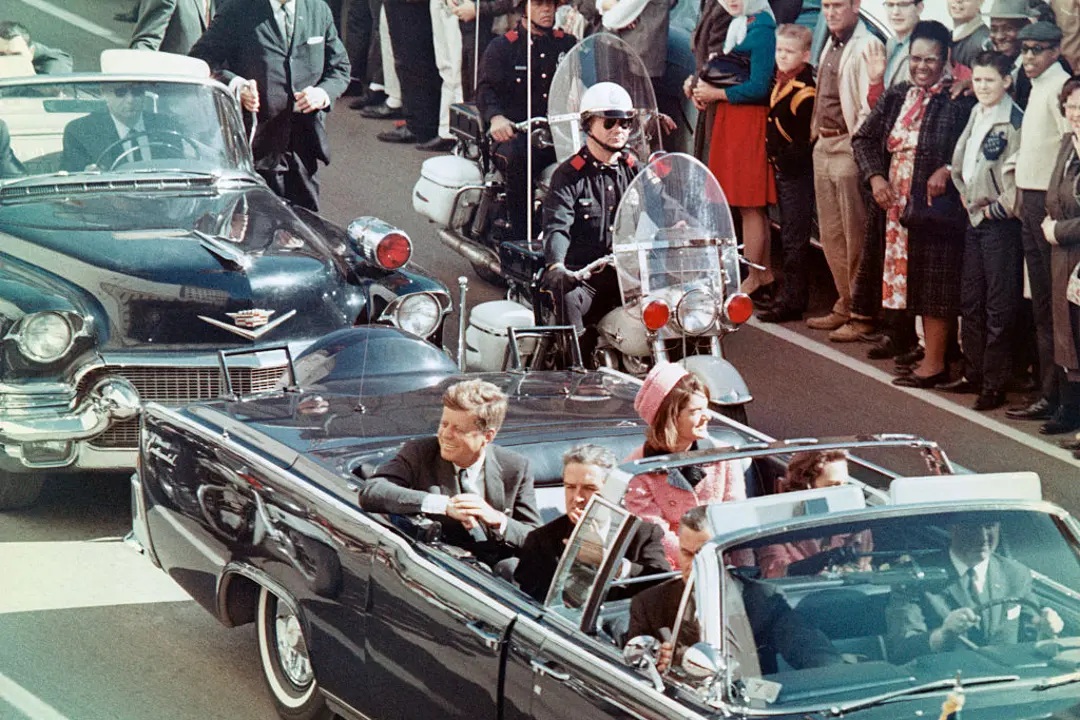
Dallas, 22 November 1963. America’s 35th President, John Fitzgerald Kennedy, is assassinated. But what fell was larger than one man's political future. An image of confidence, youth and possibility was interrupted. A young president was dead, a First Lady widowed before the world, and a nation moving confidently into the future found itself looking back at a motorcade, wondering what had happened to its innocence.
By Rami Audi
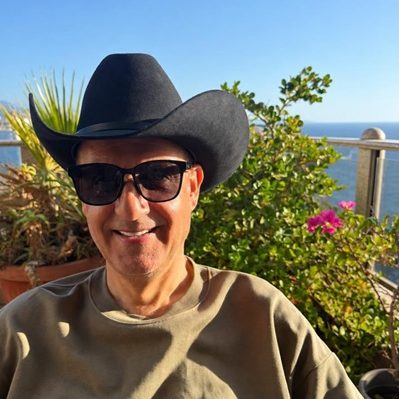
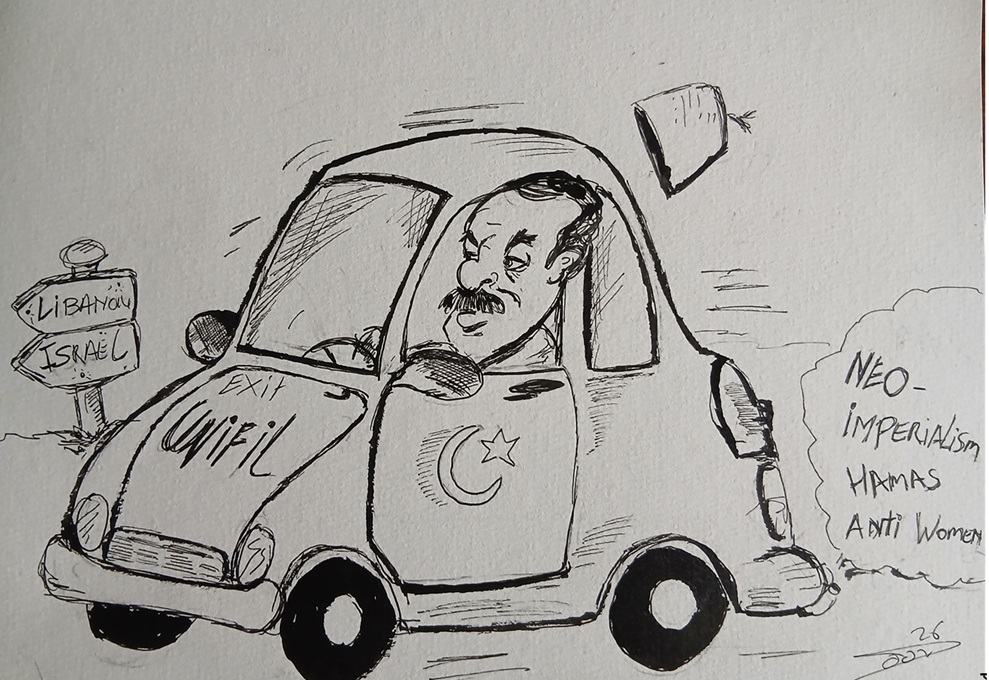
Imagine a cowboy hat falling onto the pavement that afternoon. This is a literary image, not a historical claim: Kennedy was not wearing one when he was assassinated. Yet the symbol belongs in the scene.
The hat represents the frontier spirit in America's imagination: independence, courage, personal responsibility and the conviction that the future belongs to those willing to venture into it. Its imagined fall becomes an emblem of confidence interrupted.
Kennedy was barely three years into his presidency. His administration had controversies and unfinished business. But he possessed something politics rarely manufactures: the ability to make people feel that history was moving towards an exciting destination.
His language of public service, technological achievement and national purpose made the future appear open. His challenge to ask what Americans could do for their country expressed a belief in shared civic responsibility.
Then came the gunshots. His death transformed a living presidency into an unfinished promise. An unfinished promise can become more powerful than an accomplished political record. Kennedy became not only the president who governed America, but the president America might have had.
And beside him stood Jacqueline Kennedy.
You cannot understand the afterlife of the Kennedy presidency without understanding Jackie. She was not merely the elegant woman accompanying a young president. Graceful, intelligent and remarkably composed, she possessed a charisma of her own.
Her manner, voice, fashion and instinct for presentation gave the White House a new atmosphere. She understood that political leadership was also culture and national personality: a country must govern, but it must also know how to present itself to the world.
Her restoration of the White House was more than decoration. She treated it as a living piece of American history, restoring historic furnishings and introducing the country to its cultural treasures. Her televised tour in 1962 brought millions inside. Through state dinners and cultural diplomacy, she gave American power a cultural face.
Together, John and Jackie became Camelot. The name was popularised after the assassination through Jackie's interview with journalist Theodore H. White. It captured the romance of a presidency ended too soon: a young king, a beautiful queen and a kingdom whose promise had been interrupted.
Camelot was never a complete account of the Kennedy administration. It did not need to be. It gave grief a language and Americans an image of what they had lost.
Jackie understood image-making better than most politicians understand their own speeches. She preserved her husband's memory and helped turn political tragedy into cultural legend. But Camelot left the Democratic Party with a question: could it ever again produce a political imagination as compelling as the one surrounding the Kennedys?
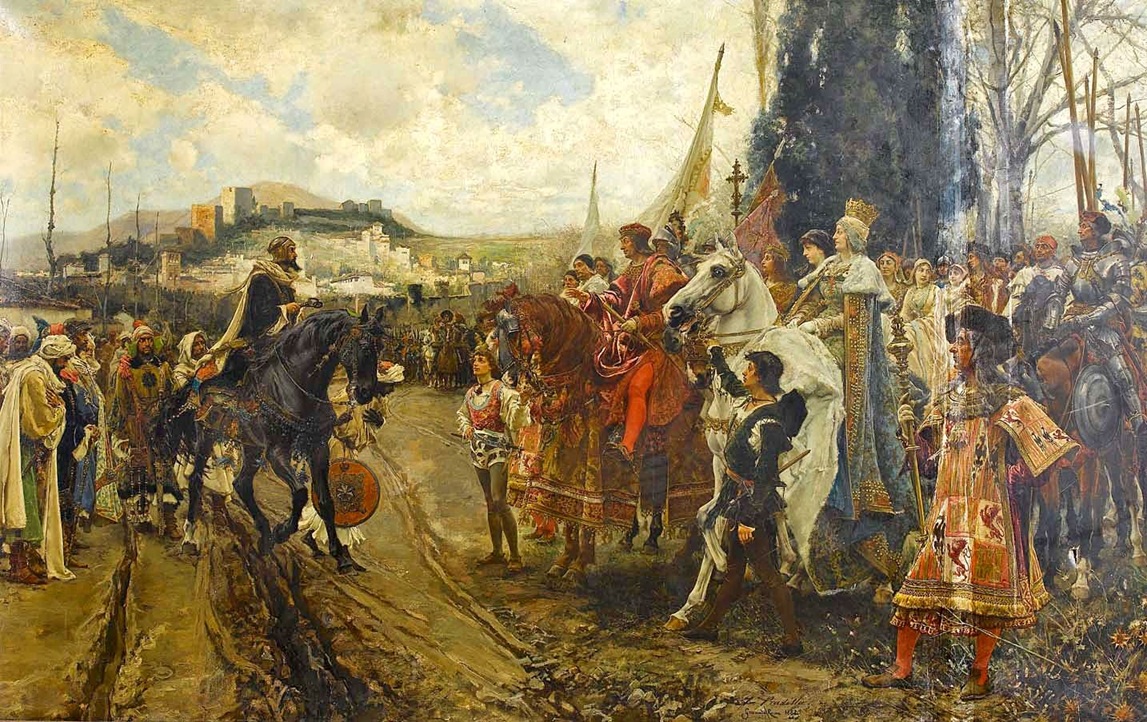
Kennedy's party was a remarkable coalition. Franklin Roosevelt's New Deal united industrial workers, immigrants, urban organisations, intellectuals, and black voters, who were moving away from Republicans and conservative southern Democrats.
Economic opportunity and federal intervention held together groups with differing cultural convictions. It was powerful, but not an entirely comfortable national family. The civil-rights revolution exposed its contradictions. Kennedy's initially cautious approach shifted towards comprehensive legislation in 1963 as violence against demonstrators intensified.
After his assassination, Lyndon Johnson secured the Civil Rights Act of 1964 and the Voting Rights Act of 1965. These defining constitutional achievements also accelerated the departure of many white southern voters from the Democratic coalition.
Vietnam opened another fracture. Johnson's escalation divided the country and damaged confidence in political authority. By the 1968 Democratic convention in Chicago, disputes over war, race and generational change were impossible to conceal. The New Deal coalition was breaking apart.
Bill Clinton's New Democrat movement sought to rebuild the party's appeal amid globalisation, market liberalisation and Republican strength. He proved Democrats could win from the centre. Yet economic change widened the distance between parts of the party and industrial communities that had once considered it their natural home.
Barack Obama brought another wave of excitement. His 2008 election was historic, and his language of hope recalled some of Kennedy's gifts. Like Kennedy, he understood the power of a speech and the emotional force of a national moment.
But the financial crisis, uneven recovery, polarisation and decline of industrial communities exposed the limits of his coalition. The party celebrated historic representation but struggled to explain why many felt displaced.
This is the modern Democratic dilemma. The party has become skilled at representing different constituencies, but representation alone cannot create shared national purpose. A collection of interests is not necessarily a movement. To lead a country, a party must persuade people that they belong to a common future.
Donald Trump understood the opportunity this vacuum created. He challenged both parties' assumptions, attacked globalist economic thinking, questioned established institutions, placed national sovereignty at the centre of his rhetoric, and spoke to voters who believed political and economic elites had forgotten them.
His style differs from Kennedy's, but the historical irony is hard to miss.
Some vocabulary associated with Kennedy's Democratic generation now features prominently in Trump's Republican politics: national greatness, technological supremacy, military strength, frontier ambition and American exceptionalism.
Their philosophies differ substantially. Yet Trump has made national ambition central to his identity, while Democrats struggle to define their own vision of American greatness.
In a sense, Trump has claimed part of Kennedy's frontier.
And where is the Jackie in this Republican appropriation of Camelot? Where is the equivalent cultural imagination, the instinct for historical memory, beauty, dignity and continuity? Jackie was a cultural force in her own right. She understood that a country is not held together by statistics and slogans alone. Its architecture, art, history, rituals and symbols tell people who they are. A nation needs leaders who make its inheritance visible and its future attractive.
The Democrats might discover that their problem is not simply the absence of another Kennedy. It is the absence of a political and cultural vision that can make Americans believe in themselves again.
The November 3, 2026 midterm elections made that question urgent. Democrats won control of both chambers in a major rebuke to Trump's administration. Frustration over living costs, the Iran war and governance helped produce the result. But an electoral victory is not an ideological revolution. Winning opposition voters is one achievement; persuading the country to follow a new direction is another.
The struggle over Senate leadership has brought the question into the open. On November 12, Senator Chris Van Hollen announced a challenge to Chuck Schumer for Senate Democratic leader in the next Congress.
Bernie Sanders and others have called for a new direction, while Schumer says he has the support to continue. It tests whether the party understands its electoral message or intends to return to business as usual.
But who will revolutionise the Democrats?
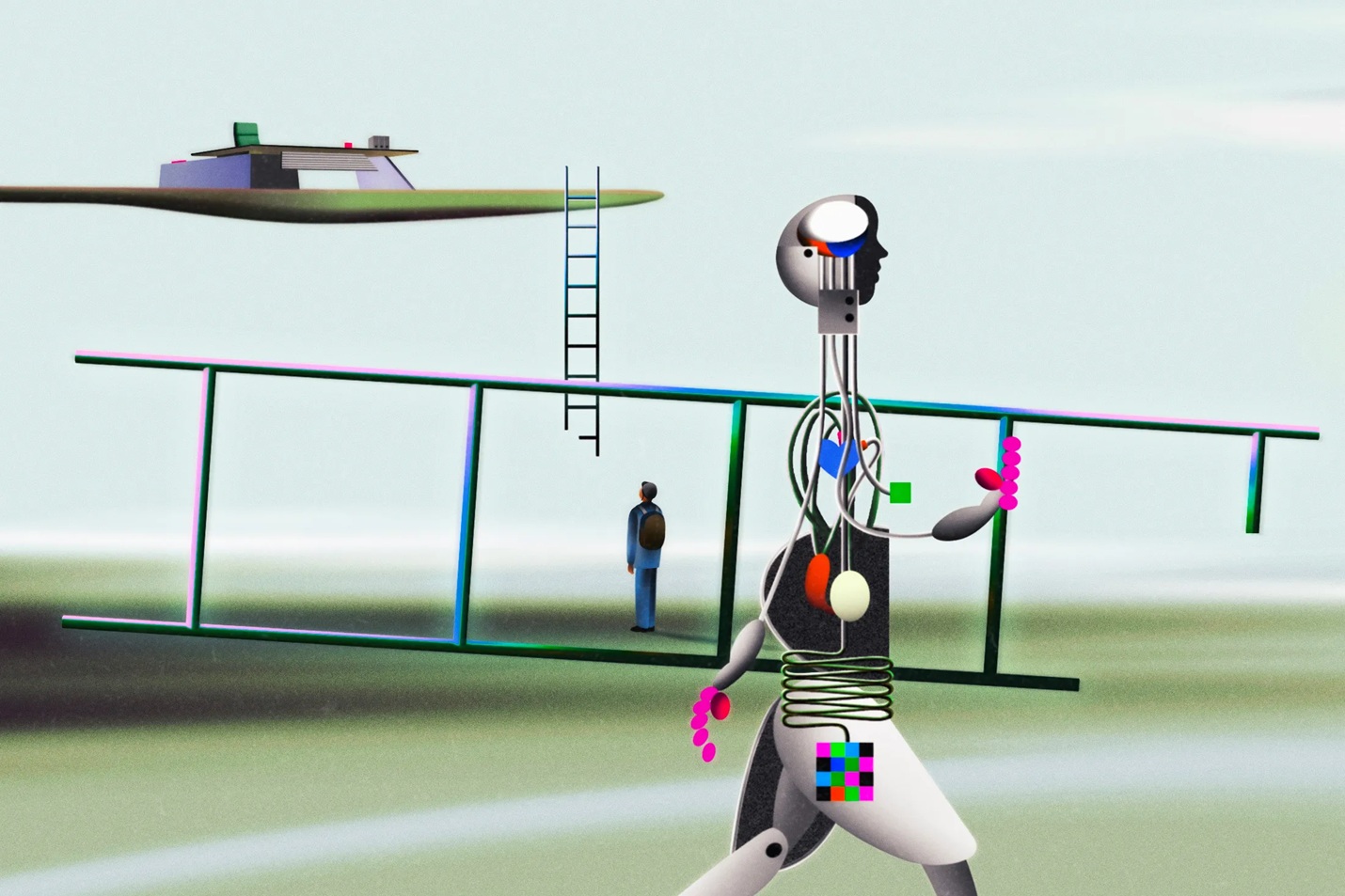
The progressive wing offers energy and a forceful critique of inequality. Yet opposition to inequality is not a complete national philosophy. Youth alone does not produce courage or vision. A return to working-class politics could rebuild lost connections, but Roosevelt's economic world cannot simply be reconstructed. The next leader must understand the America that exists, not campaign for the one that once was.
The party needs someone who can unite economic security, national identity, public safety, technological leadership and cultural confidence. America does not stand apart from the Western world. Its relationships with Israel, democratic allies and the wider Judeo-Christian inheritance are part of the civilisational responsibilities of American power.
Democrats may disagree over policies, including Israel, but a party seeking to lead the free world's most influential democracy cannot be confused about the principles and alliances shaping its position.
The next revolutionary figure may not be the loudest progressive or the most skilful imitator of Trump. It may be someone who combines economic populism with national confidence, constitutional seriousness with cultural ambition, and social reform with a clear understanding of the West. Americans need a reason to believe in a future, not simply another explanation of why the present is failing.
Kennedy's legacy should not become a Republican possession, just as Democrats cannot claim the American frontier exclusively. His presidency belongs to American history. So does Jackie, whose contribution deserves recognition beyond photographs and fashion retrospectives.
Camelot remains powerful because it joined ambition with beauty, personality, romance and national possibility. For a moment, America possessed a story people wanted to join.
The cowboy hat returns in our final image, lying on the imagined pavement in Dallas. The frontier contained courage and achievement, but also violence, exclusion and contradictions. Its enduring meaning is the belief that a nation can recognise its failures, correct them and begin again.
Perhaps the Democrats need another Kennedy, but not a replica. Perhaps they need another Jackie, not as a ceremonial figure, but as a reminder that renewal must capture the imagination as well as the ballot box. They need a leader who understands that national confidence is built through ideas, institutions, culture and the courage to offer people something worth believing in.
The hat fell in Dallas. Kennedy could not pick it up. Jackie preserved the memory, but memory cannot make the next revolution. Trump has claimed part of the frontier for the Republicans. The Democrats must discover their own.
America remembers John and Jackie Kennedy. It remembers Camelot. But the future cannot live forever in a photograph, however beautiful, or in the romance of a presidency that ended too soon.
Can another generation give America something worthy of being remembered?
The West is not a direction. It is a decision.