Just saw a charming movie the other day, Lucky (2017), starring Harry Dean Stanton. It was his final role, since he passed away the same year.
By Emad Aysha
The story is about an old dude nicknamed Lucky in a small desert town in America. He has the same healthy routine every day, before heading off to solve the crossword puzzle at the local coffee shop. But he does all of this ‘alone’.
Even when he calls people over the phone, it’s to solve the crossword. He doesn’t even have a pet and bemoans those who do – such as David Lynch’s character and his escaped tortoise, President Roosevelt!
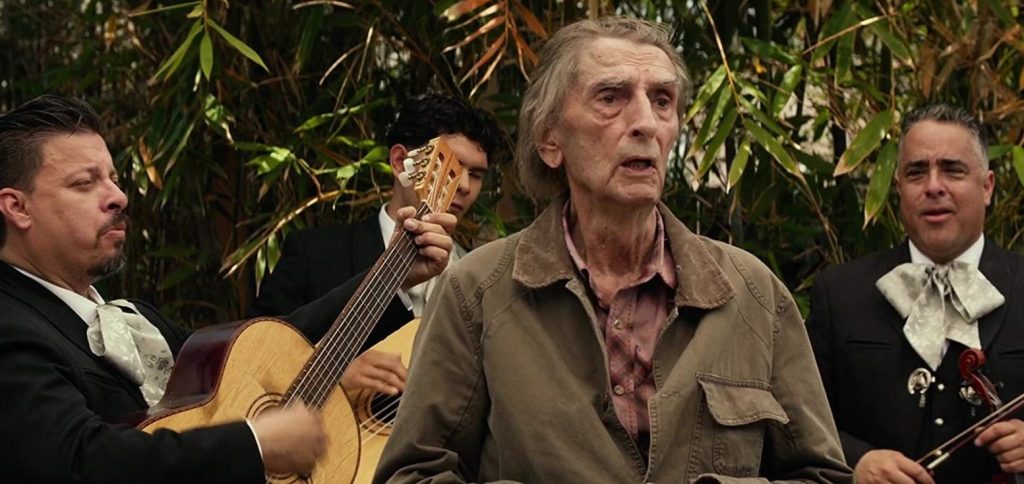
VOICE OF INCLUSION: One of the finest scenes in cinema history is also Harry Dean Stanton's finest hour - singing in Spanish at a Mexican birthday party in 'Lucky' (2017).
Then Lucky gets dizzy and falls while at home, and the doctor tells him there’s nothing to worry about, save that death is knocking on his door like all of us. Just from old age, nothing else.
Looking at the actor’s bio, he led the same kind of life you see in the movie. He was in the Navy during WWII, a cook during the campaign in Okinawa. That’s where he got the name Lucky from, not actually seeing the horror of combat.
The actor in real life also didn’t marry and have kids, at least not legitimately. Again, a point in the movie.
There are no big resolutions or reversals in this movie, just someone coming to terms with his own mortality. The guy’s an atheist, so he doesn’t have much to look forward to, and he’s a natural rebel, so he doesn’t seem to like the idea of an ultimate authority figure anyway.
That explains the bossy blonde who runs the bar, telling him not smoke and pushing her husband around. Alas, at the end of the movie, you see Lucky walking down a desert path, with a tortoise heading back from whence it came. (It was running away in the opening scene).
I’d like to believe this signifies Lucky returning to the brood, especially the lovely old Mexican lady he was introduced to at a kid’s birthday party.
He surprises everyone, including himself, when he sings in Spanish at the party. No doubt moved that someone can be so loved and need others so much. Probably something he didn’t have while he was growing up.
The only pets Lucky buys are crickets, to sing to him at night while he tries to sleep.
What a great actor, and a fitting farewell for him. I also suspect he’s recycled some items from his older masterful performance in Paris, Texas (1984),
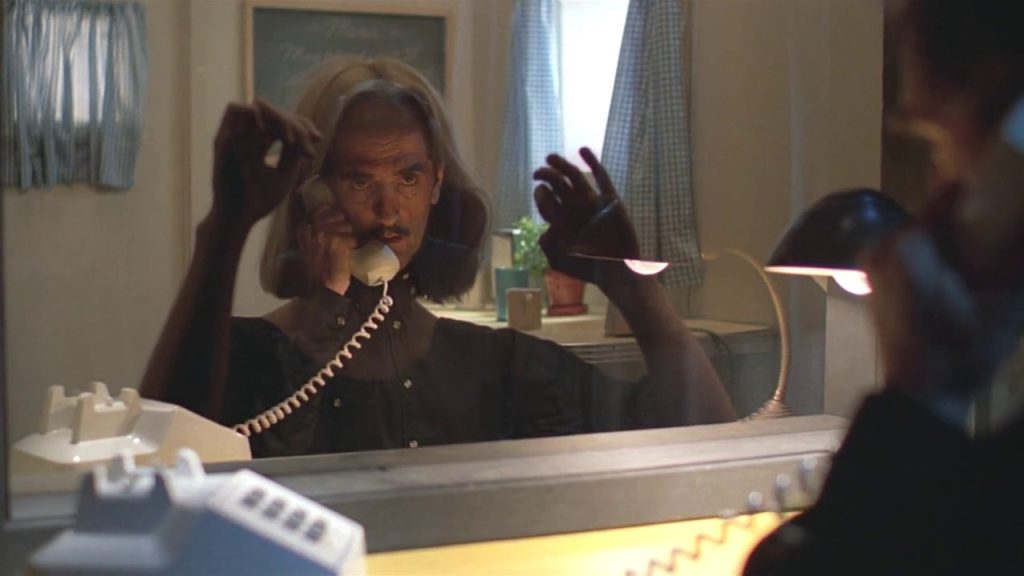
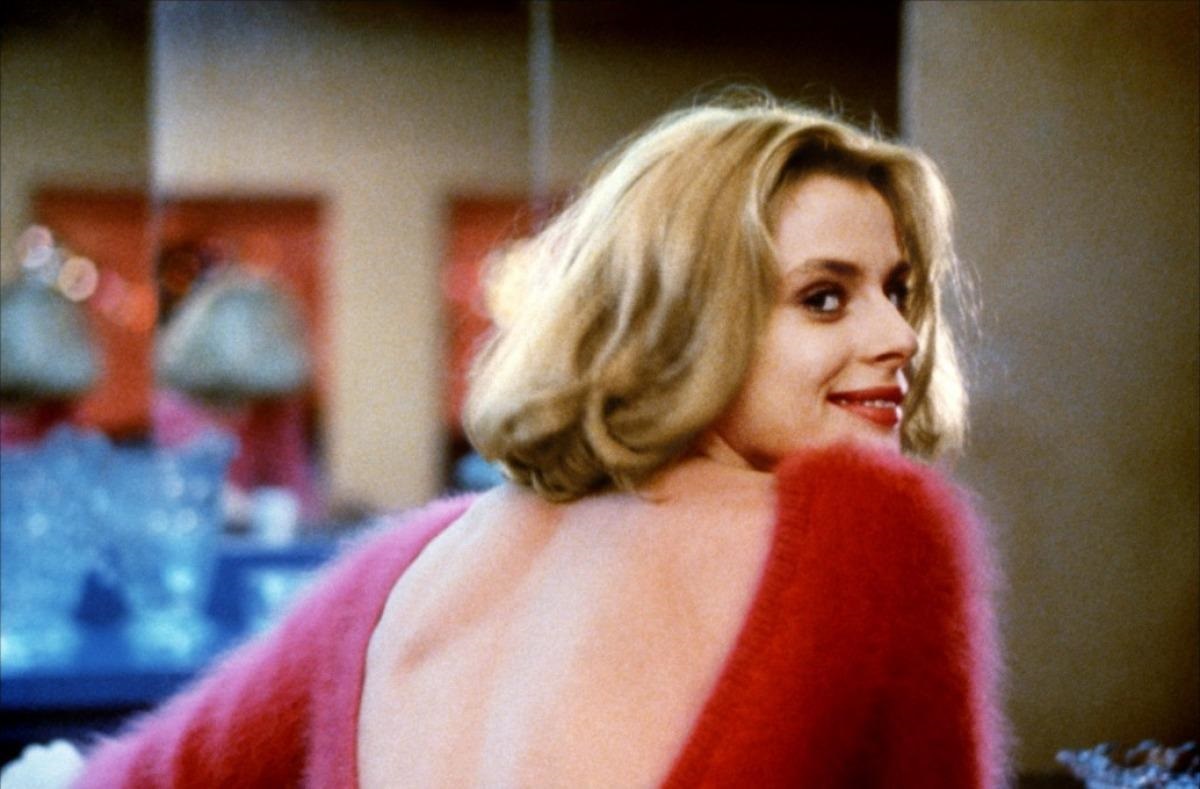
JOB DESCRIPTION: Here Nastassja Kinski goes from agony aunt to the hero's guilty inner voice. (Why is it that women everywhere have lousy taste in men?)
There, he plays a guy who has been literally lost for several years, his wife dumping their only son onto his brother’s doorstep and then disappearing herself. The lady in question is none other than the vivacious Nastassja Kinski.
The brother is likewise the dearly departed Dean Stockwell of Quantum Leap and Dune fame. He’s got an exotic wife himself, a lovingly maternal Frenchwoman played by Aurore Clément.
The brother reintroduces Stanton to his own son, and the man gradually heals and even begins to remember what happened to him. They become pals and head off in search of the missing bride.
She now works in something amounting to a brothel, where she answers fantasies and takes her clothes off behind a two-way mirror. He waltzes in like he owns the place – hint, hint – and pretends to be a regular customer.
Eventually, in the penultimate scene, he confesses. She didn’t want to have kids, and he tied her up, literally, and tried to sleep off her sobs and pleading. And then she set him on fire!
He escaped to Mexico to be in a ‘silent zone’, a place where he can’t understand what people are saying. (He still loves nameless places when he gets back).
Sadly, the ending isn’t one hundred per cent happy, since he reunites his ex-wife with their son but then hightails it out of there himself. He’s completed his mission in life, as he sees it, noting being fit to be a husband or father. (But he was doing so well!)
Personally, I would have left the boy with the decent family already taking care of him, his uncle and the man’s lovely, caring wife. (Aurore Clément was originally in Apocalypse Now, smoking a cigar in a deleted scene as a colonial temptress!)
No surprise, really, when you look at Harry Dean Stanton, in retrospect. Another overlap with Lucky is a place he constantly insults during his daily walk. Later, you learn he was kicked out of it for smoking.
And what’s the place? A park with angelic cherubs, named ‘Eden’. As for Paris, Texas, it’s called that because the hero bought some land there for his wife and kid, seeing it as his little slice of paradise.
Stanton was a cosmopolitan guy, learning from the ultra-German director Wim Wenders, who did Paris, Texas.
Why else would have an all-American movie called ‘Paris’, and have an excessively French actress in it? Let alone such an urbane, cultured, dazzlingly sexy and sophisticated woman as Nastassja Kinski.
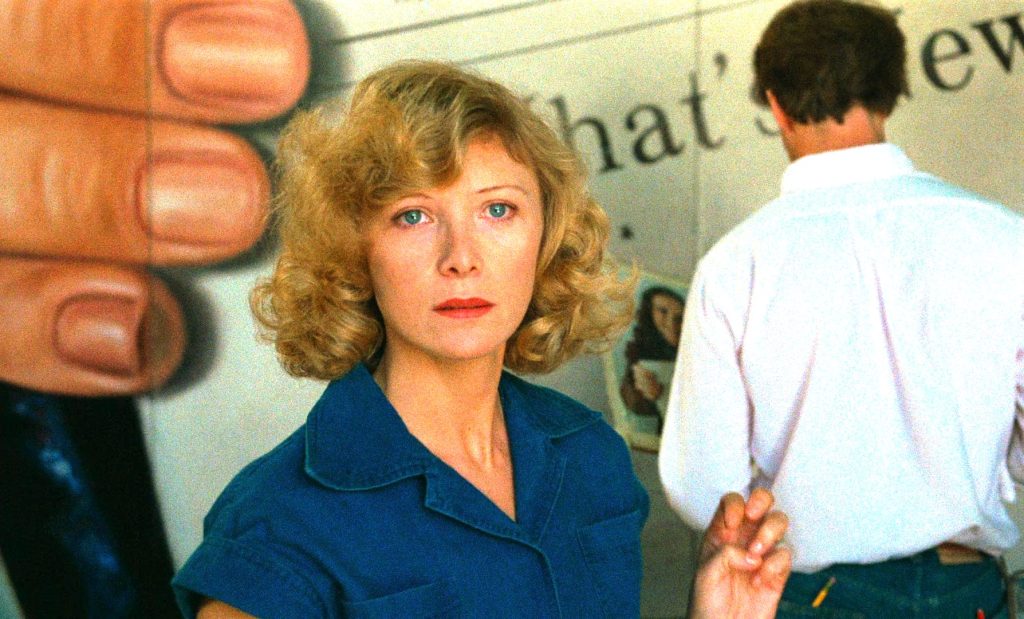
PRETTY AS A POSTCARD: Aurore Clément, from 'Apocalypse Now', plays both the dutiful and beautiful wife in Paris, Texas. A replacement mother like no other.
Man, is she breathtaking in this movie, and her transformation into a heavy-accented Texan is so convincing. She’s that good an actress, stealing the limelight from good old Harry Dean Stanton.
There are also cross-border themes in both movies. But Paris, Texas works better because of its European cinematography, which highlights American neon decadence and street insanity, and its restrained storytelling.
Lucky tells you a bit too much and has too many close-ups. It does take its time, but not nearly as much as in Paris, Texas and the other characters in Paris, Texas get more time to shine than in Lucky.
There are colourful characters, but they’re still sideshows to the main attraction, who isn’t terribly attractive. Where’s Wim Wenders when you need him?
That’s the ultimate surprise. He’s the ponce responsible for the sick sci-fi flick The Million Dollar Hotel (2000), a movie full of actors behaving like constipated ballet dancers!!