Today I thought I’d do something different and talk about something other than science fiction – may God and the fans forgive me. More specifically, a lovely Warren Beatty movie from the good old days, Heaven Can Wait (1978), and an equally surreal book by Egyptian author Muhammad Farag (شيء ما أصابه الخلل) – or ‘something is faulty here’.
By Emad Aysha
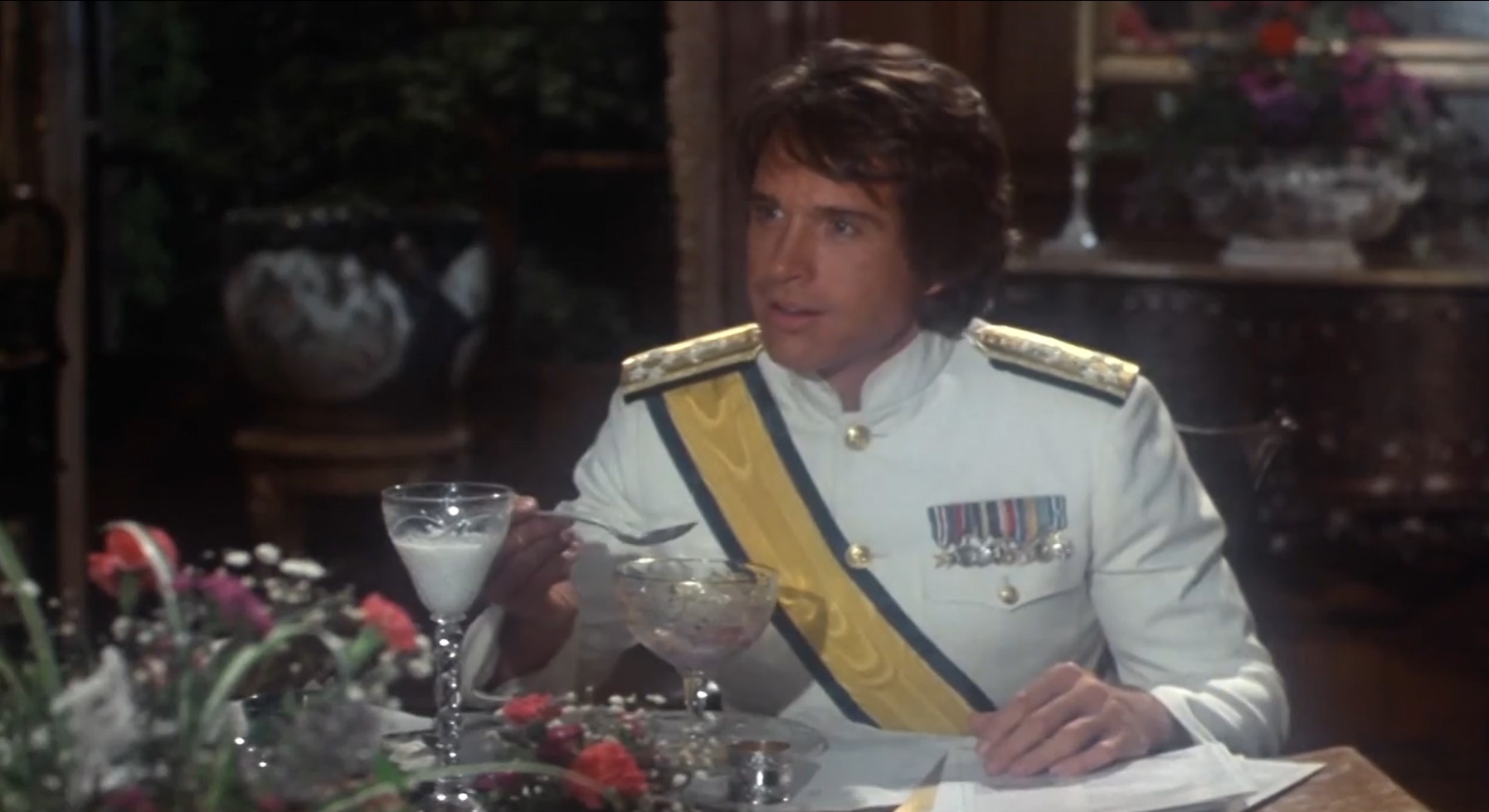
Beatty plays a lonely but persevering football player, Joe Pendleton, in this supernatural comedy classic, who nurses himself back to health from his wounds in the field and qualifies for the game of his life.
Only to meet a tragic death in a traffic accident. Turns out the angel who snatched his soul up, before he got bashed, had acted too hastily, and he was actually going to make it out of the crowded tunnel alive. (Light at the end of the tunnel, get it).
He’s given a second chance, albeit temporary, in the body of a ruthless businessman who was betrayed by his top executive and his own wife (they’re doing it together, as you can imagine).
In a key scene, he’s at a board of directors meeting, inviting people with lawsuits and complaints to sit in, and he uses some football logic to cancel all the bad, polluting, unsafe or inhumane projects the protestors are protesting about, despite the forgone profits.
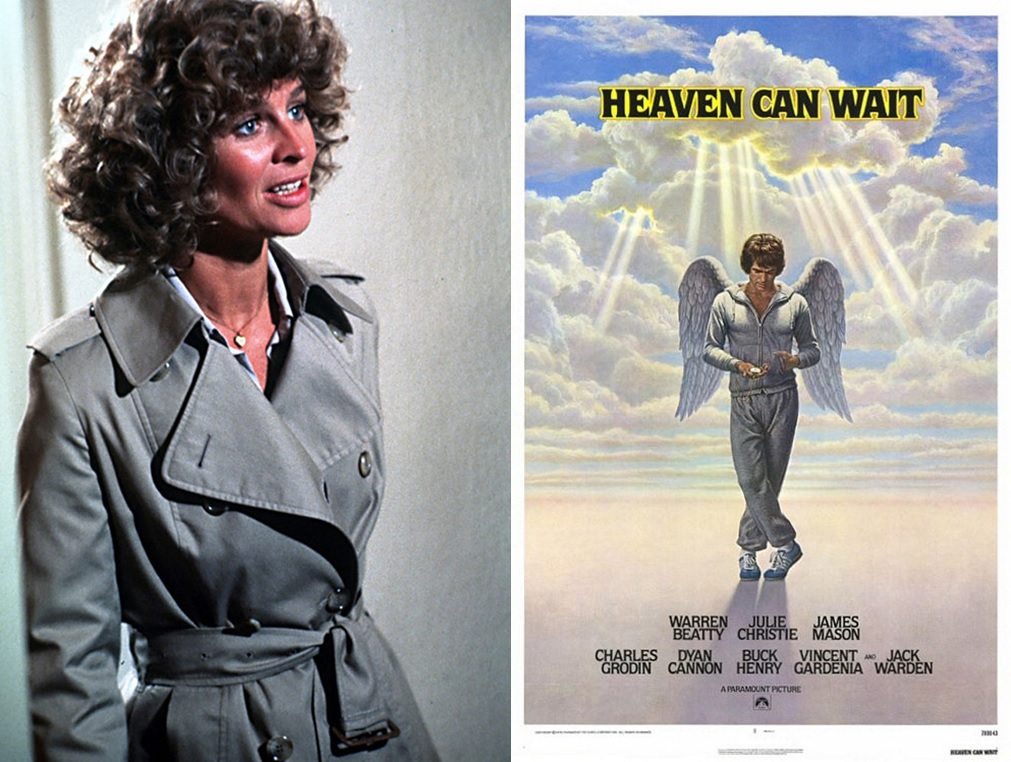
WINNING TEAM: Julie Christie is more than Warren Beatty's conscience in this movie. She's his (much) better British half.
One of the protestors, of course, is the enchanting Julie Christie, and she was the whole reason he’d agreed to take on the persona of the businessman. The need to help her was his final chance to make a difference, which is what he was complaining about in his former life as an unmarried football jock.
Then it began to dawn on me. The way the angels are portrayed: people in dark business suits, with a young, overenthusiastic employee who, it seems, is also overly concerned with pleasing his employers. Sure, he made an error of judgment, but it was well-intended, and everybody deserves a second chance.
That’s what the movie’s all about, America being given a second chance. If only the country would take heed from football. As senseless a game as it is, and fairly corrupt too (gambling, amphetamines, egotistical players, careerist coaches), it nonetheless embodies all the correct values and virtues.
Teamwork, competitive spirit, sacrifice, and even a measure of equality for black and white. (The scheming executive badmouths his boss as a racist to an African American player). Remember that the angel employee himself was given a second chance to make amends for what he did wrong.
Again, a malfunctioning corporation that can be set right in the end. Football also teaches humility and some benign fatalism in life. When Joe falls in love with Julie Christie’s character, taking her out and talking endlessly, he tells the angel bureau – headed by the wise old man, James Mason – that the deal is off. He wants this body so he can marry his sweetheart.
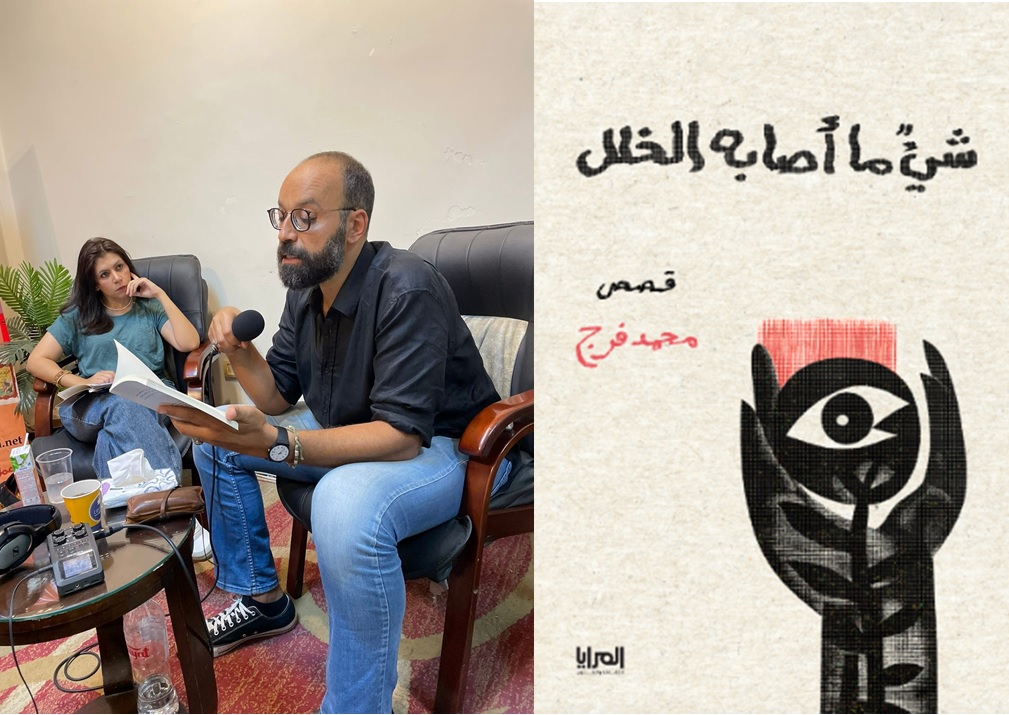
UNHINGED IN EGYPT: Interviewer Mona Abu Al-Nasr and author Muhammad Farag at the event, juxtaposed next to this surreal looking and 'feeling' book.[Photos of the event taken from the bookshop's Facebook page].
This connects to the Egyptian book, amazingly enough. Speaking at a literary event, the author explained at length about how we, in Egypt, have been pumped full of routine expectations about how we need to work hard at a steady job to get ahead in life, only to have those expectations dashed in the workplace because nobody wants to hire anybody for long-term job no matter how good you are at your job.
Then it comes time to ‘ease’ you out of your position, forcing you to go through the whole cycle all over again somewhere else. No wonder his book was such a success with the readers; I can certainly relate to it!
One of his stories is about someone whose nose got longer and longer, in the workplace, while the other employees turned into goats – at least in the eyes of the narrator. Another story was about the moon and how the narrator noticed somebody who looked curiously like him, also hanging out in the middle of the night to look at the full moon.
Typically, for me, I had to ask a difficult question, about genres, in this case, surrealism and why it can be preferable to good old-fashioned realism.
Quite a debate ensued afterwards, with both the author and the interviewer, and a member of the audience, when it went into overdrive, talking about surrealism, Kafka, and some Arab authors who dabbled in such techniques and scenarios.
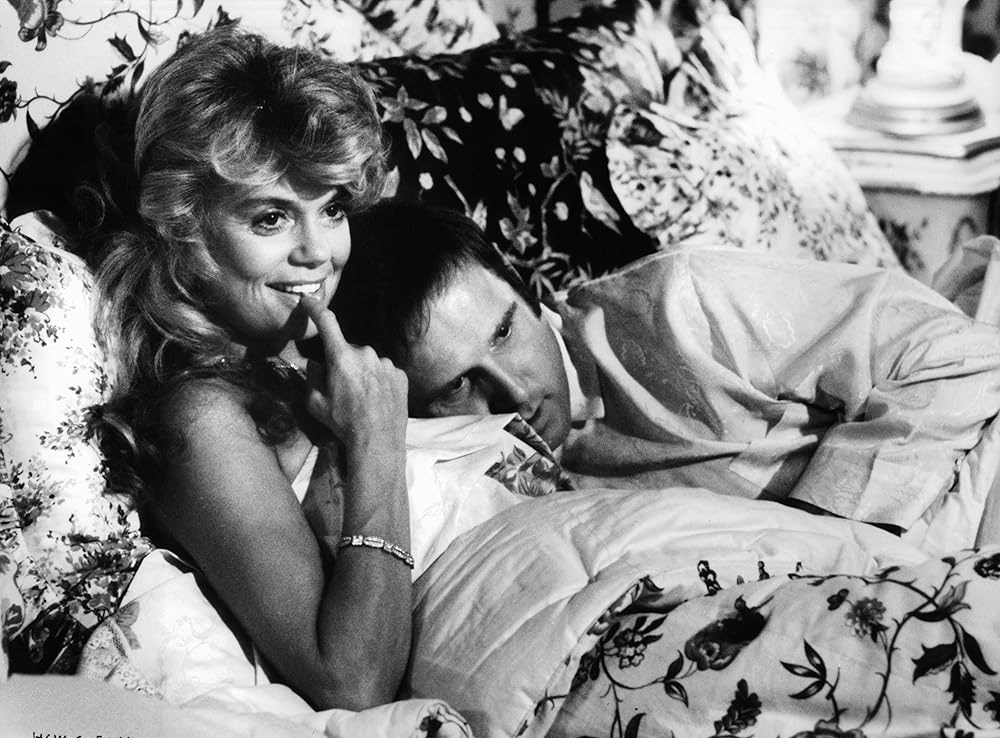
SLEEPER AGENTS: Dyan Cannon and Charles Grodin in 'Heaven Can Wait', the unmarried couple plotting against Warren Beatty - from the bedroom to the boardroom.
Afterwards, I had a chat with a friend I’d invited to the event about my own question, and the answer finally hit me, and in Arabic no less. Reality, the social reality we inhabit as people, is really two layers – an apparent surface (ظاهر) and an underlying or hidden reality (باطن).
The function of surrealism, its significant contribution, is to pierce that veil; to take the hidden and make it apparent. And often in shocking, grotesque or funny fashion. Hence, the goats and the man with the Pinocchio nose.
Realism, at least in our neck of the woods, tends to focus on the surface level of events instead of the motivations and governing dynamics behind those events.
The same goes for Heaven Can Wait, since family is clearly high on the story's priority list, too. In a hilarious scene, Joe barges into the bedroom of his scheming executive, and the businessman’s wife is there, only for Joe not to really care.
That’s what’s happened to the American family: once you treat it like an enterprise made up of greedy, self-serving people who endure each other but don’t honestly care about or trust each other.

PHOTO ANALYSIS: That's me in there with the T-shirt and black vest, dressed the way an Arab social scientist should.
Something that would never happen in a team. Hence, the scene early on when Joe is told about his ‘rival’, and he thinks it means the other team he’s playing against, not a team member who’d got his slot.
The English characters and references are allusions to the special relationship, too, and to old-world wisdom. What a tongue-in-cheek way to entertain and enlighten you.
No, delight and entertain you. SF authors take heed!