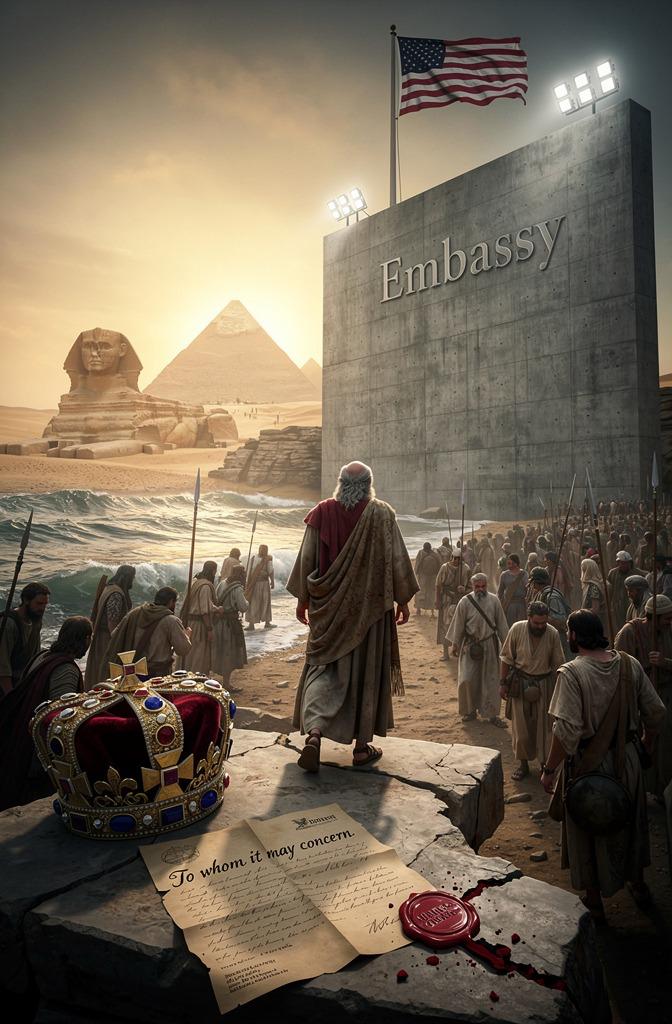
As I recently passed through my ‘barrio’ – to be pronounced in Spanish as ‘wario’ – the miscellaneous nature of the neighbourhood impressed itself upon me. Western-style compounds with steel fences, tall glass windows and towering concrete walls, intermingled with rotting wooden grates, overgrown pastures and worn shacks; wild cows and dogs traversing sandy streets. The experience of my stroll can only be described as ‘fragmentary’ – a dotage of scenes failing to coagulate into a coherent whole.
By Sid Lukkassen
I naturally thought of what we discussed in our letter exchange years ago, in my book Links en Rechts in Dialoog (Left and Right in Dialogue – 2020), which has caught renewed attention amid ongoing polarisation. There, we discussed the Danish philosopher Søren Kierkegaard (1813–1855) and his concept of “fragmentaric striving,” which we describe here as fragmented pursuit. For the passionate reader, there are two pieces where I touched upon the topic (1|2). Going through my neighbourhood, which seems like an amalgamation of various ‘slices of life’ rather than a systematic design thought up in the orderly mind of an architect, it has become apparent that it is time to resume our discourse.
Kierkegaard describes the fragmentary striving in Enten|Eller (Either|Or – 1843). This striving is conceived as a deliberate resistance to “the infinite coherence inherent in nature.” It is a style of speaking, an “interjection style in which the idea breaks forth without achieving a breakthrough”, that deliberately avoids coherence. In this manner, truth is not made knowable through language, but in a roundabout way through mannerisms: it becomes palpable at most “by chance” or “in the moment”.
Any conversation that results from this “interjection style” can hardly be called a conversation at all, in the sense that ‘conversation’ presupposes a shared engagement with an agreed-upon topic. Kierkegaard lets his character state that his rebellion against coherence cannot even be called a “rebellion” proper, because the language used to describe his goal is so vacuous and flowery that it, in the end, only carries a faint trace of what cannot be called “revolutionary”.
You might feel irritated because it is challenging to narrow down what we are talking about. Just so, my neighbourhood inspires me to reexamine the fragmented pursuit, as we discover what our letters are really about while we write them.
Fragmentary striving is about veiled allusions and ideas that constantly slumber beneath the surface of what is actually said. The ideas appear not as-themselves, but as something else, making it questionable if the conversation even has a core. A character that illustrates this perfectly is Jep Gambardella in La Grande Bellezza (2013). He once made a name for himself with a book and became part of an in-crowd world of media elites and celebrities, but at this point, nobody remembers what Jep's book was about. His actual merits and talents have become completely irrelevant to his current role as ‘spider in the network of appearances’.
The fragmented pursuit thus reveals itself in an unspoken subject that always hovers in the background, exerting its influence, but never penetrating to the forefront of the conversation. Things that silently find their place between “x” and “y,” floating in the ether, yet remain unspoken.
Silent Hill: James & Maria
What is interesting then – and what I wish to discuss with you – is the movie I watched recently in a movie theatre in Asunción: Return to Silent Hill, 2026 (which I reviewed here). Since the original Silent Hill 2, the movie is based on, dates from 2001, and the recent remake dates from 2024, the plot details are generally known. In short, the story revolves around James Sunderland, who receives a letter from his wife, Mary: an invitation to Silent Hill, where they experienced the most romantic moments of their relationship. The peculiarity of this situation, however, is that Mary is dead, and James knows this. He decides to go anyway...
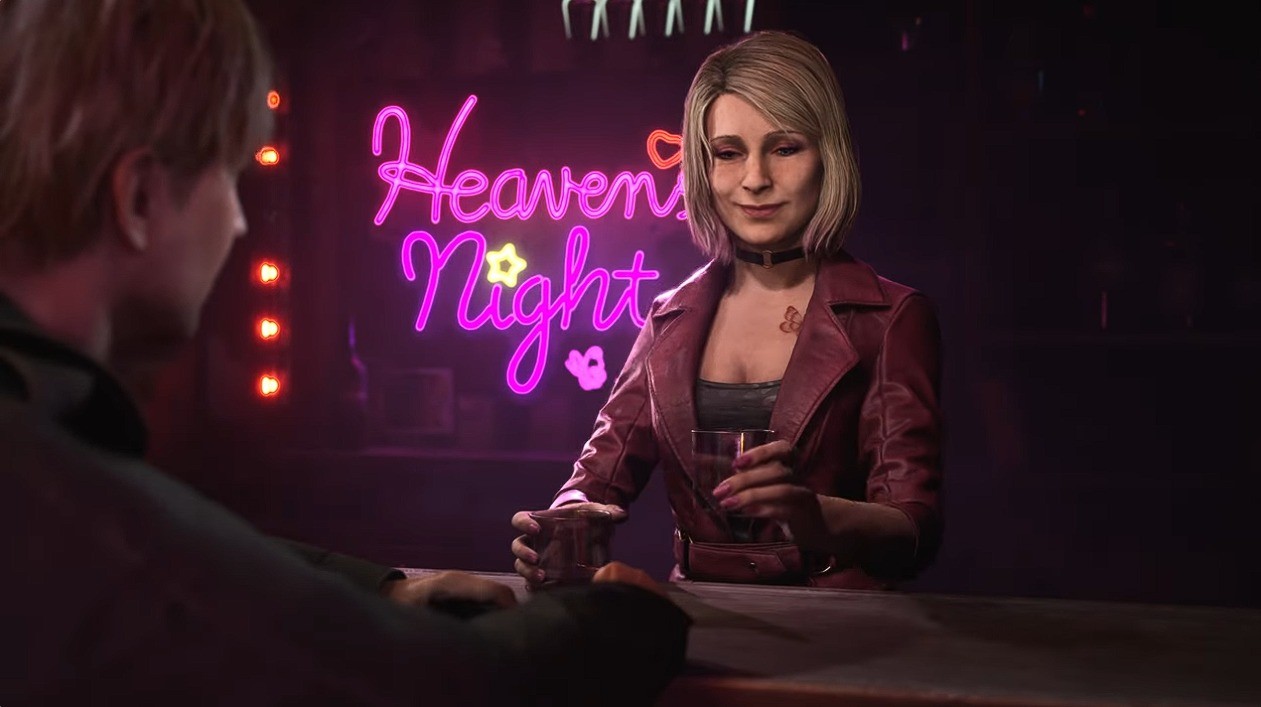
The town turns out to be infested with nightmarish horrors and monsters – James is not a trained combatant but resembles the ‘everyman’. He manages to fight off the monsters and survives, by a hair, to eventually reach the park. There, with heavy mist above sombre hedges and worn statues, he encounters a woman who introduces herself as Maria. She looks dressed to go clubbing – her outfit is uncannily sexy and mismatched with the perilous situation. James senses that something is off, and it is here that we – the players – decide how he responds.
I played this game as an adolescent, but as I grew older, the memories of it fermented in my mind. The atmosphere, the music, the characters and backgrounds... Fragments merged into a melancholic mixture of youthful bliss, dread and decay. As years passed, I often thought back on James’ quest to meet his deceased wife again, how he struggled against powerful monsters to find her, with Maria as his only companion – the only one to take his side. I reflected on the truly unique nature of the situation: the interaction with Maria had achieved the impossible.
Although they are hunted by adversaries with murderous intent and have only just met, Maria creates a moment of serenity for James. She is playful and seductive, where blind terror would be a perfectly human and expected reaction. A warm bubble envelops the two if the player allows it: James then temporarily forgets the extreme dangers of the situation, underscored by music that conveys a mixture of melancholy, suppressed horrors, and long-lost childhood happiness.
Could a romance blossom within a situation that is too perilous and too gruesome for anyone to think about anything other than survival? Yet through her mannerisms, so subtle, so extremely well performed by the actress Maria, James (and the player!) thinks it could be possible. Although it is only a video game – where you traverse gloomy corridors draped with rusted radiators and murky windows that leak the milky orange luminance of a sombre afternoon, somehow, the experience made you feel less alone.
Who is Maria, and what does she represent?
In Silent Hill lore, the Maria character is usually explained as a temptress specifically designed for James by the town's haunting powers. She exhibits traits he would have wanted to see in Mary – especially during her terminal phase when she was no longer able to answer to his desires. For this reason, James's leaving the town with Maria is traditionally considered one of the bad endings by Silent Hill theory crafters. It would prove that he is unable to transcend his desires and, therefore, unable to break the chain that ties him to repeating his past mistakes.
Existence is a phenomenon that meanders between two opposing poles: life and death. Sexual desires are connected to life: that primal force of bucolic flowers sprouting, of fertile animals dotting endless green hills... Spreading seed is the potential to birth new life. Sexual desire helps James to move past the loss of his wife; that he feels desire kindled within him for a new partner signifies something positive: the drive for life to survive even the most excruciating horror. For him to want to fall in love again proves that all the suffering he endured was ultimately not enough to break him. In the darkest depths the town throws up, James still believes he can find new love; the Maria ending proves that he is not only willing to fight for his own survival but also for a future where he can find love again.
The Maria ending shows, in other words, that the human belief that life should be fundamentally good and rewarding cannot be extinguished in James, despite the horror he endures. Despite what transpired between him and Mary, he has forgiven himself, as evidenced by his believing that he can still find happiness, in this case with Maria. It is a testimony to the indomitable power of the human spirit.
The attack on my position
From the traditional angle of Silent Hill theory, an attack on my position is likely – especially when referring to Kierkegaard as a source of ethics.
In Enten|Eller, Kierkegaard presents two existential modes of life. He opposes the aesthetic stage to the ethical stage. The aesthetic stage is connected to a pursuit of pleasure, immediacy, and novelty, characterised by avoidance of commitment, refusal of responsibility and living through moods and possibilities rather than ethical continuity from a sustained set of moral principles.
We could even say that, psychologically, aesthetic personalities are connected to fragmented and splintered selves: a person's promises can be heartfelt, but when the mood changes, it is almost as if another personality is in the cockpit. Those previous utterances will have no bearing on that person’s current choices and behaviour.
Aesthetic persons are thrill-seekers and are always on the run for themselves – the gameplay of Silent Hill 2 represents this by jumping down holes into deeper and deeper abysses. By analogy: fleeing to deeper and deeper distractions to avoid existential despair. The ethical character, by contrast, is typified by commitment, responsibility, repentance and transparency.
In the aesthetic interpretation, Maria embodies the immediacy and ‘sexual idealisation’ of a woman who is less morally demanding than Mary was. James's escape from Silent Hill with Maria would – in the traditional reading of events – prove that he surrenders to emotional anaesthesia.
In a way, the Maria ending would prove that James has not truly processed and transcended his guilt: the truth of the situation is too much for him to bear. He therefore latches onto Maria, who is flirtatious and validates him, without the patient suffering and the commitment to the fidelity that Mary’s terminal fate demanded of him. James would choose mood over duty, fantasy over truth, and desire over repentance. This would basically make him the aesthetic personality as defined by Kierkegaard.
One could point out that Maria has a slight cough in the final scene: this would signify that James is doomed to repeat his past mistakes, starting something with a woman who is bound to fall ill, thereby perpetuating the cycle of suffering. But we should keep in mind that Maria was killed and resurrected during the playthrough. For her to have a few hiccups after being cleaved in half and sewn back together, really isn’t all that strange.
The strike back against the attacker
To summarise the attack against my rehabilitation of the Maria ending: instead of undergoing an inward transformation, James chooses regression – a relapse into Kierkegaard’s aesthetic stage.
Although it could be said that James and Maria choosing each other is a choice for illusion, distraction, and infatuation, rather than for a genuine love grounded in ethical self-awareness, it is nevertheless a choice for life above death, for romance above horror, for a flicker of light in an otherwise desolate, dilapidated landscape.
The distinction Kierkegaard draws between the aesthetic and the ethical relationship may fade in the following analysis. If you admit to yourself that a specific relationship might not be the ultimate convergent relationship, but that it is the relationship that you need right now – to sustain you with life force to make it past a specific segment of your life that is particularly challenging – then is that choice not already ethical, in the sense that it presuposes facing yourself, your true state and your true needs?
It’s like playing a black card like Phyrexian Arena in the card game Magic: The Gathering. You draw more cards to sustain your game plan, but you will do so at the expense of paying life force. It’s a devil’s bargain – trading life points for card advantage. But in some circumstances, if you know what you are doing, it is just the choice one must make. It could be argued that James needs to temporarily transcend ethics to become a more ethical person in the long run.
Opponents of my thesis might state that Maria is Mary, but then stripped of decay and moral responsibility, making her a ‘purified’ aesthetic stimulus for James. On closer inspection, that does not hold up. The requirements needed to avoid the Maria ending – ignoring her, walking long distances away from her so she is by herself in the dangerous town, not checking up on her when she lies down exhausted on a hospital bed – are not particularly ethical. The behaviours required to avoid the Maria ending require players to forego their natural human impulses to protect, help, and care, thereby estranging them from their humanity.
My approach to the situation aligns with Aristotle’s ethics and opposes Kant’s ethics. In Kant’s ethics, actions are ethical if they correspond with abstract principles that forego personal preferences – and the more abstract, the more ethical, because rational decisions rather than natural impulses guide the actions. But Aristotle argues that man is deeply connected to nature, and that nature usually knows what is good for us. Only a god can transcend nature, in his analysis. Acting like we are gods is hubris.
This means that if helping and protecting Maria is my natural response to the dire situation, then this behaviour is not only virtuous but also natural. If my virtue gets rewarded by her affection and a romantic affair, we will decide to accept that as an additional benefit. We are still earthly beings, after all, and no set of ethics can forego the rootedness in natural feelings for too long, or the system of ethics will collapse. This we have seen with Communism, Puritanism, and other systems that have tried to move humans into a moral sphere of what they fundamentally are not.
The traditional interpretation of the Maria ending – saying it only reflects wilful non-confrontation with personal sins – also entirely ignores the first part of Kierkegaard’s Enten|Eller. Because that part is about celebrating Don Juan as a bristling, bucolic force of libido.
The moralistic interpretation jumps straight to guilt, repentance, and the ethical. It ignores the first part of the book, in which Kierkegaard does not condemn Don Juan but rather admires him as a non-reflective force of immediate sensuality, intensely alive. And if Maria is the anchor that James needs to have more life force – to feel more alive and to thus not succumb to the forces of death – then that end totally justifies the means. Maria gives James the knowledge that he still has something to live for, that he can start over, that life still offers chances and a new beginning.
Conclusion: Life above Death
When all is said and done – the Maria ending does mean that James has confronted Pyramid Head as the executioner of his personal failures; he has seen Maria die and be resurrected; he has confronted Mary’s death: he saw that he was in fact the one to suffocate her when she was in the final phase of her terminal illness, and thus end her suffering and free himself.
The point Kierkegaard makes about Don Juan is that sensual immediacy can sustain the life force, but not the formation of a truly ethical self. At the end of Silent Hill 2, James has glimpsed into the truth of all that. He has seen past the seduction, the sensuality and the illusion. By choosing Maria, he chooses to live in opposition to the moral exclusivity that Kierkegaard’s ethical and non-ethical duality forces upon him.
If you appreciate this article: Support Sid through BackMe – many thanks!