Time, in the theatre of war, is traditionally elastic. It stretches through months of tense standoffs, contracts during rapid offensives, and pauses for fragile ceasefires. Historically, escalation has functioned as a ladder, a series of reciprocal, predictable steps designed to allow an adversary to back down.
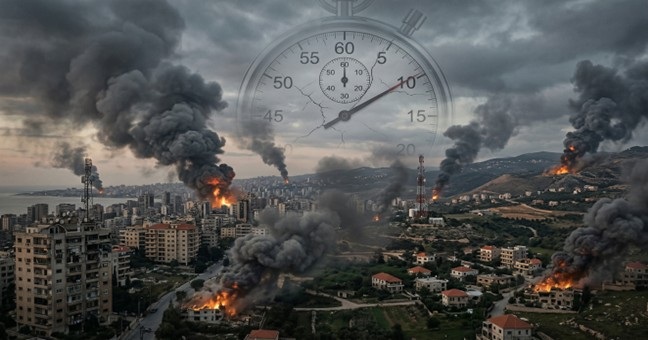
On April 8, 2026, that ladder was bypassed entirely. The launch of over 100 missiles into Lebanon within a compressed ten-minute window represented a fundamental shift in the grammar of modern conflict. It was a transition from a war of attrition to a war of erasure. As the broader Middle East looked toward a tentative US-brokered de-escalation with Iran, the skies over Beirut, the South, and the Bekaa Valley lit up.
The Israeli military apparatus executed an operation dubbed "Operation Eternal Darkness" that wasn't merely about destroying physical targets; it was a masterclass in temporal dominance. By delivering a week's worth of destruction in 600 seconds, the objective was clear: to paralyse the human mind, the medical infrastructure, and the political establishment before the dust from the first strike had even settled.
But when the traditional timeline of war is obliterated, and absolute ruin is delivered in mere minutes, how does a nation survive the immediate aftermath, and what does this terrifying new blueprint mean for the future of global conflict?
The military doctrine of cognitive overload
To understand the Black Wednesday blitz, one must look beyond the sheer tonnage of explosives and analyse the attack's algorithm. Military strategists often discuss the "OODA loop" (Observe, Orient, Decide, Act), the cognitive cycle required to react to an opponent. The "100 in 10" event was engineered specifically to break this loop.
The societal rupture: The death of the golden hour
If the military objective was cognitive degradation, the civilian reality was absolute systemic collapse. The true horror of the 600-second war lies in its aftermath, effectively destroying the foundational premise of modern emergency response.
The geopolitical irony: The compartmentalised war
Perhaps the most chilling aspect of the April 8 escalation was its broader geopolitical backdrop. The strikes occurred within hours of diplomatic breakthroughs regarding the wider regional conflict. This stark contrast exposes a terrifying evolution in international statecraft: the era of the "Compartmentalised War."
The Lebanese theatre was violently decoupled from the broader regional détente. This sent an unequivocal message to the international community: global powers can negotiate grand bargains and secure shipping lanes while simultaneously green-lighting localised devastation.
Lebanon was effectively designated as the sacrificial pressure valve for the Middle East. It proved that regional de-escalation does not necessarily mean peace; rather, it can mean concentrating violence within a smaller, legally ambiguous zone. Lebanon was not treated as a sovereign participant in the geopolitical chessboard; it was treated as the board itself, a space where foreign powers could violently settle their accounts without crossing the threshold of a multi-front regional war.
The echo of the ten minutes
The geopolitical dust of April 8, 2026, will take years to settle. As rescue workers continue to unearth the remains of those trapped under the concrete, the international community must grapple with the precedent that has been set.
This 600-second window marks the definitive end of "limited war" in the Levant. It serves as a grim blueprint for the future of conflict, where advanced technology and algorithmic targeting condense massive, society-altering destruction into the time it takes to drink a cup of coffee.