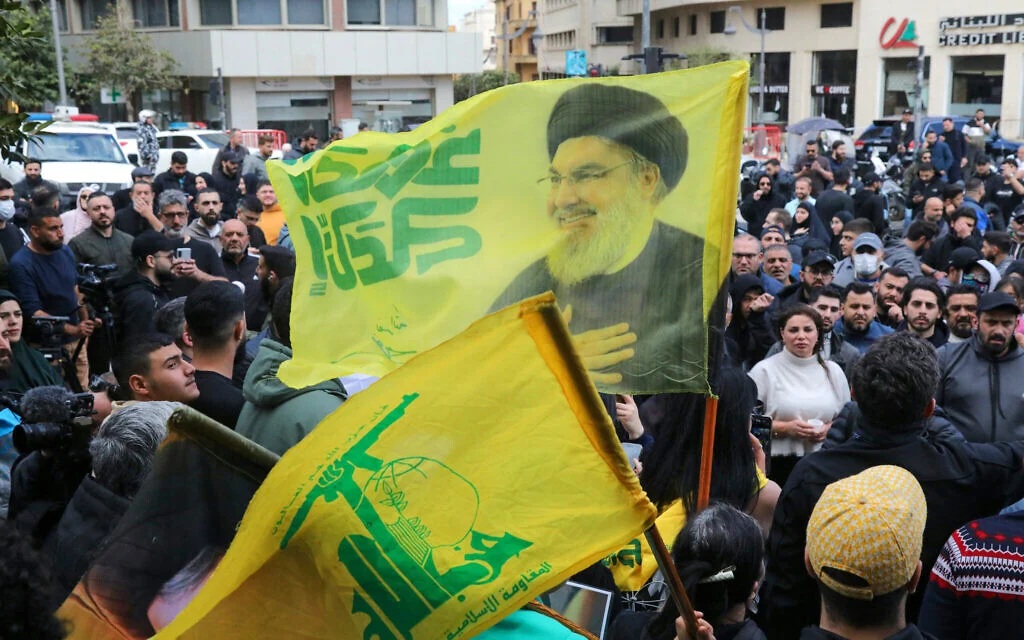
Amid escalating tensions in Lebanon this weekend, diplomatic efforts are ongoing to force an opening for de-escalation and a ceasefire between Lebanon (Hezbollah) and Israel. The initiative, led by Lebanese President Joseph Aoun, who launched a series of intensive international contacts, aims to contain the escalation and initiate direct negotiations between Lebanon and Israel next week. The first such direct negotiations between the two nations in over 40 years. Hezbollah denounced the efforts, threatening civil strife.
The United States tasked its State Department earlier this week with mediating between the two warring nations, underscoring the seriousness of international efforts to broker a ceasefire and potentially catalyse a broader peace process in the region.
The first telephone call between the two sides was held through their ambassadors in Washington today, with the American ambassador to Lebanon participating. Both sides agreed to meet next Tuesday at the US State Department to discuss mechanisms for a ceasefire and to initiate a negotiating track that could serve as an entry point to a broader solution and possibly lasting peace.
Meanwhile, Lebanese and international attention is focused on Washington as the process unfolds, emphasising the importance of regional and international roles in supporting Lebanon during this critical juncture.
At this critical moment, Lebanon cannot be left alone; fostering internal unity and Arab backing is essential to strengthen its negotiating position and protect its national interests. For example, from the Arab Gulf states.
The dilemma of war and peace in Lebanon is inseparable from the absence of a unified sovereign decision, as the state’s decision is shaped by the influence of de facto powers, foremost among them Hezbollah, the most prominent Iranian proxy in the region.
This places Lebanon before a complex equation in which the logic of military resolution sought by Israel intersects with the logic of manoeuvring and wasting time that is managed regionally.
Despite the fragility of the internal situation, Lebanon still possesses key strengths, foremost among them international legitimacy and UN resolutions, particularly Security Council Resolution 1701 (2006). The Lebanese army plays a pivotal role as a guarantor of stability and Lebanon’s geopolitical position, necessitating its presence in any regional settlement.
UN Resolution 1701 (August 11, 2006) was adopted to end the hostilities after Hezbollah provoked a 34-day war with Israel in the summer of 2006. The resolution called for a complete cessation of hostilities and the establishment of a demilitarised zone between the Blue Line (the de facto boundary between Lebanon and Israel) and the Litani River, allowing only the LAF and UNIFIL to possess weapons and take over.
These strengths remain constrained by internal divisions and the duality of security decision-making. It is evident that this ongoing conflict can not and will not be resolved militarily by any side, nor will it be resolved by the threat of civil strife.
It can only be resolved with a settlement imposed by the balance of power, based on an internationally sponsored ceasefire and new security understandings that redefine the rules of engagement. While at the heart of any such settlement is an attempt to restore the state's role. Any so-called ‘victory’ will merely be a repositioning within an open-ended conflict that has yet to be resolved.
Lebanon’s benefit from any potential agreement between the United States and Iran remains limited unless these understandings translate into tangible stability in the arenas linked to Tehran, foremost among them the Lebanese arena.
Lebanon, unfortunately, has emerged in recent decades as an arena for the repercussions of conflicts, rather than a partner in shaping its decisions. Lebanon cannot be an effective party in any serious negotiations unless the principle of the state’s monopoly on the use of force is enshrined, because the absence of this condition weakens its negotiating position and undermines its credibility before the international community.
The implementation of international resolutions, especially Resolution 1701, is vital for restoring sovereignty and should be seen as a necessary step toward tangible progress in Lebanon's stability.
Tarek Abou Zeinab is a Lebanese political analyst, researcher, and media personality, frequently featured in Arab and international news outlets discussing Middle Eastern affairs, terrorism, and regional security. He specialises in Security & Counter-Terrorism matters. This is his first contribution to The Liberum (translated from Arabic).