Long before the opening whistle, the World Cup begins. In overflowing airports, in cafés testing television screens three days before kickoff, as if governments themselves depended on signal quality. It begins in WhatsApp groups, crowded barber shops, supermarkets suddenly selling impossible quantities of beer, and fathers explaining old matches to children who were not even born when those games were played.
By Nadia Ahmad
For one month, the planet reorganises itself around flags. And every four years, the same strange phenomenon returns: the modern world suddenly starts behaving like the twentieth century again.
We were told globalisation would soften borders and weaken national identity. Technology, markets, migration, and digital culture were supposed to create a more uniform humanity. The future belonged to networks, corporations, and individuals — not nations. Then, the World Cup arrives, and billions of people instantly rediscover tribe, memory, anthem, and flag.
In Buenos Aires, office productivity quietly collapses during major matches, chairs shaking in overcrowded bars where plastic tables carry more emotion than stability. In Lagos, crowded streets flicker with neon light and the noise of generators as entire neighbourhoods refuse to lose signal during blackouts.
At the same time, in Casablanca, cafés turn into open-air parliaments where every pass is argued like a constitutional decision. In Seoul, football is watched silently on glowing phones inside subways and under office desks, as if emotion itself must remain discreet.
While in Marseille, Algerian and French flags sometimes hang from the same balcony during tournaments. In Istanbul, football arguments continue until sunrise with the seriousness of parliamentary debate.
In Munich, the transformation is almost ritualistic. A quiet beer hall near the city centre fills hours before kickoff, the smell of spilt beer and old wood mixing with the sound of tram bells outside in the rain. Older men in Bayern Munich scarves sit beside students who still carry the emotional memory of 2014 as if it happened yesterday. Someone orders another round without looking at the price. The television above the bar switches to the national team feed, and the entire room shifts posture at once — as if an invisible signal has told them that ordinary life is suspended.
Football does not erase history. It activates it. That is why the World Cup survives as something more than entertainment. It is one of the last global rituals in which collective emotion still manifests in national form. For ninety minutes, modern societies revert to older emotional architectures: belonging, rivalry, pride, and symbolic territory.
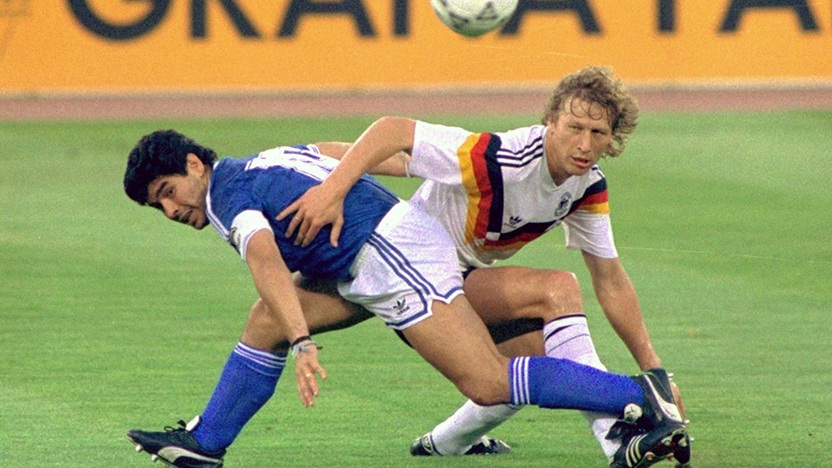
Even Europe, which spent decades trying to move beyond nationalism, cannot fully escape this gravitational pull. England still defines itself against Germany. Balkan matches still carry unresolved historical weight. France turns every victory into a debate about identity, immigration, and belonging. No demographic report explains Europe more honestly than football does.
But the World Cup is no longer centred solely on Europe and South America. In Lagos, matches are not just watched — they are survived. Electricity becomes a strategic variable. In Casablanca, cafés function like emotional parliamentary chambers where every passing is debated collectively. In Buenos Aires, entire streets collapse into spontaneous celebration after goals, strangers hugging as if they had shared the same biography. In Seoul, the silence inside trains is briefly broken when a goal notification lights up hundreds of screens at once.
Africa experiences football as recognition. Latin America experiences it as destiny. Asia often experiences it as disciplined intensity. The Arab world increasingly experiences it as visibility — a way of entering global attention without translation. Each continent does not just watch the World Cup; it interprets it differently.
The United States approaches it differently again. America tends to absorb global events and transform them into large-scale entertainment systems — sponsorship layers, celebrity culture, broadcast engineering, and algorithmic spectacle. The 2026 World Cup will likely further intensify this logic, turning football into a planetary media machine.
China remains the great paradox: immense economic power, but limited football mythology. Infrastructure can be built, leagues can be funded, sponsorships can be acquired — but emotional memory cannot be manufactured at scale. Football requires time, disappointment, inherited stories, and generational attachment.
Russia’s partial absence from global football adds another dimension: modern power is not only military or economic, but also symbolic participation in global rituals. Being outside the World Cup means being outside one of the planet’s last shared emotional stages.
The tournament therefore reveals something deeper than sport. It reveals the persistence of nations in a world that claims to be moving beyond them.
In almost every other context, nationalism is treated carefully, sometimes suspiciously, in modern liberal societies. But during the World Cup, the same societies encourage millions of people to paint flags on their faces, sing anthems loudly, and emotionally divide humanity into “us” and “them” without hesitation. The contradiction is not accidental – it is structural.
A hyper-modern digital civilisation still depends on pre-modern emotional forms to express collective identity. That is why the World Cup still looks like the twentieth century. The technology changed. The cameras changed. The platforms changed. The human emotional architecture did not.
Underneath globalisation, the old world is still there. The flags were waiting for permission to return. And when the final whistle eventually comes, the illusion of permanence disappears as quickly as it arrived. Stadiums empty. Airports quiet down. Jerseys return to closets. The cafés go back to normal programming. The world remembers its routines. But something small, almost invisible, remains behind.
A shared memory between strangers who will never meet again, yet who screamed at the same moment, for the same goal, under the same flag, believing for ninety minutes that history itself could be suspended. And perhaps that is the real secret of the World Cup: it does not create nations.
It reminds them they never really disappeared.