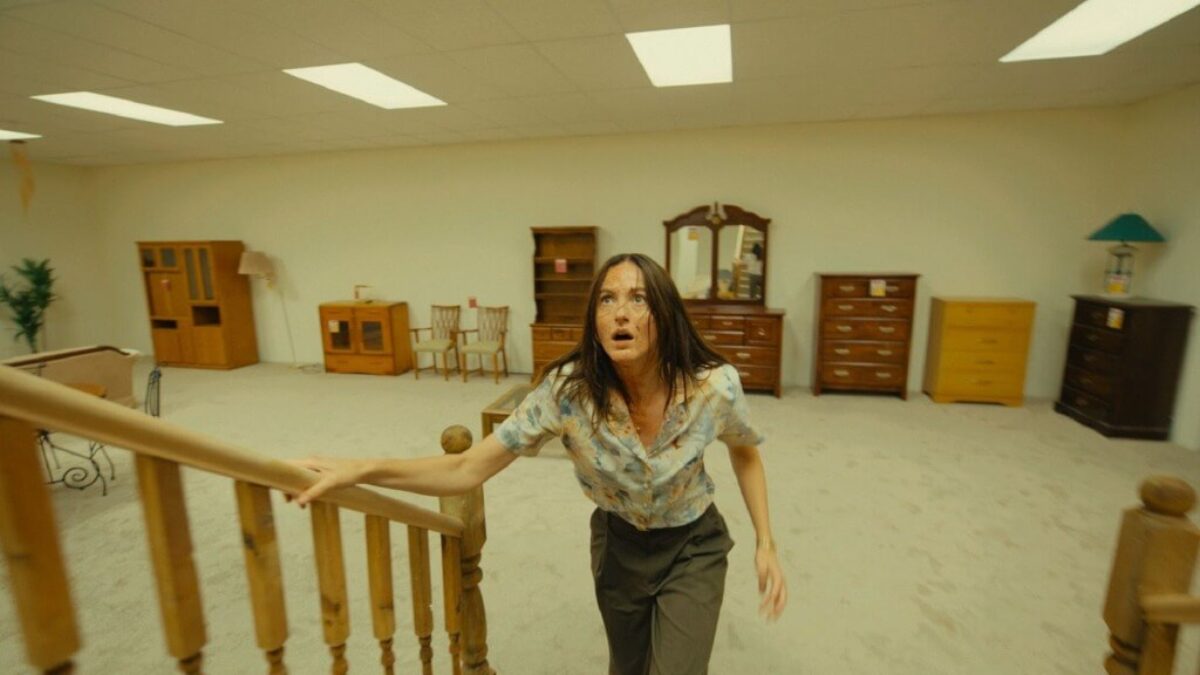
Backrooms (2026), I had to watch only to see what all the fuss is about. For what it’s worth, it’s quite a good movie, but do the many fans completely understand it? The key here is, of course, furniture. Bland, tasteless post-modern future that comes from nowhere and so fits everywhere. Not that the story tells you it’s 1990, along with the existence of cassettes and VCRs and absence of mobile phones. That was the beginning of the Ikea craze, along with DIY, pushing out the old world of authentic and antique furniture made by craftsmen that left a cultural signature.
By Emad Aysha
Ikea is also an emblem of ruthless globalisation. I know that for a fact, having attended a seminar lecture on it when I was at university in England in the 1990s. The company uses cheap labour from abroad to keep its prices low, and so unemployed unionised labour at home.
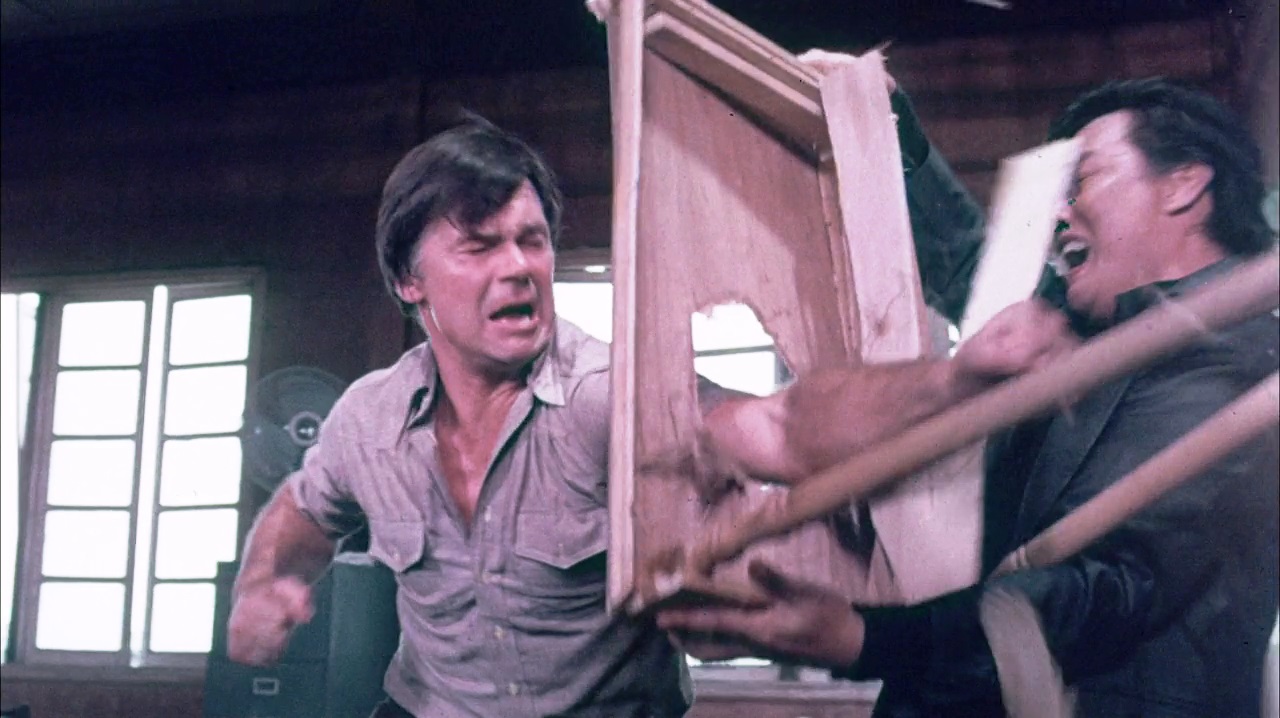
Note that the moody, insolent divorcee Clark (Chiwetel Ejiofor) owns a furniture store that describes itself as the ‘Ottoman’ empire. He dresses up as a pirate for an infomercial and, in a key scene, sits on an antique chair which cracks under his weight.
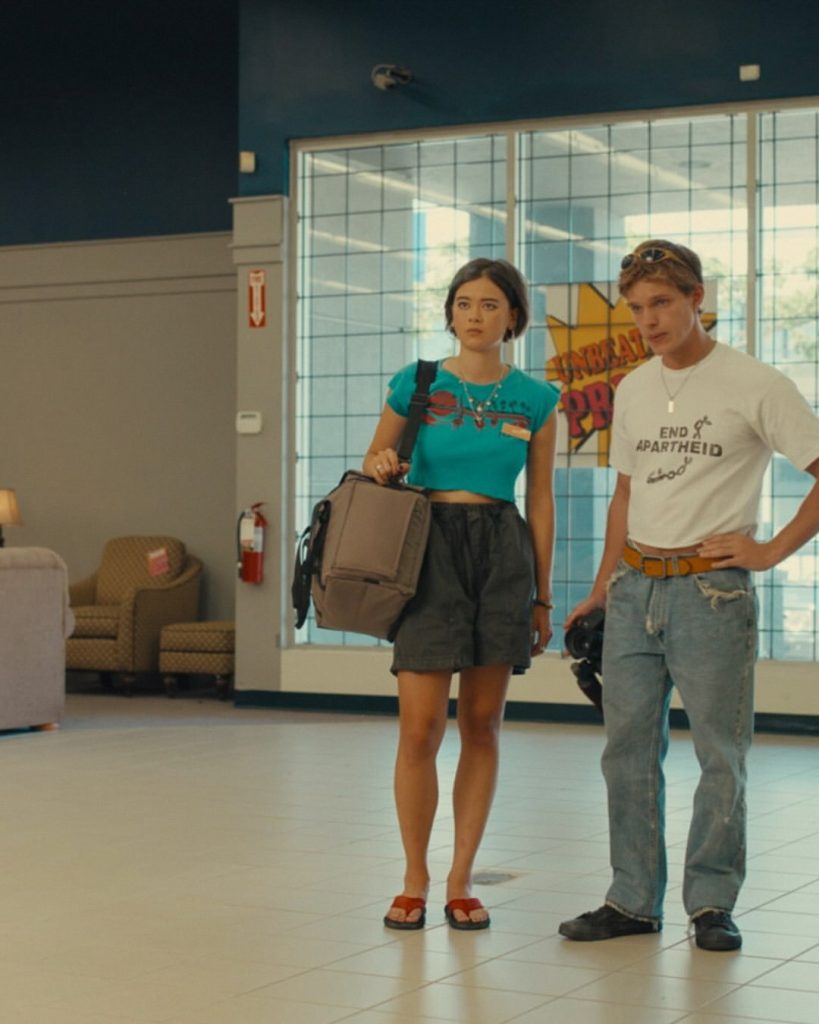
CAST CAN DO: Kat (Lukita Maxwell) and Bobby (Finn Bennett), a 1990s duo and Clark's two ill-fated assistants.
There are lots of other little indicators of internationalism, such as the recording Clark hears when he makes his way into the backrooms. You have endless different languages on display, along with a celebration by children of the planet Earth.
There’s even a protest shirt with ‘apartheid’ on it. Same goes for the cast. Clark’s personal therapist Mary (Renate Reinsve) has a transparent Swedish accent.
She also lives in a place that looks like an Ikea catalogue. It’s tasteful and stylish, but she clearly isn’t happy there. She's as lonely as Clark is, who actually lives in his giant store, Captain Clark’s.
Mary is also haunted by memories of her own housebound childhood, thanks to her mad mom who tried to make her afraid of going outside before the woman got locked up.
She clings too much to her own past, in part because where she grew up is demolished to make way for some high-rise building project. She saves a tiny portion of that old life of hers, an impression of her hand in the wet concrete when she was a kid.
Even Clark’s assistants have an international demeanour. The guy, Bobby (Finn Bennett), is blond as they come, but his girlfriend Kat (Lukita Maxwell) is half Indonesian. Clark himself is black, and his wife was white.
Chiwetel Ejiofor, always a cool actor, really outdoes himself here. Especially in that early scene where he’s having a session with Mary, replaying his fight with his wife that got him divorced and lost him his home.
He’s a Brit, after all. Which brings me back to the 28 Days Later franchise and how Americans fouled it up. I’ve been avoiding the task of reviewing 28 Years Later: The Bone Temple (2026), mostly because I didn’t like it.
It’s deliciously gory and has some good performances in it, but it’s no longer a proper British movie, being Americanised with cults and zombie apocalypse-type iconography.
Spike (Alfie Williams) has joined with Jimmy (Jack O’Connell) and his bleached-blond goons, but he has to prove himself in a fight to the death. Not what you had before and so clichéd it hurt. In the meantime, Jimmy inexplicably goes around terrorising the remaining survivors.
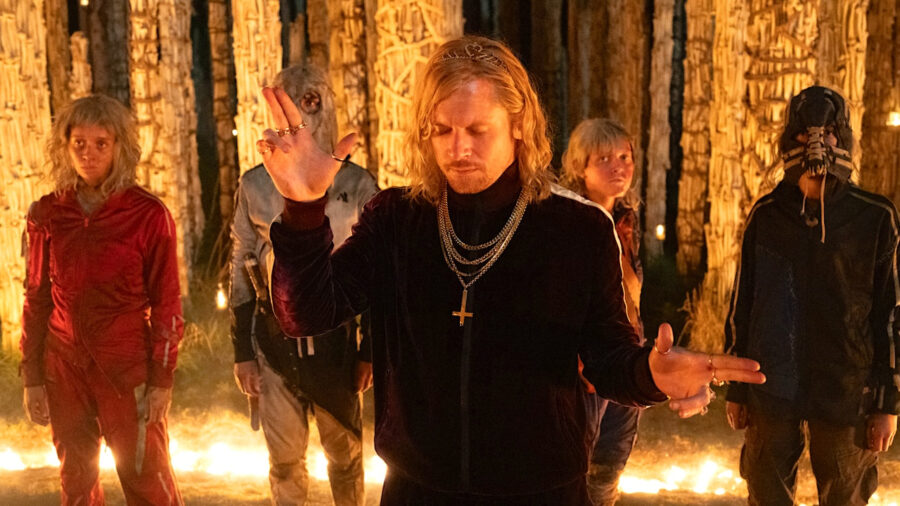
CHORALE OF EVIL: A screenshot from '28 Years Later: The Bone Temple' with Jack O’Connell as the cult leader he shouldn't be.
The survivors themselves are prats and couldn’t possibly live the way they do, with pathetic fences that somehow keep out the hungry, mindless hordes. This is bad world-building and plotting, and the two supercool characters are Jimmy (who plays the bad guy in Sinners) and Dr Kelson (Ralph Fiennes).
Dr Kelson finds a way to cure the alpha Samson (Chi Lewis-Parry) of the Rage virus. The sedatives he uses on him allow Samson to think, remember and even speak.
That’s nice, but it doesn’t really go anywhere, and in the process those two main characters get killed in the end.
Spike doesn’t grow here and doesn’t get much to do. The fingers are well chosen and acted, to be fair, particularly Jimmy Ink (Erin Kellyman). She helps him in the end, and they get rid of Jimmy once and for all, realising he’s not actually in contact with the devil.
It’s like they were clearing the path for the studios to introduce new, or old, characters. Cillian Murphy does show up in the end.
There’s something to be said for the cottage industry approach to British horror cinema, with the Indie production Backrooms being an example: the director, Kane Parsons, while an American, is a YouTuber.
Hence the casting of Chiwetel Ejiofor and Renate Reinsve. Clark actually hates his crummy job, which he’s overcommitted to, and dreams of pursuing his degree as an architect.
Mary does get rescued by the end, by some corporation researching these bizarre interconnecting backrooms that are apparently popping up everywhere now. Everybody is paradoxically being pulled into the same loop of loneliness, creating their own worlds inside this larger interconnecting world.
That’s why the pirate captain mascot is the haunting monster in this story, along with the no credit sign. That’s also why when Mary gets trapped in this mental vortex you see playgrounds and what look like council estates – twisted replicas of what she endured as a kid.
Nothing’s permanent in the world of private self-interest. Why her home was eventually knocked down, with her mom probably going mad because she was clinging too much to their home, it might not be much, but it’s theirs.
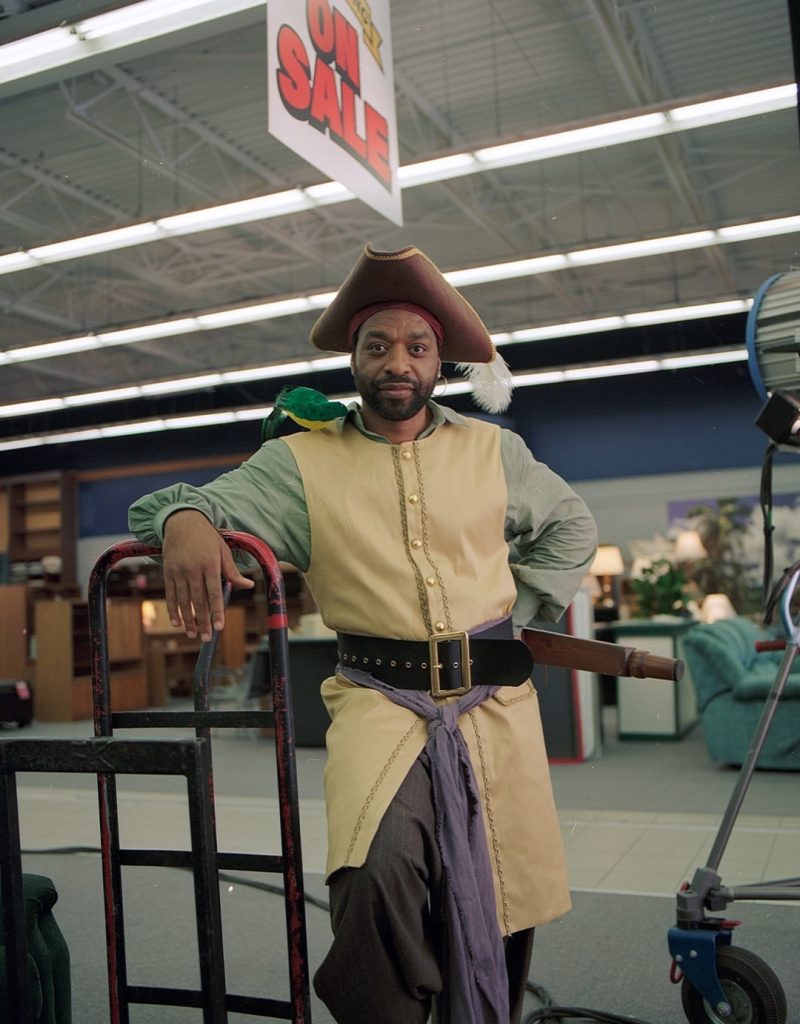
DRESSED TO KILL: Super-Brit Chiwetel Ejiofor as ultra-American Clark. Gives privateer a whole new meaning.
The thing that saves her life up against the pirate mascot monster is that slab of concrete with her handprint on it, non-coincidentally.
As for Bone Temple, I wouldn’t say the movie has no soul, but it has no purpose. It’s not a satire about anything, and uses gore to fill the void—a void it created with unsympathetic characters and bad planning.
An Ikea catalogue horror movie if there ever was one!