Food in science fiction and fantasy fascinates me. So is my sci-fi buddy Blaze Ward. His latest issue of BOUNDARY SHOCK QUARTERLY is elegantly titled “GALACTIC GASTRONOMY” (Pubshare 29 March 2026), with a little introductory essay of his own called “Food and the Future”. The publication is a reasonable size, 196 pages long, with a total of 10 stories of widely varying lengths, all by the virtually unknown authors who populate the nether worlds of indie cyberspace and mainstream print.
By Emad Aysha
I’d love to talk about every single one, but there isn’t enough time, and my concern here is getting at the philosophy of food in Western SF. The intro essays pretty much say it all when it comes to, namely, harking back to America’s New Deal era of post-war promises. That is, everything from freedom of speech to freedom from ‘want’.
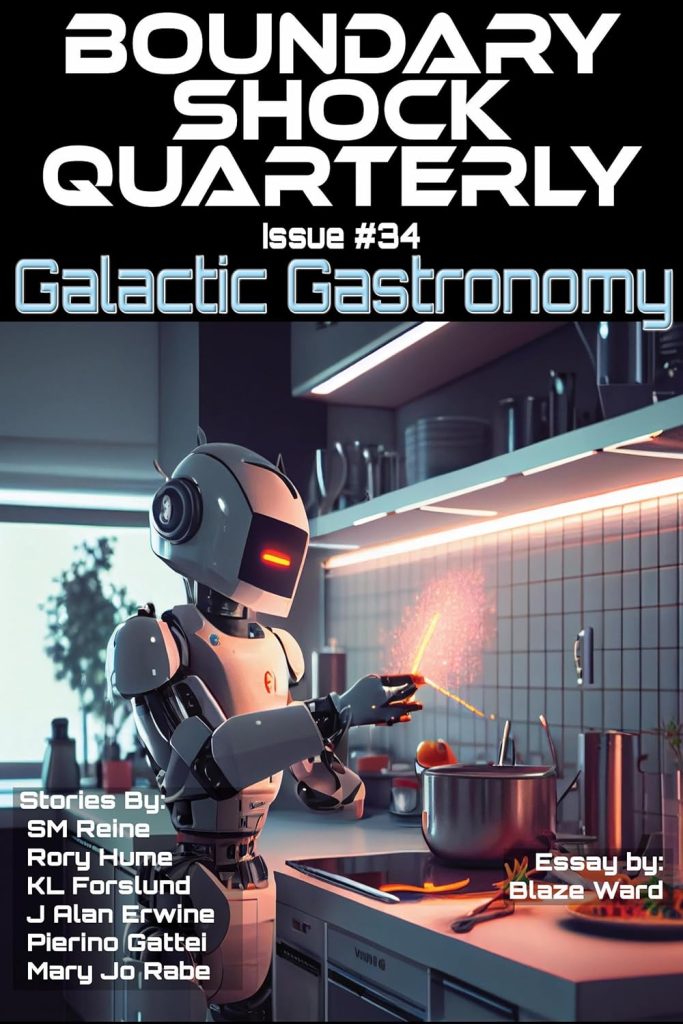
ON THE MENU: Blaze Ward's little contribution to pushing the bounds of the proper subject-matter of science fiction. Praise to the indie authors too.
The best story, needless to say, is by Blaze Ward himself; “The Spice of Life”, part of his BECKETT FERNSBY ADVENTURE series. The world-building is very complex, but the key plotline involves a band of unlikely heroes travelling to a hostile jungle world to harvest natural foods, including honey and mushrooms, to grow or process them aboard their spaceship.
It’s great, of course, that natural foodstuffs are being praised in a work of contemporary science fiction from the West. There are also cultural and historical references in there that you should take notice of, since beer made of the therapeutic honey is mentioned – mead.
If you’ve read Michael Crichton’s The Eaters of the Dead or are familiar with the Beowulf epic, you’ll know the centrality of the mead hall in Viking society and Nordic myth, the very beating heart of the community where people learn to live in peace by burying the hatchet, just not in somebody else’s head.
Watch the terrible animated Beowulf, and you have the King literally throwing gold at his people as they drink and feast in his honour, singing along to which drives Grendel crazy. It’s not the sound of merriment that gets on his nerves, but morality.
This is where Iron Age communities redistribute resources and food and settle disputes. The same held in Bronze Age communities – the palace culture of Mycenaean Greece – and in the Stone Age with Britain’s famous ‘henges’.
Look at the tongue-in-cheek reference to Stonehenge in the deleted opening scene in Prometheus, if you don’t believe me. The engineer is dressed like a Druid, after all!
Even with the cruel despots of the galactic system Beckett resides under, the old age wisdom still prevails. Food is what brings us together and what makes the world go round. You can’t serve if you’re dead, can you - from starvation or sickness.
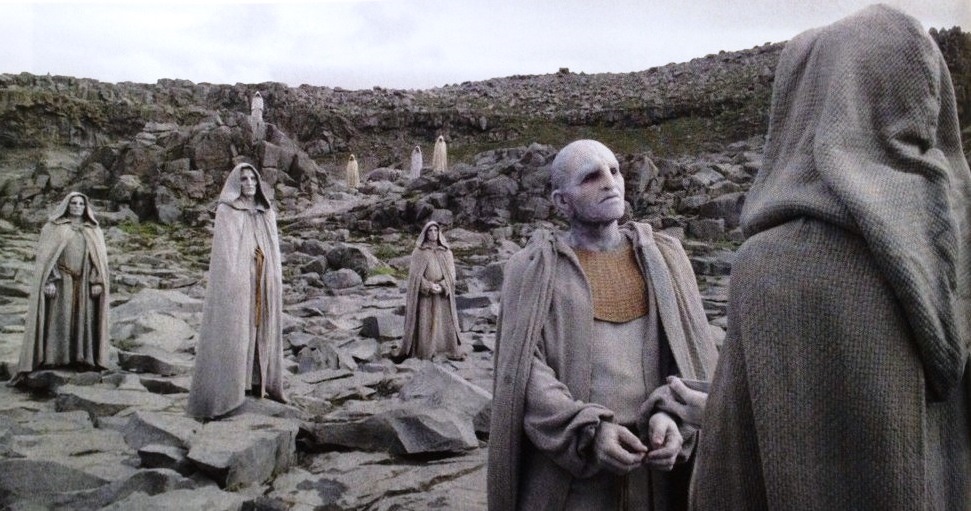
FOOD GODS: A deleted scene from 'Prometheus' (2012) with the engineers dressed up like Druids in a grey rocky setting. Retro alien futurism run amok?
“Galactic Grub Gauntlet” by Chuck Anderson is a fun story about a man who needs to pay off his spaceship debts, so he signs up for an eating contest he technically has no hope of winning. How can he beat a giant absorbing amoeba or an insect that can eat with four hands?
Nonetheless, the guy perseveres through sheer gumption and a little intelligence. Nothing like the American penchant for the underdog gaining faith in himself. There are similar vibes in M.E. Owen’s “The Former King of Greenland Makes Good”, with a guy on parole working as a cook, risking imprisonment and custody of his kids to save a guest’s life.
The same positive model in “Galactic Bake-Off” by Mary Jo Rabe, but in female form with cookies made on Mars. Minus the atmospheric dust.
The most widely written story is Pierino Gattei’s “The Guest of Honour”, in which a hapless individual on an alien world is served the meal of his life. The food makes him feel complete to the point that he sells off all his belongings and comes back for more.
He’s specifically heard that there is a larger banquet involved, and he gets propositioned by a shady individual. He’s taken to a red-carpet planet and fed several courses that change him physiologically, first in a symbiotic plant form, then in an animalistic form.
He enjoys himself more and more with every meal and thinks less and less as his mental capacity diminishes. I won’t tell you what happens in the end, but you can guess. Even that first ever meal, of some large worm with legs, left him feeling he was wandering through the underbrush eating things smaller than it.
Talk about you are what you eat, as Blaze Ward points out in his own tale. The most philosophical story by far is SM Reine’s “We Don’t Eat Animals” with a benign, super-advanced alien race coming to Earth (in peace) and dressed up as human beings to boot.
They’re vegetarians and want human recipes, then they’re accidentally fed mushrooms, and it almost leads to a diplomatic boycott. Fungus to them is the ultimate food, the ultimate symbol of oneness of the universe. It grows from decaying food and nutrients, repressing the cycle of life.
The aliens are pan-dimensional and linear time distinctions mean nothing to them. The story is also interesting from a gender perspective, since the chosen Earth diplomat is a woman, as is the alien representative.
The macho military guy lives in a comic book world of his own, where you conquer aliens instead of trade with them. The diplomat is also forgiven for throwing up, something her male counterparts would never put up with.
This all seems terribly self-indulgent to us as Arabs, more so in Egypt where food is there to keep you alive and not much more. People constantly indulging themselves and wanting more and more from far-flung, often colonised lands.
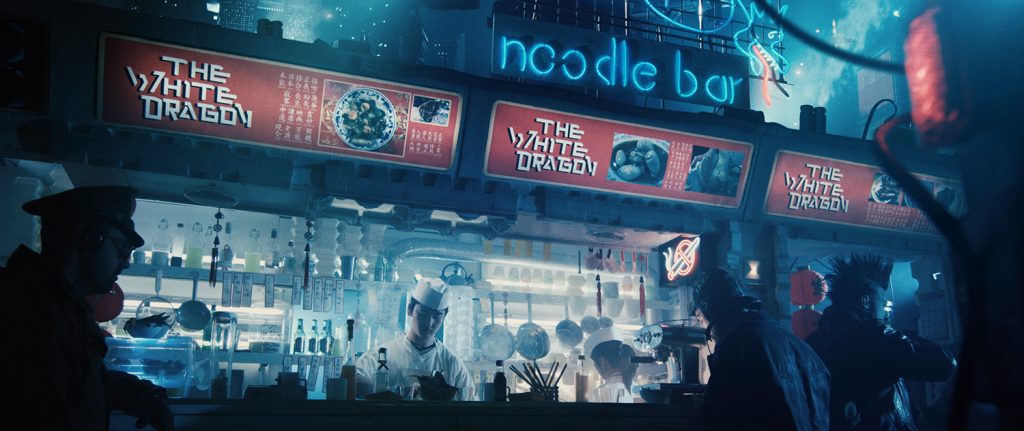
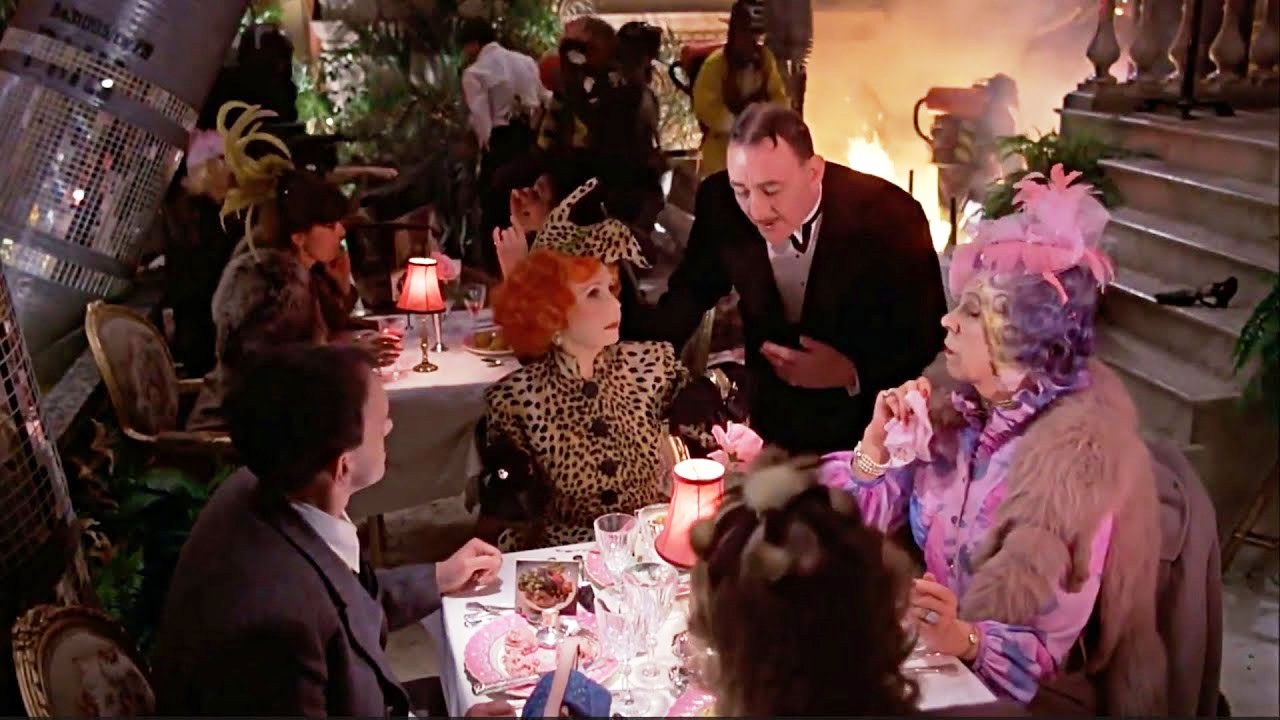
EURO-ASIAN RULES: Classic scene in 'Blade Runner' (1982); modelled on Ed Hopper's 'Nighthawks' (1942). In the background an off-world commercial says America is being taken into the 'new' world!
But that’s why you need to read someone else’s SF, a breather from your own problems. And there are crossover points, such as paradise consisting of milk and honey and fruits, with a clear penance for attaining it in this life, given the price to your conscience will.
If only I’d read the whole anthology before I chaired the “Fantastical Foods: Worldbuilding a Food Culture” session in Balticon 60 (Saturday, 23 May 2026). Still, it’s either that or Douglas Adams’ Restaurant at the End of the Universe!