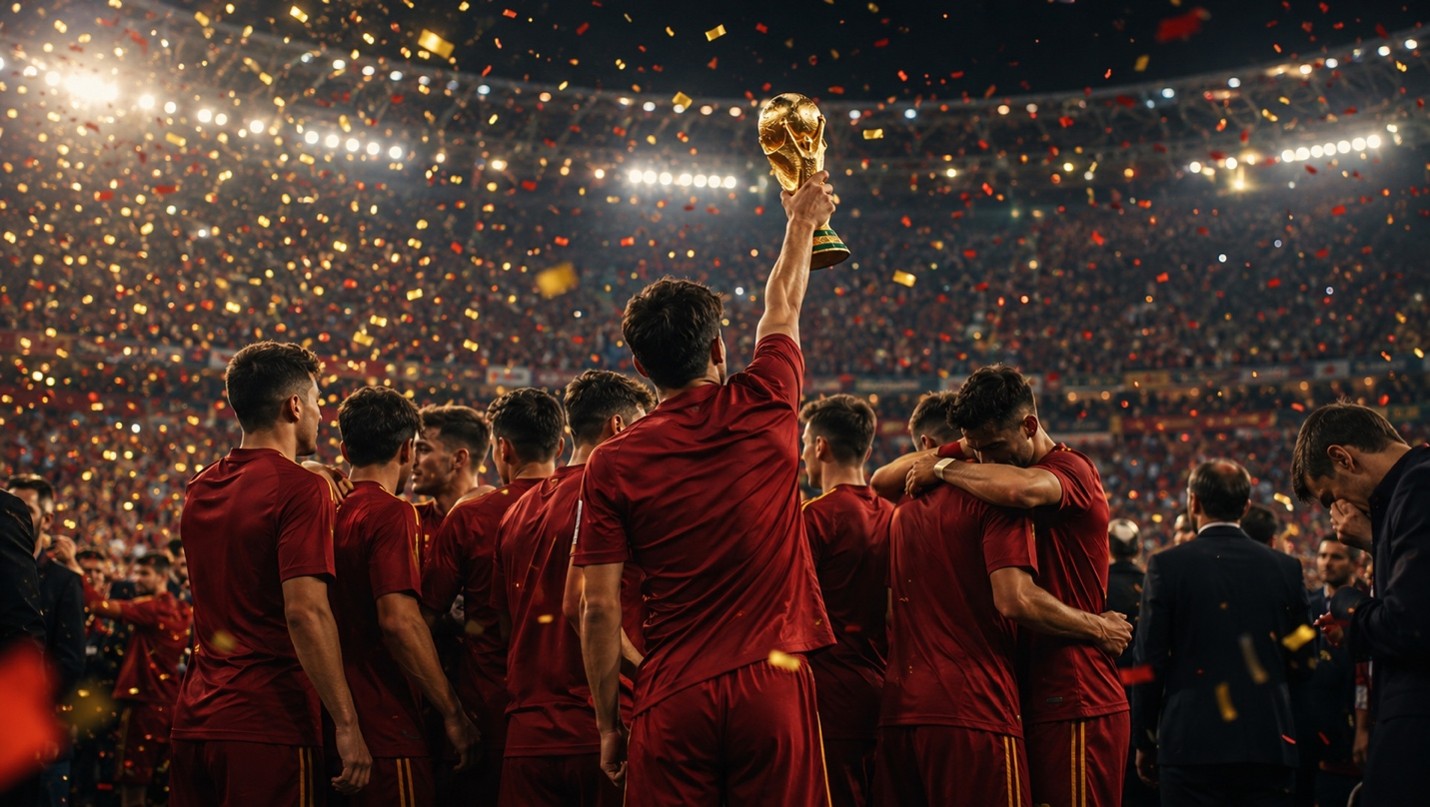
It has been a week since the final whistle of the 2026 World Cup, and the excitement of Spain’s victory has finally begun to settle. As someone who has always felt connected to the country, watching Spain defeat Argentina and lift the trophy was unforgettable, yet once the celebrations quietened, I found myself thinking about everything the tournament left behind beyond football: unexpected results, late goals, new heroes and emotions that changed within minutes.
Spain’s victory came after a tense final that remained goalless until Ferran Torres scored in the 106th minute. The winning goal arrived late and came from a player who had started on the bench, which felt like the perfect ending to a tournament that reminded us how rarely life follows the script we prepare for it.
1. A team needs more than famous names
Individual brilliance can change a match, but it cannot carry an entire tournament alone. Spain succeeded because the players trusted one another, understood the system and contributed without turning every moment into a personal performance. Talent attracts attention, but teamwork keeps a team moving when pressure rises.
2. Predictions are part of the fun, not a promise
Before the first whistle, supporters and experts had already named their favourites, yet many confident predictions disappeared once the matches began. History, rankings and reputation can shape expectations, but they cannot decide the result. That is true beyond football too: advantages may place someone ahead, but everyone still has to face the opportunity in front of them.
3. Not every answer arrives within ninety minutes
Spain kept searching while penalties moved closer and the breakthrough seemed unlikely. Then, in the 106th minute, everything changed. We often expect effort to produce results within the timeline we imagined, and when it does not, we assume something has gone wrong. Sometimes the answer is simply taking longer, and patience is part of reaching it.
4. Starting on the bench does not make you less important
Torres did not begin the final, yet he scored the goal that won it. Until his moment arrived, he had to remain focused without knowing how much time he would receive. Many of us know what it feels like to be overlooked or asked to wait while someone else steps forward, but being chosen later does not mean being valued less. The opportunity may be delayed; the ability was already there.
5. The most important work happens before anyone applauds
A World Cup lasts only a few weeks, but no player prepares for it in a few weeks. Behind every confident performance are years of training, repetition, recovery and ordinary days that receive no applause. We notice the promotion, award or final result while missing the quiet work behind it, yet preparation gives people something to rely on when confidence alone is not enough.
6. Losing one final does not erase everything before it
While Spain celebrated, Argentina faced the other side of the result. For Lionel Messi, the defeat may have marked the end of his World Cup journey, but it could never erase his achievements or influence. We can be equally harsh with ourselves, allowing one rejection, mistake or ending to overshadow an entire journey. A painful result deserves to be acknowledged, but it should not rewrite everything that came before.
7. Every generation eventually makes room for another
The embrace between Messi and Lamine Yamal brought two football eras together: one shaped the game for almost two decades, while the other is only beginning. Change often carries sadness and excitement at once, because we miss what is ending while wondering what will come next. A new generation does not erase the previous one; it moves forward with the inspiration and standards left behind.
What remains when the stadium empties
Spain took the trophy home, but everyone who watched was left with something different: a surprising team, a late goal, a new player or the memory of where they were when a match changed. That is why the World Cup has never been only about winning. It brings people together across languages and borders, leaving us with stories about patience, teamwork, preparation, endings and possibilities that can still appear when the clock suggests otherwise.