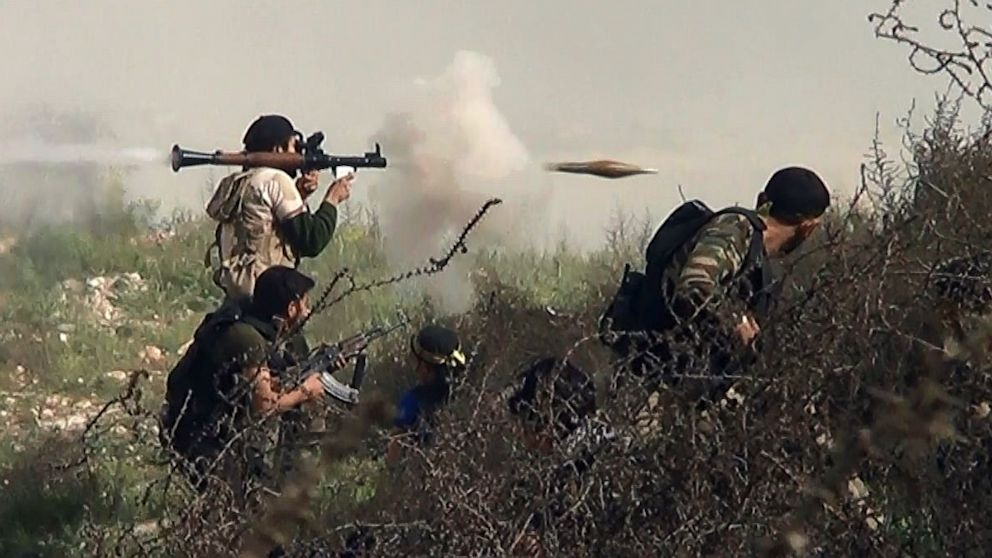
What appears today as chaos in Syria is not easily dismissed as mere failure, nor adequately explained by the familiar language of civil war, sectarian fragmentation, or post-revolutionary instability. The pattern that emerges is far more deliberate. Syria increasingly resembles a system not of calibrated erosion, but of a space in which sovereignty is thinned, institutions hollowed out, and authority repurposed as an instrument of external and internal extraction. This is not the absence of order. It is the presence of a different kind of order—engineered disorder.
By Rafic Taleb
At the centre of this configuration stands a governing authority that behaves less like a state and more like an interface. Its genealogy—tracing a path through successive allegiances, ideological mutations, and strategic repositionings—reveals a structure optimised for adaptability rather than legitimacy. Such an authority does not derive its power from a social contract, electoral mandate, or institutional continuity. Instead, it persists through utility.
It is useful to external actors as a negotiable partner, to regional powers as a conduit for influence, and to itself as a broker of rents. In this sense, power is not exercised to consolidate a nation-state, but to mediate between competing interests while remaining perpetually contingent.
The economic dimension reinforces this reading. Grand announcements of investment—tens of billions pledged, partnerships declared, agreements signed—stand in stark contrast to lived reality: deepening poverty, currency collapse, unpaid salaries, and the steady outward migration of those who can leave.
This dissonance is not incidental. It suggests an economy designed less for growth than for extraction, where the spectacle of investment substitutes for its substance. Monopoly structures emerge around financial flows, access to contracts becomes contingent on informal payments, and public resources are converted into private gains.
In such a system, corruption is not a deviation; it is the mechanism itself. Development would require transparency, predictability, and trust—conditions fundamentally at odds with a model that thrives on opacity and control.
Overlaying this internal architecture is a dense web of external engagements that further dissolves the notion of unified sovereignty. Regional and international actors—each pursuing distinct, sometimes contradictory objectives—intersect within the Syrian space.
Ports, energy routes, and territorial arrangements become bargaining chips in a broader geopolitical negotiation. Security concerns, particularly those of neighbouring states, translate into demands for demilitarised zones, territorial concessions, or long-term leasing arrangements that effectively reassign control.
Meanwhile, financial assistance from Europe is conditioned on governance reforms that remain perpetually deferred, while other actors quietly consolidate economic footholds. The result is not a coherent foreign policy environment but a layered patchwork of influences, each extracting value from a state too weak to arbitrate among them.
This fragmentation extends beyond external relations into the internal configuration of the country itself. Proposals and informal arrangements point toward a future in which different regions operate under varying degrees of autonomy, security presence, and administrative control.
The central state, rather than acting as a unifying force, becomes one actor among many in a landscape of localised authorities. Such an arrangement reduces the risk of any single centre reconstituting strong, independent power, while facilitating targeted forms of control and extraction. Sovereignty, in this context, is not lost outright; it is partitioned, leased, and negotiated away in increments.
To sustain such a system, coercion remains indispensable. The persistence of arbitrary detention, the absence of judicial oversight, and the repression of dissent signal a continuity with older authoritarian practices, even as the ideological framing shifts.
Yet this coercion is no longer embedded within a robust state apparatus; it operates instead through networks that blend formal authority with informal patronage. Positions are distributed along lines of loyalty and kinship, public offices become sources of private enrichment, and accountability is systematically undermined. The effect is a paradoxical stability: a regime too fragmented to govern effectively, yet sufficiently repressive to prevent organised opposition.
What lends this configuration its deeper resonance is its familiarity. Historical precedents abound in which external powers, confronted with complex local environments, have opted not for direct domination but for mediated control.
By empowering local actors, granting them limited victories or symbolic legitimacy, and then constraining their capacity for independent action, such strategies achieve influence at reduced cost. Narratives are mobilised to justify alignments that would otherwise appear contradictory, and populations are drawn into conflicts whose underlying logics remain obscured.
The language changes—from empire to counterterrorism, from civilising mission to stabilisation—but the structural pattern persists.
In Syria, the invocation of victory—whether in the form of territorial consolidation, the reassertion of public order, or the revival of visible religious and social practices—risks serving precisely this function. Symbolic gains can legitimise authority in the short term, even as substantive sovereignty is eroded in the background. Economic hardship is reframed as a temporary sacrifice, political exclusion as a necessary discipline, and external entanglements as pragmatic compromises.
Over time, however, the gap between appearance and reality widens to the point where it becomes difficult to sustain the narrative without increasing reliance on coercion.
The most consequential battleground, therefore, is not territorial but cognitive. The capacity of a population—and its intellectual and political elites—to recognise patterns, question narratives, and demand accountability becomes decisive.
Without such awareness, systems of engineered disorder can reproduce themselves with remarkable resilience, drawing on local divisions, external pressures, and institutional weaknesses to maintain equilibrium. With it, even deeply entrenched configurations can be challenged, though never without cost.
To describe Syria today as a tragedy is accurate but incomplete. Tragedy implies inevitability, a descent driven by forces beyond human control. What we are witnessing instead bears the marks of design: a set of choices, incentives, and strategies that, taken together, produce a landscape of managed instability.
It is a form of governance that does not seek to resolve conflict but to contain and utilise it, that does not aim to rebuild a state but to repurpose its remnants. In this sense, the ruin is not accidental. It is architectural.