For years, one of the safest assumptions in Middle Eastern politics was that Washington and Jerusalem ultimately moved in the same direction. American and Israeli leaders often disagreed on tactics, timing and tone, but the destination usually seemed the same. Even when tensions surfaced, few doubted the strength of the relationship. That assumption has become less obvious in recent days.
By Nadia Ahmad
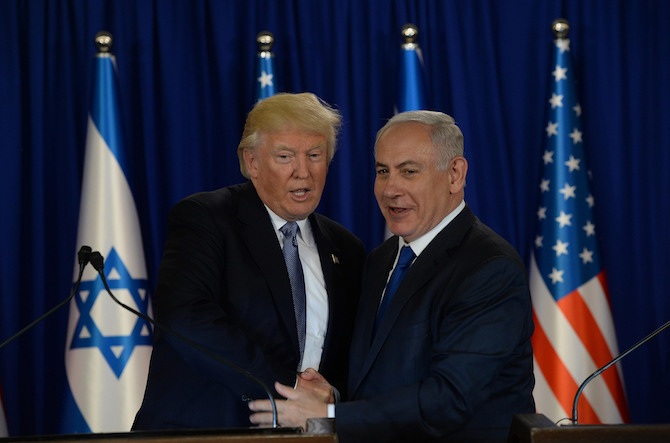
As Washington moved forward with its understanding with Iran and began speaking about diplomacy, de-escalation and regional stability, Benjamin Netanyahu appeared notably less enthusiastic. While Donald Trump spoke about opportunities created by the ceasefire and the possibility of opening a new chapter, the Israeli prime minister continued speaking the language of caution, deterrence and security.
The contrast was difficult to miss.
In Washington, officials sounded eager to turn a military confrontation into a diplomatic process. In Jerusalem, leaders sounded as though the region remained one miscalculation away from another crisis.
Almost immediately, speculation followed. Had the United States and Israel begun drifting apart? Was a genuine gap emerging between Trump and Netanyahu? Had the ceasefire revealed deeper disagreements about the future of the Middle East?
The questions are understandable. After all, wars often expose differences that remain hidden during calmer times. Once the fighting slows, governments begin thinking about what comes next. That is often when allies discover they are looking at the same landscape through different lenses.
For Trump, the ceasefire represents an opportunity. After months of tension and confrontation, Washington wants to prevent another regional crisis. The administration would like to stabilise the situation, calm markets and create enough political space for diplomacy to take hold. From the American perspective, another cycle of escalation would risk undoing whatever gains have been achieved so far.
Netanyahu's position is different.
Israel does not experience regional developments from a distance. Its leaders live with the possibility that today's diplomatic breakthrough could become tomorrow's security challenge. Israeli governments have watched ceasefires collapse before. They have seen temporary arrangements unravel. As a result, optimism often comes more slowly in Jerusalem than it does elsewhere.
This difference in tone has created the impression that the two allies are speaking different languages. Yet appearances can sometimes be misleading.
The easiest interpretation is that Trump and Netanyahu are moving apart. It is an attractive explanation because it fits neatly into a familiar media narrative of disagreement between allies. But international politics is rarely that simple.
A more interesting possibility is that the two leaders are responding to different responsibilities.
Trump is looking at the region after the war. Netanyahu is looking at what could still go wrong. While one sees an opening, the other sees unfinished business. Neither perspective is irrational. In fact, they may be more connected than they appear.
American policymakers understand that diplomacy works best when tensions are reduced. Israeli policymakers understand that diplomacy often succeeds only when backed by credible deterrence.
One side is trying to create space for negotiations. The other is trying to ensure that negotiations do not come at the expense of security. That distinction may seem technical, but its consequences are visible across the region.
Take Lebanon.
For Washington, Lebanon is part of a broader effort to prevent renewed instability and reduce the risk of another regional confrontation. For Israel, Lebanon remains inseparable from security concerns along its northern border and from questions that many Israelis believe remain unresolved.
This does not mean Washington and Jerusalem necessarily disagree about the destination. It means they may disagree about what must happen before that destination can be reached safely.
That difference is becoming increasingly visible as the region enters an uncertain transition period. The fighting may have slowed, but many of the underlying questions remain unanswered.
The future relationship between Iran and the West remains unclear. The long-term balance of power remains unsettled. Several regional actors are still trying to determine what the post-war landscape will look like.
In such circumstances, caution and optimism often coexist uneasily. That is exactly what appears to be happening today.
Washington is speaking like a government eager to move beyond the crisis. Jerusalem is speaking like a government determined not to be caught off guard by the next one. Observers often interpret such moments as evidence of a major rupture. History suggests caution before reaching that conclusion.
The United States and Israel have experienced disagreements before. They have argued over negotiations, military operations, regional diplomacy and security priorities.
At various moments, commentators predicted lasting damage to the relationship. Yet the alliance repeatedly proved more resilient than the headlines suggested. Part of the reason is simple: strong alliances are not built on complete agreement. They are built on shared interests.
Close partners rarely experience events in the same way. Different leaders answer to different voters. Different countries face different pressures. Different national experiences produce different perceptions of risk.
What sounds reassuring in Washington can sound risky in Jerusalem. What appears urgent in Jerusalem can seem manageable from Washington. That does not make either side wrong. It simply reflects the reality of an alliance between two countries that occupy very different positions in the world.
The coming weeks will reveal whether the current contrast is merely temporary or the beginning of something more significant. Negotiations will continue. Statements will be scrutinised. Every public remark will be examined for signs of either cooperation or disagreement.
But the most important story may not be whether Trump and Netanyahu are arguing. It may be why they are emphasising different things at the same moment. One ally is trying to build a diplomatic opening.
The other is trying to ensure that the opening does not become a vulnerability.
Whether those approaches eventually clash or complement one another will help shape the next chapter of the Middle East. And it may also remind us of something that is often forgotten in international politics: allies do not need to speak the same language to move in the same direction.