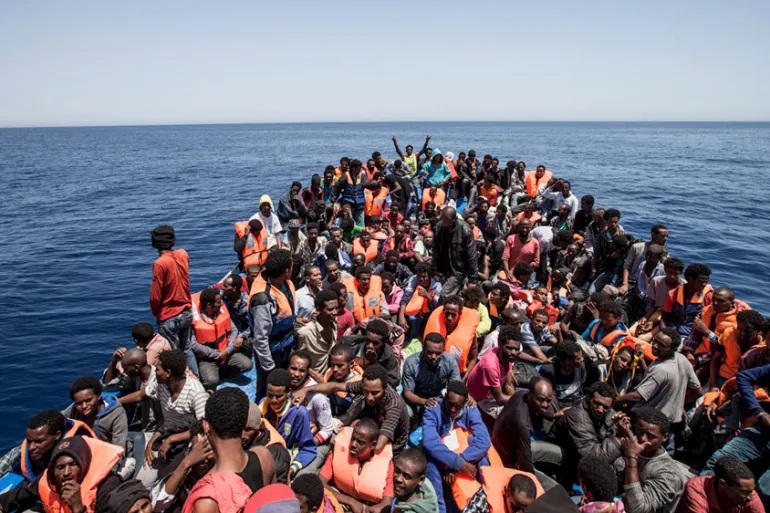
The international refugee system is failing, and the people who need it most are the first to feel it. It was designed for a world that no longer exists, and never redesigned for the one that took its place.
By Rafael Baroch
In principle, a person fleeing persecution and, under regional or subsidiary protection regimes, certain forms of war-related serious harm can seek protection in states that are parties to the 1951 Convention and its 1967 Protocol.
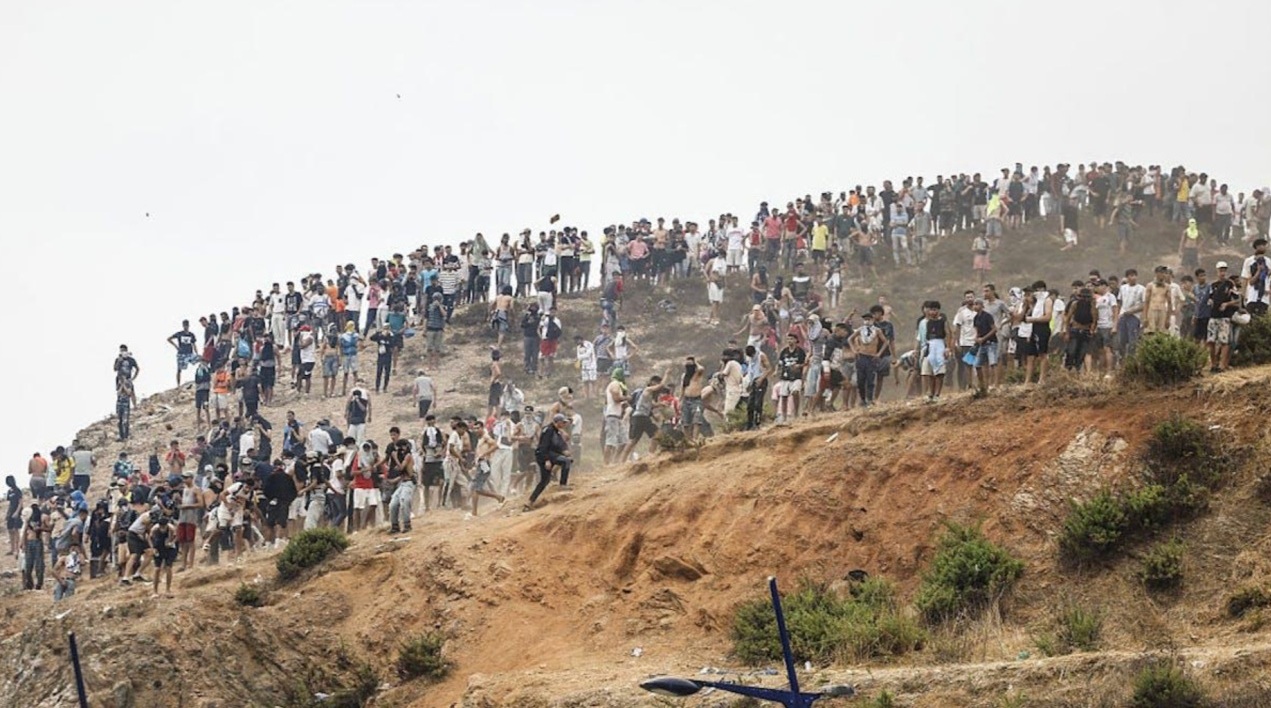
In practice, the routes to that protection run through smugglers, through the Mediterranean, through years of administrative limbo, and increasingly through deals designed to keep claimants from ever arriving. A promise made to everyone is being kept for almost no one.
That gap is not a failure of implementation. It is the predictable result of a local instrument given an unlimited reach.
The Convention was drafted in 1951 by twenty-six states at a conference in Geneva. The American delegation and other governments resisted an open-ended instrument; the drafting history repeatedly shows concern that states should not sign what amounted to an unforeseeable "blank cheque."
The geographic limitation to Europe was part of the agreement's price. The Convention addressed European people displaced by a European catastrophe. India, which took part in the drafting and would become one of the most prominent states never to sign, objected that the instrument was built around a European experience and ignored the displacements then convulsing the decolonising world.
The objection was noted and set aside. UNHCR itself was created as a temporary office, with an initial three-year mandate to be reviewed before the end of 1953. Its first task concerned just over one million mainly European refugees and displaced persons, a bounded caseload in a bounded political world.
The universalisation came later, and it came from a narrower room than most people imagine. By the mid-1960s, UNHCR officials had concluded that their mandate, which was already global, had outgrown a Convention that was not.
To close the gap, they did not convene a conference of states on the scale that had produced the 1951 treaty. They convened a colloquium. In April 1965, nineteen international law experts gathered at the Rockefeller Foundation's villa at Bellagio on Lake Como. They drafted a protocol that would strike the words that tied the Convention to a specific time and place. The draft moved through the Economic and Social Council to the General Assembly, and in 1967, it took effect.
The more far-reaching definitions that were emerging elsewhere, the African convention's recognition of those fleeing foreign domination and events seriously disturbing public order, were never on the table.
A regional emergency measure became a universal entitlement, and the conversion was performed less by the world's parliaments than by a small circle of jurists who saw, correctly, that the original treaty no longer matched the scale of human displacement. What none of them reckoned with was what universality would cost when that scale multiplied.
That scale now stands at roughly 118 million people forcibly displaced worldwide, according to the UNHCR, of whom 41.6 million are refugees. That is more than one in every seventy human beings.
The caseload the system was built to handle has multiplied beyond anything its designers could have imagined. And the world that produces these people moves faster than the one the drafters knew. Conflicts last longer, and states fail more often. Smuggling has become an industry, and information travels instantly. A mechanism built for individual dissidents slipping out of the
Astonishingly, the mechanism has not changed one bit. Sadly, the reality has changed dramatically.
Here is an asymmetry that rarely gets stated plainly. Ordinary laws are regularly revised when circumstances change. The legislature meets, debates, and votes, and what no longer works is replaced. Treaties behave differently. They carry the weight of international assent and the symbolic authority of solemn occasion, and so they acquire a presumption of untouchability.
To question the Refugee Convention is to invite the suspicion of moral collapse, even when one is asking nothing more than whether a text written in 1951 still fits the world it now governs. The consequence is perverse: an instrument loses its legitimacy in practice while remaining beyond revision for no good reason.
The comparison the European debate avoids is a simple international one. Europe is unusual not simply because of the number of asylum seekers it receives, but because it combines large-scale protection with a dense legal infrastructure: individual rights backed by judicial review, reception duties, family reunification, and an expectation that those who arrive will, in time, stay and integrate.
The heaviest burdens are still carried largely by states close to the crises themselves. According to UNHCR, around 65 per cent of refugees live in countries neighbouring the ones they fled. Among the largest host countries are Colombia, Türkiye, Uganda, Iran, and Chad, each absorbing people from across its own border.
Germany now appears on that list too, but for revealing reasons. A large share of those it shelters are Ukrainians under temporary protection, regional arrivals from a neighbouring war. The rest came crossing continents, along the asylum route, and it is that second group, not the first, that drives the political strain. Even Europe's largest host, in other words, works best where its protection is regional and struggles where it is not.
Anyone still doubting that regional protection can work needs only look at Ukraine. Since February 2022, EU states have granted temporary protection to more than seven million people fleeing the war; over four million remain under that status today.
It worked. There were no multi-year backlogs, no collapsing reception centres, no electoral panic over Ukrainian presence. The European Union reached for a directive that had sat unused since 2001 and found that it fit. Not because Ukrainians had a stronger moral claim, but because they were regional. Geographically close and culturally familiar, manageable in scale, and tied to a war whose end might allow return.
Outside the region, Ukrainians would have had no such standing. And many non-Ukrainian third-country nationals who had been temporarily living in Ukraine, students, workers, and others without permanent or protection status, did not automatically receive the same protection. The system worked precisely because it was bounded.
This is the proof that Europe can absorb large numbers when protection is regional and politically supported. The global asylum regime does the opposite. It breaks on procedures, on numbers, on consent, on legitimacy.
Claims drag on for years, reception fills up, returns fail, and with each surge, the electoral share of the hard right rises. In France, Italy, the Netherlands, Germany, and Austria, anti-immigration parties are now the largest or second-largest political force. Anyone who believes this can be solved with better messaging or more public confidence has not done the arithmetic.
What is at stake is not European hospitality. It is the security and the survival of Europe as a political space.
The honest objection to all of this is that regionalism abandons the refugee to the accident of where catastrophe struck. A person from a poor and dangerous part of the world would be sheltered in another poor and dangerous part of it.
That is real, and it cannot be waved away. But the answer is not more universalism, which produces grand entitlements that wealthy states quietly refuse to honour while people drown in their attempts to claim them. The answer is enforceable shared responsibility: money, lawyers, monitoring, and resettlement places for the most vulnerable, directed by rich states into the regions that already carry the load.
Regional protection is not abandonment. Outsourcing to a distant safe country, paid to keep the consequences out of sight, is abandonment. The two are routinely confused, and the confusion is convenient.
Political communities are regional. Administrative capacity is regional. Public consent for asylum is regional, and so is the money that pays for it. The 1967 Protocol placed a global claim on systems that operate at a far smaller scale, and the result is a promise that holds in law and collapses in politics.
The Protocol can be renounced. Article IX provides the procedure: written notice to the UN Secretary-General, with one year's notice. No state has ever done so, and proposing it is to step outside respectable opinion. But respectable opinion has produced a system that lets people die in the Mediterranean in the name of a promise it cannot keep.
Renouncing the 1967 Protocol and rebuilding protection on a regional foundation that states can actually sustain is not cruelty. It is the first honest step toward saving both Europe and the people it claims to protect.
What protects everyone protects no one.