Some wars change the regional balance of power, and others change a state's internal political system. The prolonged Russo-Ukrainian war has increased strategic pressures on Belarus, with constant pressure from Russia that could change the tide of power within the country.
By Ahsan Ali
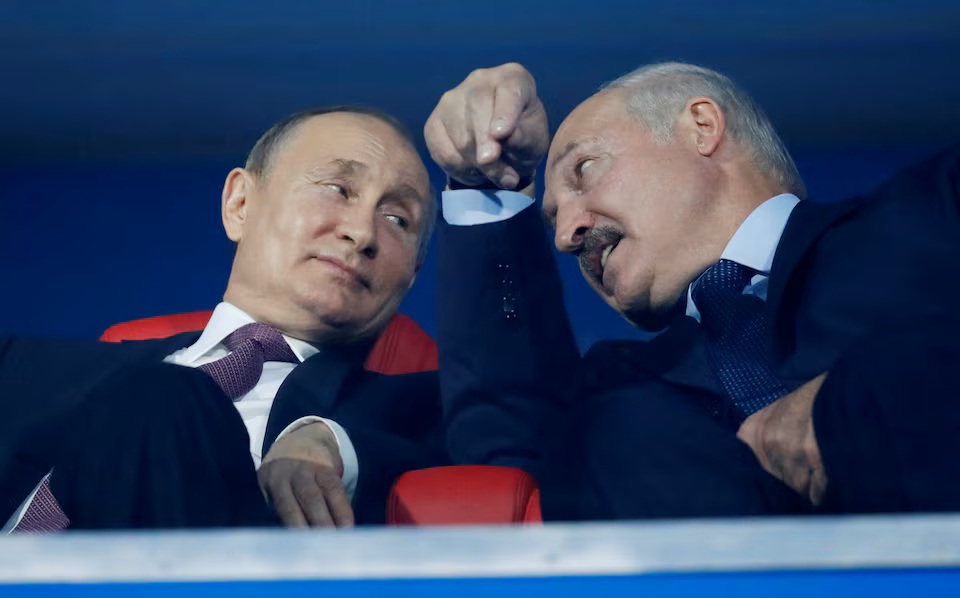
Belarus is in the Eastern periphery of Europe, bordered by Russia to the east and sharing frontiers with several NATO and EU territories to the east and northwest. Since 1994, the country has been governed by President Alexander Lukashenko under an authoritarian political system.
Over the past three decades, his administration fostered close political, economic, and security ties with Russia, while Belarus remained geographically, culturally, and historically connected to the broader European continent.
Many post-Soviet states transitioned towards market economies, privatisation, and political pluralism. Belarus remains nostalgic for the Soviet era under President Lukashenko, preserving a heavily state-controlled economic system and political characteristics. He halted “shock therapy,” restored Soviet-era state symbolism, and strengthened relations with Russia.
Before the 2022 Russian invasion of Ukraine, Belarus maintained a relatively balanced foreign policy of limited engagement with the US and the EU. However, the engagement deteriorated following the outbreak of war in Ukraine, when President Lukashenko permitted Belarusian territory as a launchpad for Russian troops.
As the war has evolved into a prolonged conflict of attrition, Russia repeatedly encouraged Belarus to expand its involvement. It wants to expand from just a launchpad of logistical support to greater strategic options for military operations to increase pressure on Ukraine. These developments have placed Minsk under growing military pressure as the conflict deepens.
Recently, the flashpoint of tensions came over Ukrainian President Zelensky threatening to hold President Lukashenko accountable over signal-guidance infrastructure within Belarus to support Russian missiles against Ukraine. Meanwhile, in a calculated effort to preserve his authoritarian regime, President Lukashenko refrained from any military action against Ukraine despite reported Russian pressure to expand its role.
President Lukashenko's continued resistance to entering the war, with limited support for Russia, is mainly aimed at preserving his own regime and avoiding domestic unrest. He recognises that a direct military front would expose Belarus to greater strategic vulnerabilities and potential retaliation. Hence, President Lukashenko is aware that any military escalation can undermine his own political survival.
Belarus's active military force comprises 45,000 personnel and 289,000 reservists, with limited experience, offensive capabilities, and structural weaknesses. Despite regular joint military exercises with Russia and other CIS states, the Belarusian Armed Forces have not been tested in large-scale conventional warfare. Hence, any involvement in Ukraine can expose operational challenges and raise the risk of significant casualties, potentially reducing Belarusian troops to a supporting role.
As the border between Belarus and Ukraine remains mined, heavily fortified and under heightened military tension, any military involvement in the conflict would expose the country to Ukrainian retaliatory strikes. The strikes on key logistical, military, and industrial infrastructure could alter the strategic dynamics, as limited Belarusian capacity will increase its vulnerability.
For the Kremlin, greater Belarusian involvement would not only expand military operations but also compel Ukraine to allocate additional military resources to its northern frontier. From Moscow’s perspective, any such development would create a complex, multi-front battlefield, potentially dispersing Ukrainian forces and increasing pressure on Kyiv’s defence posture.
Following the 2020 presidential elections, Belarus experienced widespread dissent and protests that weakened President Lukashenko’s political position and significantly challenged Belarus's political apparatus. Since that time, President Lukashenko has consolidated its military, economic, administrative, and financial ties with President Putin to ensure stability and survival.
Given the Belarusian public's broad opposition to President Lukashenko’s policies towards Russia and the war in Ukraine, any involvement could trigger domestic protests against him. Any announcement of war with compulsory conscription can further erode public trust and turn them against the regime.
The armed forces are essential in preserving Lukashenko’s regime and can face internal strains in the event of a prolonged military campaign. Given Belarus' limited manpower and low public support, this could undermine morale, weaken cohesion, and impact Lukashenko's existing political status quo.
Any Belarusian military intervention in Ukraine would escalate regional tensions, likely prompting EU sanctions and increased support for Ukraine, affecting regional stability. Such an escalation may diminish the EU’s potential for a future thaw with Belarus and aggressively reinforce sanctions against President Lukashenko and Minsk's political elite. This could change European states' rhetoric for stronger military and economic support to Ukraine.
Strategically, any Belarusian entry into the war would complicate any diplomatic rapprochement between Washington and Minsk. Rather than encouraging limited engagement, it would potentially reinforce the image of Belarus as a co-belligerent that can lead to stronger political and economic measures against Lukashenko’s government.
Any reconfiguration of the frontline resulting from Belarus' entry into the conflict could ultimately undermine President Lukashenko's authoritarian rule. Where the army might be deployed at the border, there can be difficulties on the frontline that may pose considerable challenges, potentially exposing the military’s limited offensive capabilities.
Any collapse of the Belarusian Armed Forces or the occurrence of heavy casualties can intensify domestic tensions in Minsk and generate political repercussions for Lukashenko’s regime. Under such circumstances, opposition mobilisation could emerge, reviving the demand for democratic political change that gained momentum in the post-2020 presidential election.
A military setback in Ukraine could carry significant political consequences for President Lukashenko, including massive casualties, declining public support, and opposition voices, which could create conditions conducive to heightened domestic instability and increased pressure for political transformation.