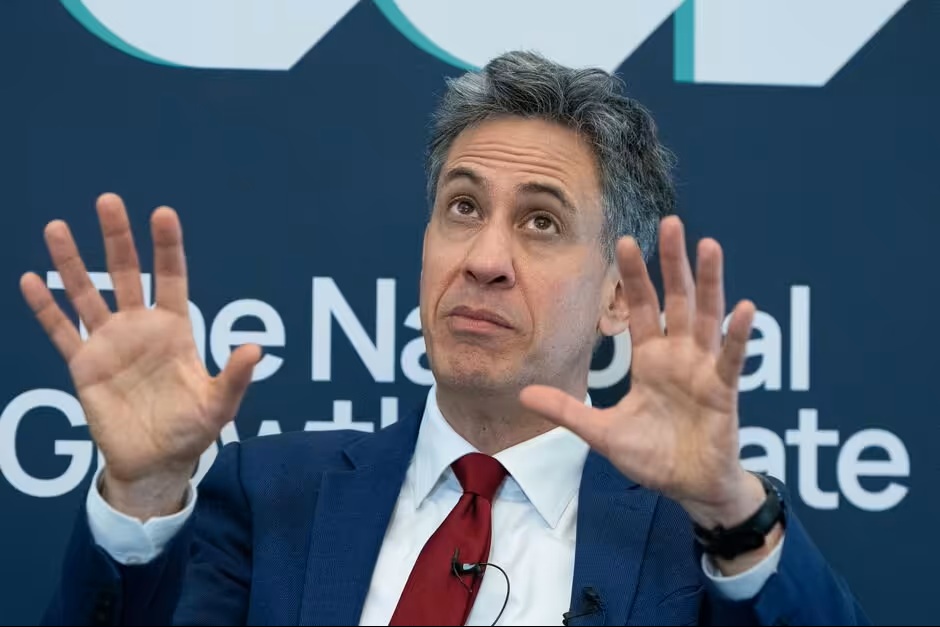
There is an old, cynical adage that hangs like a dark shadow over the Middle East, perfectly capturing Israel’s cyclical geopolitical isolation: “With friends like these, who needs enemies?” Recently, British Foreign Secretary Ed Miliband overturned decades of Foreign Office inertia by announcing sweeping trade and economic sanctions against Israeli companies and infrastructure linked to the West Bank.
Predictably, a caravan of eleven European nations and Canada, including France, Spain, and Ireland, rushed to follow London's lead. It is a textbook example of a moralistic 'spotlight reaction'. Europe has chosen a hyper-focused obsession with settler violence to fundamentally take the measure of Israeli democracy, completely ignoring the existential fires lit by Iran and its proxies that threaten to consume the entire region.
For Israel, with crucial national elections on the horizon, this coordinated European pressure leaves no room for diplomatic niceties. The Jewish state is presented with a false choice: submit to economic blackmail or freeze its long-standing relationships with the West.
By swiftly retaliating, shutting down the British consulate in East Jerusalem and pulling out of joint defence and aid frameworks [abc], Jerusalem has chosen the latter. It has signalled that it would rather keep its European relations on a low simmer than allow foreign capitals to dictate its strategic boundaries.
To truly understand this deep diplomatic chasm, one must look through the lens of the prominent Israeli strategist Prof. Dan Schueftan [quillette]. Schueftan has long articulated a fundamental civilizational clash between two entirely different worldviews: the European rule-based society versus the Middle Eastern law of the jungle.
Europe has become a manicured, post-historical cultural landscape. It is a continent built by naïve Europeans who genuinely believe that every historical tragedy is merely a technical malfunction waiting for a blueprint.
In the European mind, deep-seated existential paradoxes can be 'solved' if you apply enough funds, international court rulings, and well-meaning lectures. The holy grail of this mindset remains the two-state solution, administered to the region like a mandatory, one-dimensional vaccine, completely decoupled from the reality on the ground.
But as Schueftan masterfully argues, there are no solutions in the Middle East; there are only threats to contain and problems to manage [tablet]. The dispute between Israel and its adversaries is not a tragic misunderstanding over border lines or water rights, dilemmas that naïve Europeans think can be calculated and divided.
It is a deeply rooted, ethno-religious existential conflict. It is a zero-sum game of to be or not to be. In the law of the jungle, perceived weakness or reliance on Western 'codes of conduct' invites destruction. Permanent, unwavering deterrence is the only currency that buys security.
When European diplomats issue sanctimonious decrees from the safety of their Brussels or London offices, they act like armchair generals telling a soldier in a muddy trench how to hold his rifle. They fail to see that their rules-based order is a luxury born of decades of American protection. Israel does not have the luxury of living in a post-historical paradise.
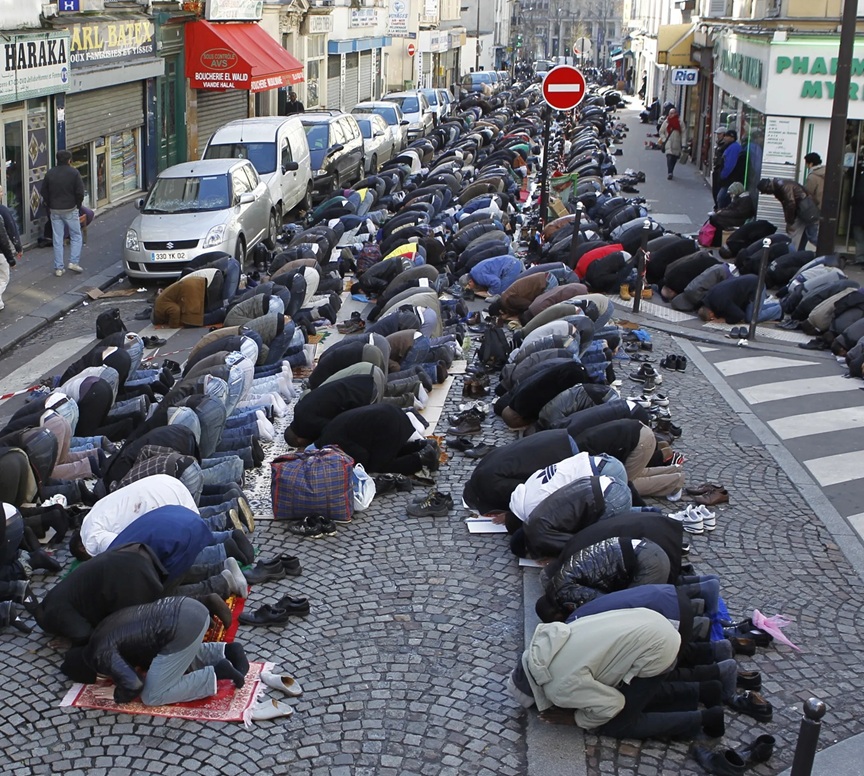
Yet, the ultimate collateral damage of this European policy is not felt in Jerusalem, but in Europe itself. In their rush to satisfy anti-Israel electorates, naïve Europeans have thrown their own 1.3 million European Jews under the bus. By systematically delegitimising the Jewish state, the EU has fostered a domestic environment where Jewish citizens are forced into an existential corner.
They are effectively left with a harrowing choice: remain in Europe as modern-day Dhimmi, second-class citizens forced to hide their identity for safety, or flee to Israel. This orchestrated betrayal marks nothing less than the historical end of the Jewish diaspora and culture in Europe.
Jerusalem, operating under the law of the jungle, sees the writing on the wall. Far from panic, Israel is actively preparing for this massive reverse-migration. The state is already expanding its physical space, developing infrastructure, and setting aside vast financial reserves to absorb European Jewry.
The tragic emptying of Europe is laying the foundation for a historic, autonomous economic and demographic boom in Israel over the next ten years, fueled by an influx of highly educated, skilled Western citizens.
The irony of Europe's blunt intervention is that it profoundly misreads the internal dynamics of the upcoming elections. The upcoming vote is not a referendum on whether to accept European engineering, but on how to manage the jungle. The three leading paths offer radically different internal visions, yet none of them bends to European dictates.
Should Benjamin Netanyahu retain power, the status quo of defiance will solidify. Gusted by hard-line nationalist coalition partners, Netanyahu will treat European sanctions as a political asset, rallying his base against foreign extortion while deepening the West Bank infrastructure.
Conversely, should former IDF Chief of Staff Gadi Eisenkot and his Yashar party capture the premiership, the approach will shift to an unapologetic military pragmatism. Eisenkot intends to strip control of the West Bank away from political zealots and return it to the apolitical military command, deploying administrative detention to crush radical settler violence that undermines the state ruthlessly. Yet, Eisenkot is a seasoned soldier; he harbours no illusions about a swift two-state utopia and will build deterrence, not diplomatic fantasies.
Even a victory by former Prime Minister Naftali Bennett, now leading a corporate-style centre-right alliance, would replace Netanyahu's ideological drama with rigid, operational law enforcement on the West Bank, while flatly rejecting the creation of a Palestinian state.
Fortunately for Jerusalem, the transatlantic alliance is not a monolith, and Washington has stepped in to correct Europe’s blindness.
While Ed Miliband acts as the vanguard for Europe’s moral grandstanding, the United States remains firmly anchored in reality. US Secretary of State Marco Rubio immediately and flatly rejected the British path, stating that Washington "obviously" will not follow the UK [timesofisrael]. Rubio warned that destabilising the West Bank with sweeping trade bans at a time when the region is already incredibly tenuous is a grave strategic blunder.
Simultaneously, the US Ambassador to Israel, Mike Huckabee, has re-anchored American policy in a doctrine of hard realism [abc]. While Huckabee has been clear inside the region that specific, individual crimes and lawlessness, including radical settler violence targeting American-Palestinian properties, will face strict, targeted consequences, he has refused to broad-brush the entire state of Israel.
More importantly, Washington has sent a quiet but stern warning back across the Atlantic: British and European firms that blindly adhere to these broad boycotts could face severe financial retaliation and legal countermeasures from individual American states.
The tragic irony of Europe’s approach is that it achieves the exact opposite of its intended goal. By weaponising international law to bully its only democratic ally in the region, naïve Europeans do not foster peace. Instead, it drives Israel into a corner where defiance is the only electorally and strategically viable option.
If Europe wishes to play a meaningful role in the shifting geopolitical landscape of the Middle East, it must recognise the reality on the ground instead of relying on universal blueprints.
Until the complexity of this diehard conflict is fully weighed, diplomatic measures taken by naïve Europeans risk leading primarily to diminished influence on the actual field of power, leaving the strategic course to be largely determined by Washington and the regional players themselves.