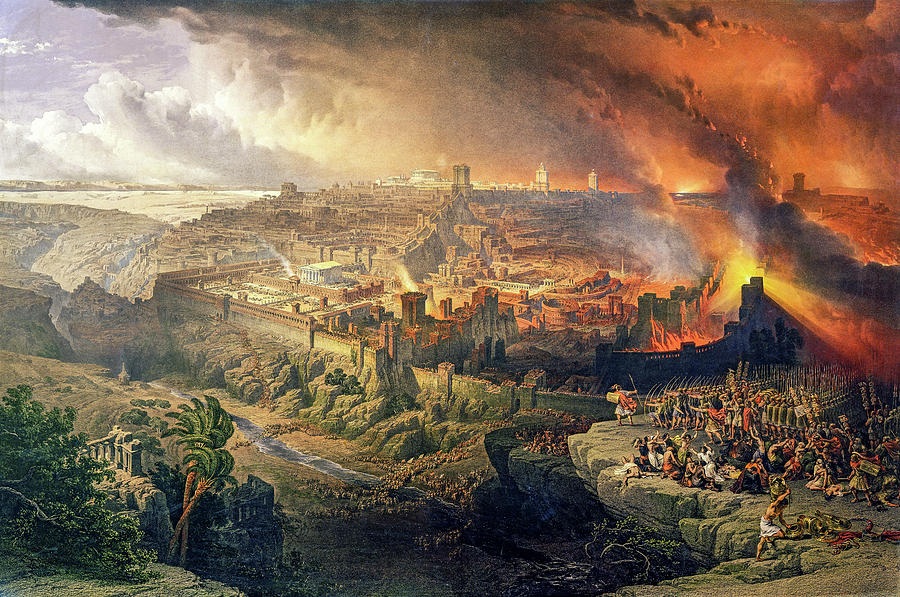
Rome destroyed Jerusalem in 70 CE. The Second Temple was burned, Jewish sovereignty was crushed, and a people whose political and religious life had revolved around Jerusalem were scattered across an empire that considered their independence a threat. Rome could destroy the Temple, seize the city and disperse its inhabitants. What it could not destroy was the memory that Jerusalem was not simply a place of residence. It was the centre of a covenant, a civilisation and a historical promise.
By Rami Audi
Nearly nineteen centuries later, another European power would place that ancient question on its diplomatic table. In November 1917, Britain issued a declaration supporting the establishment of a national home for the Jewish people in Palestine.
The Balfour Declaration was not merely a diplomatic document. It was the moment when a biblical inheritance entered the modern political order, when a promise preserved in scripture confronted an empire's calculations.
The significance of that moment becomes clearer when we consider Europe's relationship to its own religious inheritance. European civilisation cannot be understood without Jerusalem. Its moral vocabulary, theological imagination and understanding of history were profoundly shaped by the Hebrew Bible.
Christianity carried the Jewish scriptures into the heart of Europe, and generations of European thinkers, theologians and political leaders drew upon a tradition whose geographical and spiritual centre was Zion.
Yet Europe developed a remarkable contradiction. It inherited a civilisation shaped by the Hebrew Bible while repeatedly treating the Jewish people as strangers within its own society. The same continent that built cathedrals around biblical narratives expelled Jewish communities, restricted their occupations, confined them to ghettos and periodically turned them into targets of collective violence.
Jews were permitted to remain in European civilisation as figures in its sacred history but rarely accepted as a people entitled to determine their own political future.
This contradiction is essential to understanding Balfour. The declaration did not emerge from an intellectual vacuum. It came at a moment when the old European order was collapsing under the weight of the First World War, when empires were reconsidering their borders and when the national aspirations of peoples once denied political recognition were becoming increasingly difficult to ignore.
Zionism had already given political expression to the Jewish national question. Theodor Herzl had articulated the necessity of Jewish sovereignty, while the movement that developed around him transformed an ancient longing into a modern political project.
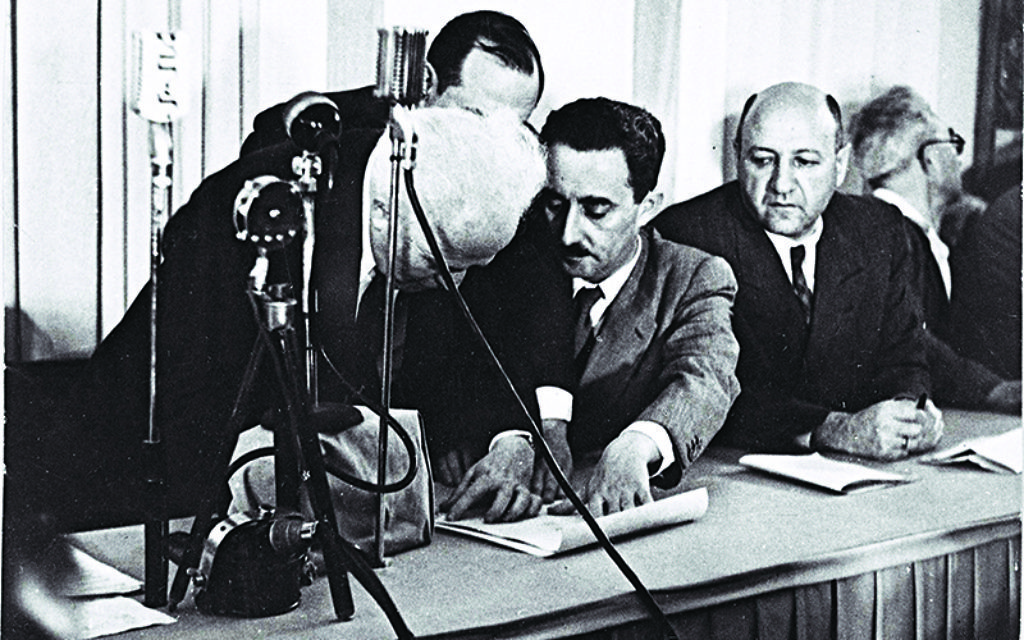
Its foundations, however, were considerably older than nineteenth-century nationalism. Jewish attachment to Zion did not originate in European diplomacy, nor did it require European permission. It survived through religious practice, collective memory, historical experience and an uninterrupted relationship with the land.
The distinction matters. Zionism was modern in its political organisation, but its historical subject was ancient. It sought to restore political agency to a people whose connection to its homeland had survived centuries of displacement.
Two members of the Rothschild family illustrate the different dimensions of this transformation. Baron Edmond de Rothschild supported Jewish agricultural settlements in Palestine with substantial financial assistance, helping lay the material foundations for renewed Jewish life. His contribution belonged to the practical history of return: land, agriculture, employment and settlement.
Walter Rothschild, by contrast, received the letter in which the British government communicated its historic declaration. The letter was addressed to Lord Rothschild because of his standing within the British Jewish community and his association with the Zionist movement. The family name thus appears in two different chapters of the same historical undertaking: one connected with the physical reconstruction of Jewish life, the other with its diplomatic recognition.
But neither financial assistance nor diplomatic language could have produced the declaration without Chaim Weizmann's political work. A chemist by profession and a Zionist leader by conviction, Weizmann understood that the Jewish national question had to be presented not merely as a humanitarian concern but as a legitimate political claim. His relationships with British political figures, including Arthur Balfour and David Lloyd George, helped bring Zionism into the highest levels of British government.
The declaration itself was brief, but its implications were enormous. Britain viewed the Jewish national home as a matter of strategic, political and moral significance. The First World War had placed the future of the Ottoman territories under intense scrutiny. British policymakers were also influenced by religious convictions, geopolitical calculations and the growing recognition that Jewish national aspirations could no longer be dismissed as an unrealistic dream.
The biblical dimension was not incidental. For centuries, the return to Zion had existed within European religious consciousness. The story of exile and restoration was familiar to Christian Europe, even when European political practice contradicted its moral implications. In 1917, that inherited narrative entered a diplomatic document.
Britain, in a symbolic sense, became a new Rome. The comparison is not about identical intentions or historical circumstances. Rome had destroyed Jewish sovereignty; Britain now possessed the power to recognise the possibility of its restoration.
The empire that once governed territories through conquest could, at this particular moment, use its diplomatic authority to acknowledge a national aspiration rooted in a history far older than the British Empire itself.
This was Britain's opportunity for historical distinction. It could have shown that European power could correct, rather than perpetuate, the injustices of its past.
Yet the declaration contained a tension that would soon become impossible to ignore. It supported a Jewish national home while stating that nothing should prejudice the civil and religious rights of existing non-Jewish communities in Palestine. That qualification was important. The land was not an empty geographical abstraction. It was inhabited by Arab communities whose rights, security and future mattered.
The challenge was therefore not simply to recognise Jewish national aspirations, but to translate that recognition into a political arrangement that could accommodate the legitimate rights of the population already living there. A historic promise required political responsibility, and political responsibility required more than the language of imperial benevolence.
The British government ultimately failed that test.
Following the Ottoman defeat, Britain received the Mandate for Palestine, incorporating the Balfour Declaration into an international framework. But the Mandate's administration increasingly exposed the gap between the declaration's promise and Britain's willingness to honour it.
The 1939 White Paper severely restricted Jewish immigration and land acquisition at precisely the moment when European Jews faced the growing machinery of Nazi persecution.
The timing was catastrophic. As Hitler's regime stripped Jews of their rights, confiscated their property and prepared the machinery of extermination, Britain's immigration restrictions closed one of the most important potential routes to refuge.
The country that had once opened the diplomatic door to Jewish national restoration now narrowed the physical door through which desperate Jewish refugees might escape. The contradiction was not merely administrative. It was civilisational.
Europe's Jewish catastrophe exposed the consequences of a continent that had repeatedly treated Jewish existence as conditional. The Holocaust was the most terrible expression of that history, but it did not begin in 1933. Its intellectual and cultural foundations were cultivated through centuries of antisemitism, exclusion and the political normalisation of hostility towards Jews.
Against that background, the Balfour Declaration took on a meaning beyond its original diplomatic purpose. It became a measure of Europe's relationship with its own history. Britain had recognised that Jewish national restoration was legitimate, yet when the moment demanded the courage to defend that principle, it retreated.
The establishment of Israel in 1948 transformed the historical question. Jewish sovereignty was no longer simply a declaration of intention or an aspiration negotiated between governments. It became a political reality. The Jewish people had returned to the position of a nation capable of defending itself, governing its affairs and participating in international politics as an independent state.
This did not resolve every question created by the competing national aspirations in the land. Palestinians experienced displacement and the loss of homes and communities during the events surrounding Israel's establishment.
Their history cannot responsibly be erased, nor can their legitimate rights be dismissed. They were not responsible for Europe's centuries of antisemitism, and they should never have been made to carry the burden of European guilt.
But acknowledging Palestinian suffering does not require denying Jewish history. Nor does recognising the legitimacy of Jewish self-determination require treating Palestinian national aspirations as illegitimate.
The tragedy of the conflict is that two peoples have come to understand their national futures through competing historical experiences, while political leadership has repeatedly failed to build a sustainable arrangement between them.
The Balfour Declaration should therefore be read neither as a complete solution nor as an imperial document whose significance ended with the Mandate. It represents a turning point in the relationship between European civilisation, Jewish history and the modern state system.
It also reminds us that political legitimacy is not created simply by the power of the state that issues a declaration. It must also be understood through the history of the people whose future is being recognised.
There is an irony in the fact that Europe, which inherited so much of its spiritual vocabulary from the Hebrew Bible, eventually had to confront the return of the Jewish people as a political reality. For centuries, Europeans interpreted Jewish history through theology, literature, and religious imagination. In 1917, and more decisively in 1948, that history re-entered the political world through Jewish agency.
Britain had the opportunity to make its name in history by helping reconcile European power with the civilisation from which much of its moral inheritance had emerged. It made a genuinely historic declaration, but failed to carry its promise through the most consequential years.
The lesson is larger than Britain, Palestine or the diplomatic history of the First World War. Civilisations cannot indefinitely celebrate the traditions that shaped them while refusing to recognise the historical rights of the people who preserved those traditions. Nor can a government claim moral distinction for a promise while abandoning the responsibilities that accompany it.
Rome could destroy the Temple, but it could not extinguish Zion's memory. Empires came and disappeared. The Jewish people survived, carried their history across continents and eventually restored their sovereignty. The Balfour Declaration did not create that historical relationship. It recognised, however imperfectly, that it belonged in the modern political order.
In the end, the Bible entered the diplomatic room because history had never really left it. The question was whether Europe was prepared to understand the consequences of its own inheritance.
The return of the Jewish people to sovereignty was not Europe's gift to the Jews. It was a Jewish achievement, pursued across generations despite Europe's repeated failures. Britain's declaration remains significant because, for a brief moment, an empire recognised a historical truth that it subsequently lacked the courage to defend.