“It is easier to start a war than to end it,” Gabriel García Márquez wrote in his celebrated novel One Hundred Years of Solitude. Perhaps Russia would have been better off had its leadership read not only Márquez but also Sun Tzu’s The Art of War before launching the invasion of Ukraine in 2022.
By Nikola Mikovic
Unable to achieve any of its strategic goals in Ukraine, the Kremlin seems desperate to at least freeze the conflict, if not bring it to an end, in a way that would allow Russian President Vladimir Putin to save face. To do that, Moscow is counting on help from Washington.
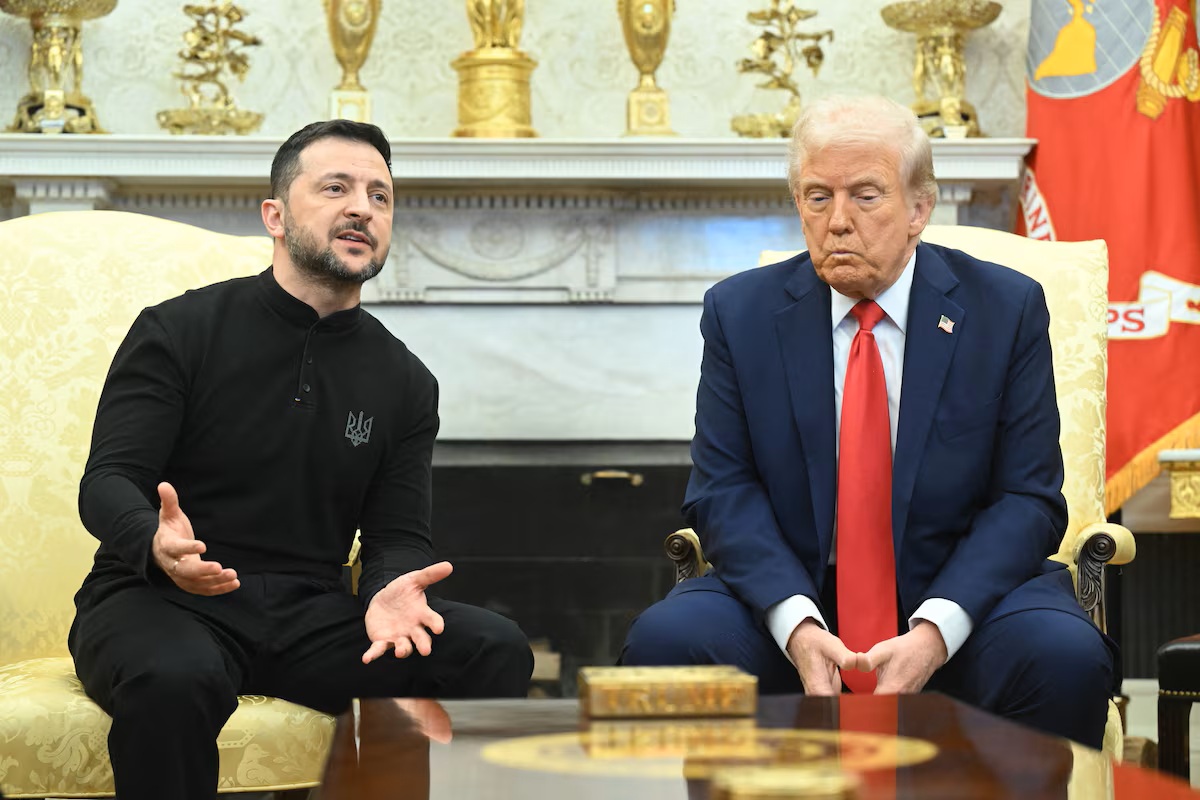
On November 10 and 11, Russian and Ukrainian representatives, along with US President Donald Trump's special envoys Steve Witkoff and Jared Kushner, met in Abu Dhabi to discuss ending hostilities in the Eastern European country. No significant progress has been made, although the two US officials are expected to meet separately with Putin and Ukrainian President Volodymyr Zelensky, hoping to persuade them to reach a deal.
From Trump’s perspective, such an approach makes perfect sense. Following the Republicans' defeat in the primaries, as well as the US debacle in Iran, Trump badly needs a foreign policy success that he can present as a victory. More importantly, if he plans to launch another round of confrontation with Iran, which could be even more devastating than the previous one, he likely wants to put the war in Ukraine on hold.
However, under the current circumstances, Zelensky, firmly backed by his European allies, has no compelling reason to make concessions to Trump or Putin. If a peace deal is reached, he will have to hold presidential elections, which would almost certainly lead to his defeat. Also, ending the war would mean lifting martial law in Ukraine, potentially prompting hundreds of thousands, if not millions, of men to leave the country.
Nevertheless, the US and Russia are likely hoping to pressure him into reaching a deal with Moscow. The Kremlin is doing so by targeting Ukrainian critical infrastructure, while Washington is applying pressure by refusing to provide military aid to Kyiv.
However, even a shortage of US-made Patriot missiles is unlikely to force Zelensky to sign a deal that could be interpreted as a “capitulation” to Russia. The Ukrainian leader can clearly see that the Kremlin is not fighting the war to win it, but rather to secure a compromise.
Russia is not even attempting to take advantage of Ukraine's lack of air defence systems by launching massive strikes against its key bridges, tunnels, command centres, military airfields and other critical infrastructure. Instead, it is targeting power stations, which have little impact on Ukraine's military operational capabilities, and using drones to damage, but not completely destroy, bridges over the Dnieper River.
Zelensky therefore knows that even without American weapons, Ukraine can keep fighting, as its opponent does not seem particularly interested in achieving its military and political objectives. The only exception might be the Donbas, as Russia seems determined to capture it at any cost. But even there, the Kremlin might be willing to make concessions.
According to unconfirmed reports, Witkoff and Kushner suggested that Ukraine redraw the administrative boundaries of the Donetsk region, incorporating the parts it still controls into neighbouring Kharkiv Oblast. Such a “creative” approach would allow the Kremlin to declare “victory”, claiming that it had achieved its strategic goal of “liberating” Donbas.
Given that Putin has established a dictatorship at home, he will not have to explain to the Russian public why he failed to achieve his other goals, namely the demilitarisation and “denazification” (whatever that means) of Ukraine, forcing Kyiv to abandon its aspirations to join NATO, and granting the Russian language the same status as Ukrainian.
At the same time, by accepting any deal with Ukraine, the Kremlin would effectively give the United States the green light to focus entirely on Iran/ Moscow's key partner to the south.
Once the job in the Middle East is done, the US can shift its focus back to Ukraine. Meanwhile, European countries will undoubtedly continue arming and funding Kyiv, preparing it for the inevitable continuation of the war. Russian leaders’ rhetoric suggests that they are fully aware of such an outcome, which is why they repeatedly insist that they will not sign a ceasefire with Ukraine.
However, given the Kremlin's history of “goodwill gestures”, it is not hard to imagine Moscow eventually signing a “peace deal” with Kyiv, only to accuse its Ukrainian and Western partners of “deceiving” Russia once the agreement proves to be a dead letter. But no matter what deal, if any, Russia and Ukraine reach in the coming weeks or months, it is very unlikely to bring the war to a permanent end.
Sun Tzu famously argued that the supreme art of war is to subdue the enemy without fighting. Yet neither Moscow nor Kyiv seems willing or able to achieve such an outcome.
Since neither side has achieved its strategic goals, and both are weary of fighting and seem unable to make significant breakthroughs, a ceasefire resembling the Minsk Agreements period (2015–2022) looks entirely possible. However, lasting peace between Moscow and Kyiv will come only when one side agrees to a de facto surrender.