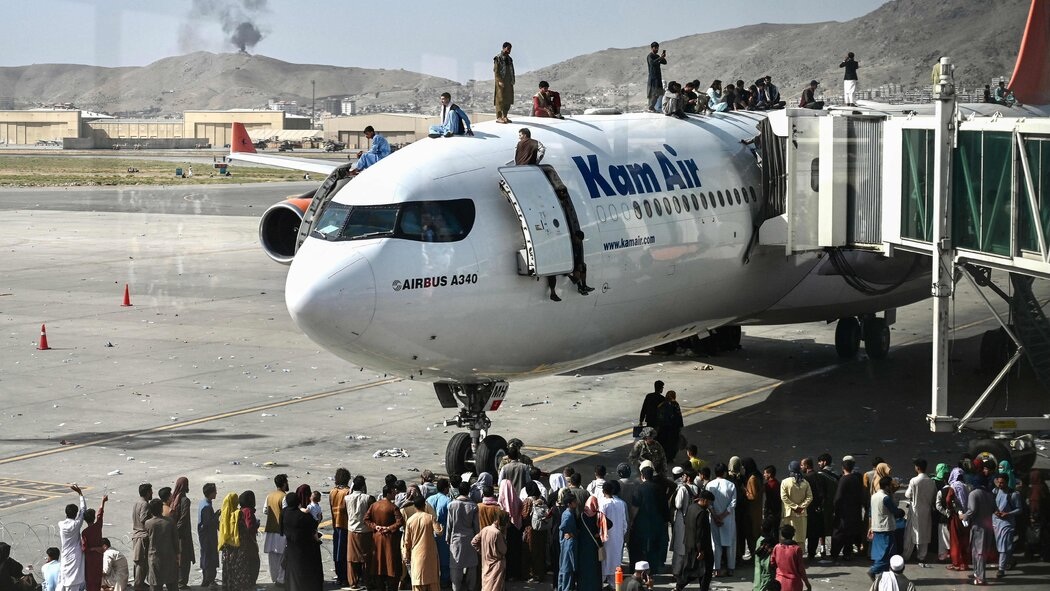
The unexpected reconfiguration of Afghanistan’s political and strategic future marked 2021. In July 2021, US forces handed over the base to the Afghan National Security and Defence Forces chaotically, without a plan or ceremony, in the wake of the US and NATO coalition forces' withdrawal.
By Ahsan Ali
Before the US withdrawal on 15th August 2021, Kabul and the entire base fell into Taliban hands, much to the astonishment of the world, while the US was still withdrawing. There were lingering questions over the Afghan National Army’s ineptitude in the field despite massive spending and training programs under the US and NATO cooperation.
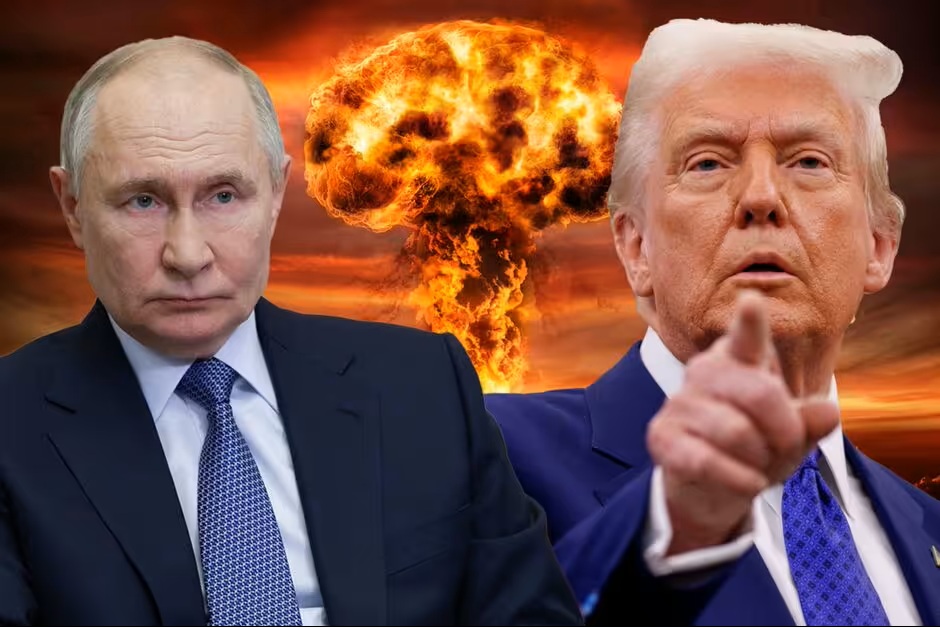
President Trump criticised the chaotic withdrawal of the US from Afghanistan under President Joe Biden and the handing over of Bagram Air Base to Afghan forces. His comments inflamed the Taliban by firmly rejecting handing over Bagram Air Base to the US, recalling the past agreement of no resort to force and respect of territorial integrity.
For Afghans, Bagram Air Base symbolises a fortress of foreign power; meanwhile, the US regards it as of geostrategic importance. President Trump’s geostrategic importance is not limited only to Afghanistan. Instead, he considers Venezuela and Afghanistan the joint spots where, if left unchecked, they can become the hotspots against the US and its interests.
The timing of President Trump's push at Bagram Air Base was not coincidental. The geopolitical events of Venezuela, Chinese economic interest in Afghanistan and Russian recognition of the Islamic Emirate of Afghanistan coincide with President Trump’s control of Bagram Air Base.
To counter China, President Trump pushed the narrative that China would build a nuclear bomb at Bagram despite China’s limited economic and security interests. President Trump does not want Central Asia to become part of a Sino-Russian economic and security orbit.
President Trump did not put his eyes down when Russia recognised the Taliban government in July 2025. The recognition reverberated across the post-Soviet space, but all are proceeding with caution. Russian recognition permits Russia to cooperate with the Taliban against terrorism and security enhancement pragmatically.
Where Russia faced terrorist attacks last year by ISIS–Khorasan, which is perceived as a mutual threat by the Taliban and Russia, and needs to be tackled. From the US perspective, any Russian foothold in Afghanistan would be serving as a strategic intelligence platform. Any enabling in the name of combating terrorism in Afghanistan can allow Russians to monitor the US activities.
If Russia is permitted to establish a liaison office in Bagram, it could undermine U.S. influence. Russia may play a pivotal role in improving Afghan-Iranian relations and in significantly containing U.S. influence. This would facilitate security and economic cooperation between Iran and Russia, enabling Iran to recoup its recent military losses.
Chinese interests in Afghanistan are tied economically with deals such as a $150-580 million oil extraction deal, $2 billion mining and industrial parks and inclusion in the Belt and Road Initiative alongside Pakistan. The US views Chinese investments in Afghanistan as a strategic precursor to securing future operational access, including to Bagram Air Base.
Meanwhile, across the Atlantic, Russia maintains a diplomatic, strategic, and security partnership with Venezuela under President Nicolas Maduro, where the US is currently building up military. The Russian presence in Venezuela is part of a broader strategy to establish a presence in Latin America.
The asymmetrical leverage enables military diplomacy, intelligence gathering, and a foothold in Cuba. The posture supports President Maduro and facilitates intelligence gathering while maintaining strategic ambiguity and deniability. Without being hostile to Moscow, the US indirectly aims to detach Venezuela from Russia.
Consequently, President Trump seeks to implement a strategic pincer movement by opposing any Russian foothold in Bagram. Simultaneously, he wants to manoeuvre Russia out of Venezuela, preventing any Russian forward operating base in the American hemisphere. This calculus will also enable the US to preserve the Monroe Doctrine by excluding Russia from Latin America.
With tensions heightened between the US and Venezuela, and limited Russian support, the tides are turning against the Russian intelligence apparatus in Venezuela. This juxtaposition reveals President Trump’s approach to personal diplomacy as a transactional, interest-driven strategy.
President Trump may want a light footprint in Afghanistan for forward operating bases. Domestically, President Trump called President Biden’s policy on leaving Afghanistan a complete disaster, and any footprint would be a domestic win for him.
In foreign policy, the U.S. presence in Afghanistan would be for surveillance and intelligence and to exert political leverage against China. It would further involve reasserting its influence by countering Russian energy deals and potential military cooperation in Afghanistan, and by monitoring developments in BRICS and the SCO.
It can play a pivotal role against Iran as a launching point for deterrence operations in the wake of a crisis. It would provide an insurance policy against extremist elements of Al-Qaeda and ISIS-K with rapid deployment and potential strike capacity.
Lastly, in any scenario of the fall of President Maduro and the rise of a pro-Western government, the Russian intelligentsia will be expelled with dismantling operations against the US. This would underscore President Trump, publicly engaging with Russia, and indirectly rolling back Russian influence in critical theatres and favouring forward basing.


This article's mention of Afghanistan and Venezuela, Russia and the USA is most insightful.