Azerbaijan underscored its active role in navigating the shifting geopolitical landscape of Eurasia in 2025. Across the South Caucasus and beyond, states are adjusting to the aftershocks of the war in Ukraine, shifting regional alliances, and evolving global priorities. Baku pursues a foreign policy that balances engagement with the protection of national interests, leveraging its strategic position in regional transport and energy networks.
By Vasif Huseynov
The country's approach combines diplomatic negotiation, regional cooperation, and assertion of sovereignty, reflecting a pragmatic rather than purely ambitious strategy. In doing so, Baku has managed to project influence far beyond its immediate neighbourhood, shaping discussions on energy, security, and infrastructure across Eurasia.
Amid this broader strategic canvas, the Armenia–Azerbaijan peace process has been the centrepiece of Baku’s foreign policy achievements. After years of stalled negotiations and intermittent military escalations, 2025 has witnessed a significant breakthrough.
The US-mediated meeting of the Armenian and Azerbaijani leaders in Washington (August 8, 2025) marked a decisive moment, bringing both sides into intensive dialogue and producing substantial progress toward a comprehensive peace treaty. The sides initialled the peace treaty and agreed to sign it after Armenia removes territorial claims against Azerbaijan from its state constitution.
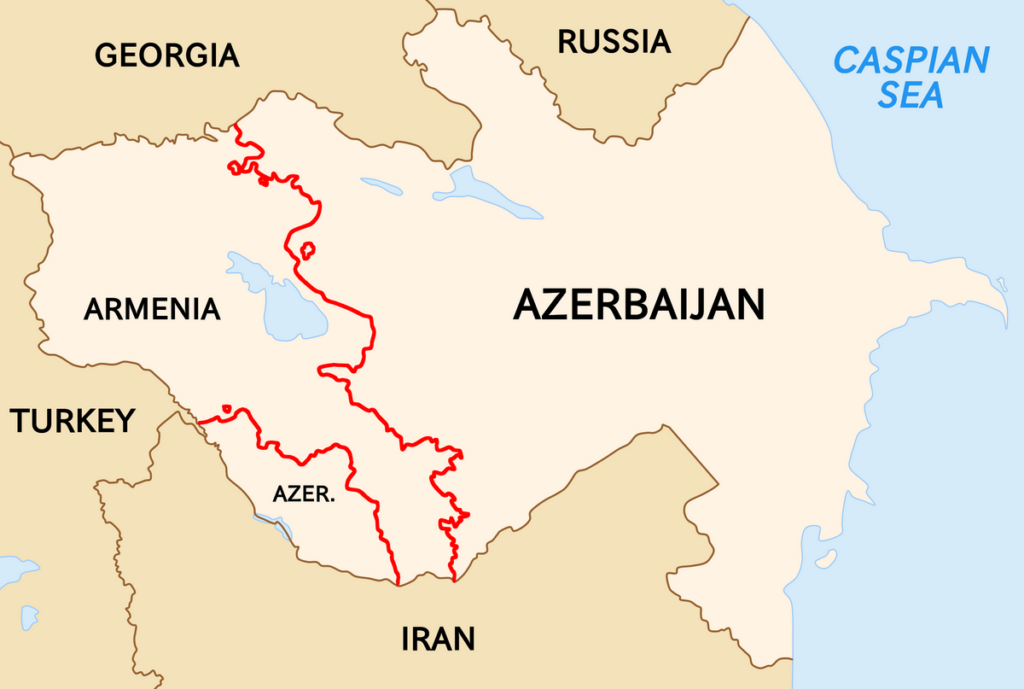
The two countries also agreed to dissolve one of the last relics of the conflict – the Minsk Group of the OSCE, an institution created in 1992 to mediate the Armenia-Azerbaijan peace talks, and in a move of critical geoeconomic and geopolitical importance for the broader region, Baku and Yerevan also agreed to open the Zangezur corridor.
This key transportation corridor will enhance the potential of the Trans-Caspian International Transport Route (also known as the Middle Corridor) once it is opened.
The aftermath of the Washington summit has opened a clear path toward the normalisation of relations between Baku and Yerevan, with notable developments. In this context, the most crucial development was Azerbaijan's October 21 decision to lift all restrictions on the transit of goods to Armenia via Azerbaijan. Restrictions that had been in place since the early 1990s, when Armenia occupied the Azerbaijani territories.
Armenia reciprocated this gesture by lifting restrictions on cargo transit to Azerbaijan. This was accompanied by the launch of grain shipments from Russia and Kazakhstan to Armenia via Azerbaijan for the first time in three decades.
Towards the end of the year, Azerbaijan began exporting oil to Armenia via Georgia, in a way that complemented the earlier decision to lift transit restrictions by commencing interstate trade between the two sides. In parallel, the sides made progress in a few other directions that generally created a conducive environment for the normalisation of bilateral relations.
The Washington summit was critical for Azerbaijan, particularly given its implications for US-Azerbaijan relations. Washington’s facilitation of the talks not only reinforced the peace process's legitimacy but also underscored Azerbaijan’s growing role as a trusted partner in US regional strategy.
Baku’s engagement with Washington has combined advocacy for its national interests with alignment on broader regional security concerns, including energy security, counterterrorism, and transport infrastructure. The decision to begin work on establishing a charter for the strategic partnership between the two countries has been a highlight of bilateral relations throughout the post-Soviet period.
Through these efforts, the US-Azerbaijan relationship has overcome the crisis it experienced during the Biden presidency and embarked on a rapidly developing track. In the other Western direction, in relations with the European Union, Azerbaijan made notable progress in 2025.
The April visit by the EU’s High Representative for Foreign Affairs and Security Policy, Kaja Kallas, to Azerbaijan was a highlight of bilateral relations over the past year. She conveyed positive messages about the future of ties, demonstrating the EU’s willingness to overcome the hostile atmosphere in relations over the past years.
While consolidating Western partnerships, Azerbaijan has also navigated a complicated relationship with Russia. From the outset of the Ukraine war, Azerbaijan upheld Ukraine’s sovereignty and territorial integrity, providing up to $50 million in humanitarian and energy assistance, including a landmark 2025 agreement to supply natural gas to Ukraine.
Simultaneously, tensions have arisen in Azerbaijan–Russia relations, particularly following the tragic crash of an Azerbaijani Airlines aircraft over Russian territory in December 2024, which claimed 38 lives. The crisis tested the limits of the bilateral relationship over the past year, resulting in diplomatic strains, cyberattacks, and mutual recriminations.
Despite these tensions, Azerbaijan demonstrated both resolve and strategic vision. President Ilham Aliyev demanded accountability and compensation, signalling that Azerbaijan would no longer tolerate Moscow's unilateral dominance in the South Caucasus. The turning point came in October 2025, when President Aliyev met Russia’s President Vladimir Putin in Dushanbe during the Commonwealth of Independent States (CIS) summit.
President Putin’s rare public acknowledgement of Russia’s responsibility for the incident represented a major diplomatic victory for Baku and reflected its rising influence.
At the same time, Azerbaijan continues to cooperate with Russia on mutual interests, particularly regarding the North–South Transport Corridor, which connects Russia with South Asia through the South Caucasus and Iran. This balance between criticism and cooperation highlights Azerbaijan’s sophisticated approach to managing great-power relations.
Azerbaijan’s engagement with the Middle East has also expanded notably in 2025. It reflected its evolution into a trusted diplomatic actor beyond the South Caucasus. Baku’s participation in the Middle East Peace Summit in Sharm el-Sheikh in October 2025 demonstrated its growing credibility in regional conflict mediation efforts.
The ceasefire agreement facilitated by the United States, Egypt, Qatar, and Türkiye opened discussions on forming an international stabilisation force for Gaza, with Azerbaijan — alongside Indonesia and Pakistan — considered as a potential contributor. While no final commitments have yet been made, the very inclusion of Azerbaijan in these deliberations reflects both Washington’s trust and Baku’s strengthened diplomatic profile across the broader Middle East.
Azerbaijan’s strategic vision extends beyond bilateral diplomacy to multilateral regional engagement. The Organisation of Turkic States (OTS) and the establishment of the C6 format of cooperation in Central Asia (November 2025) have been key drivers of Baku’s regional policy. A notable example is the transformation of the C5 format of Central Asian states into C6, now including Azerbaijan.
This evolution reflects Baku’s growing recognition as a bridge between the South Caucasus and Central Asia and its ability to integrate its interests into broader regional frameworks. By participating in the expanded C6, Azerbaijan has strengthened regional dialogue on trade, security, and infrastructure connectivity, further consolidating its role as a hub linking Europe and Asia.
President Aliyev described this alignment as the emergence of “a single geopolitical and geo-economic region.” At the same time, President Shavkat Mirziyoyev called Azerbaijan’s inclusion “historic” and proposed transforming the consultative platform into a structured regional institution capable of shaping security, economic, environmental, and digital policy.
The year also marked a significant milestone in Turkic cooperation, with the 12th Summit of the Organisation of Turkic States held on 7 October 2025 in Gabala, Azerbaijan. Bringing together leaders from across the Turkic world, the summit marked an essential step toward transforming the OTS into a more cohesive and influential actor.
The Gabala Declaration reaffirmed member states' commitment to regional peace, prosperity, and integration, while President Aliyev emphasised the need for the organisation to assume a more proactive global role.
A key proposal was Azerbaijan’s initiative to organise the first-ever joint military exercises of the Turkic states in 2026. While not directed at any external party, the initiative aims to strengthen coordination and preparedness to address regional threats.
The summit also advanced major economic, technological, and environmental initiatives, including the creation of new financial instruments, the expansion of trade cooperation, and the launch of the Central Asia–Azerbaijan Green Energy Corridor.
With new outreach mechanisms such as “OTS+” and growing cultural and educational collaboration, the Gabala summit underscored the evolution of the Turkic world from a culturally linked community into a developing political and economic bloc of global relevance.
At the same time, Azerbaijan has reinforced its position as a logistical and energy connector in 2025. The Middle Corridor — the multimodal transport route linking Europe with China through Azerbaijan, Georgia, and Central Asia — continues to gain momentum.
Infrastructure development along the corridor, combined with Azerbaijan’s strategic location and investment in transport and energy links, enhances its role as an indispensable node in Eurasian connectivity.
These achievements complement the progress in the Armenia–Azerbaijan peace process, as regional stability is increasingly tied to economic integration and transportation networks.
In sum, Azerbaijan’s foreign policy in 2025 reflects a pragmatic effort to navigate a rapidly evolving regional and global environment. Through progress in the peace process with Armenia, renewed engagement with Western partners, calibrated management of its relationship with Russia, expanding outreach to the Middle East, and deeper involvement in Turkic and Central Asian cooperation formats, Baku has sought to safeguard national interests while contributing to broader regional stability.
At the same time, its growing role in connectivity initiatives such as the Middle Corridor underscores the country’s emphasis on economic integration as a foundation for long-term security. The durability of recent diplomatic gains will depend on developments within and beyond the South Caucasus.
Azerbaijan’s actions in 2025 reflect an approach to balancing diverse partnerships and positioning the country as a constructive actor in an increasingly interconnected Eurasian landscape.