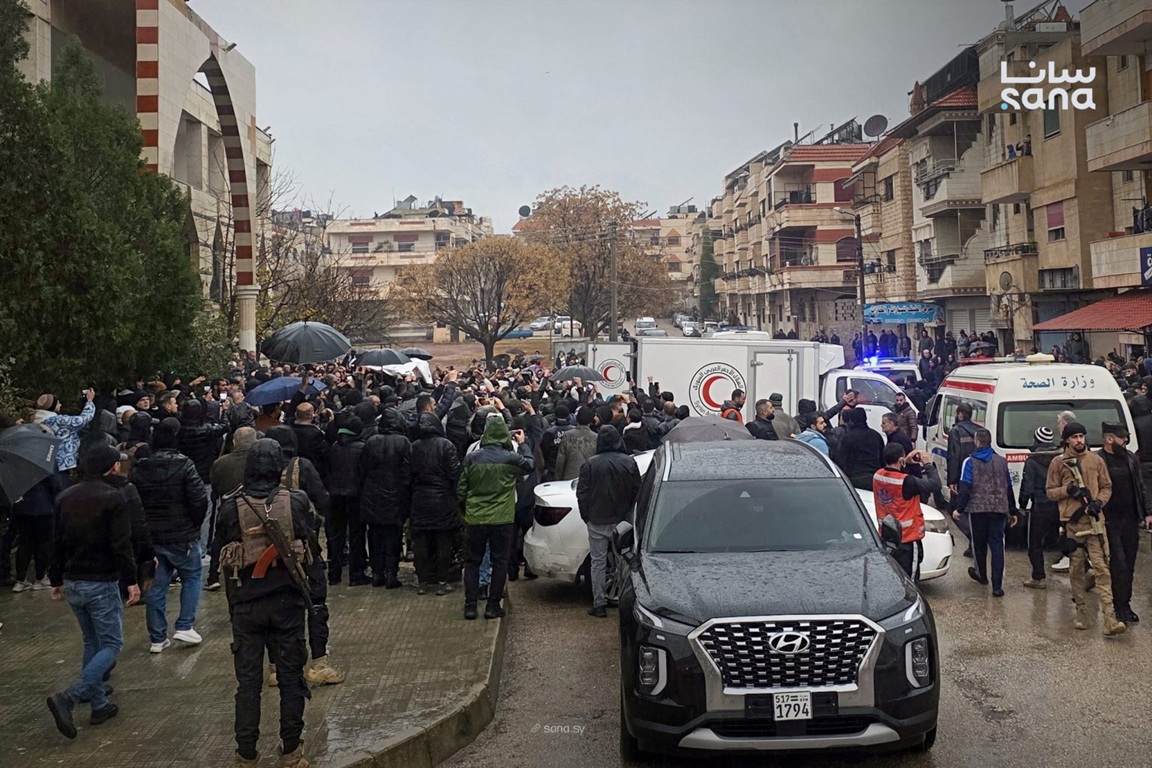
The terrorist bombing in Homs on Friday was not an isolated act of violence. It marked the beginning of a dangerous chain reaction in which Alawite civilians have found themselves increasingly exposed to extremist attacks, repression, erasure, and political exploitation. What unfolded after the bombing reveals how the failure of governance and the deliberate choices of the al-Sharaà administration have magnified Alawite suffering instead of containing it.
By Rafic Taleb
The Homs attack targeted civilians in an area inhabited by Alawites, Murshidis, Ja‘fari Shiites, and Sunnis who had relocated there after losing their homes or being priced out of the city. The mosque that was destroyed was an Alawite mosque, despite state-aligned media presenting the bombing as an attack on a Sunni mosque.
This misrepresentation concealed the sectarian reality of the crime and erased the identity of its primary victims.
This distortion was not incidental. It reflected a broader pattern in which Alawite victimhood is either denied or politically inconvenient. By refusing to acknowledge that an Alawite place of worship was targeted, the authorities signalled that some civilian deaths are more narratively acceptable than others.
Responsibility for the attack was widely attributed to extremist actors. The bombing was said to have no link to Israel, Iran, the Syrian Democratic Forces (SDF), remnants of the former regime, or foreign intelligence services. Attention instead focused on “Ansar al-Sunna,” described as an ISIS-aligned or parallel organisation operating in a way that allows ISIS to exert pressure without formally claiming attacks.
At the time, ISIS had not issued a statement, reinforcing the perception that the bombing was part of a campaign of intimidation rather than a single operation.
More alarming, however, is the acknowledgement that armed groups outside both ISIS and Hay’at Tahrir al-Sham openly advocate attacking Alawites wherever they are found. This reality alone demanded a serious, protective response from the authorities—one that never came.
Protests, Repression, and Direct Responsibility
In the aftermath of the bombing, protests erupted in coastal areas with significant Alawite populations. These demonstrations were not spontaneous outbursts of chaos but expressions of fear, anger, and abandonment. Protesters burned images of Bashar al-Assad and confronted security forces, seeking accountability and protection.
The response of the al-Sharaà administration was decisive—and disastrous. Security forces intervened in a manner that resulted in the deaths of six people, including a member of the General Security. This outcome was not the product of inevitability or confusion; it was the direct consequence of political choices. The administration chose coercion over de-escalation, repression over dialogue, and force over responsibility.
By allowing sectarian hate speech to flourish unchecked while responding violently to Alawite protests, the authorities created a combustible environment. The result was predictable: more profound alienation, rising anger, and a widening gap between the state and a community that already feels unprotected.
The al-Sharaà administration bears personal and political responsibility for this outcome. It failed to secure Alawite areas before violence occurred, was unable to protect civilians after the bombing, and failed to manage protests without bloodshed. These failures are not abstract—they have names, faces, and graves.
A Compromised Security Architecture
The crisis cannot be separated from the structural decay of Syria’s security institutions under the current authority. Former regime elements—including members of the Fourth Division, reconciliation forces, and National Defence militias—have reportedly been integrated into security and military bodies. These actors retain their own loyalties and are widely believed to be poised to defect if a coordinated military move occurs.
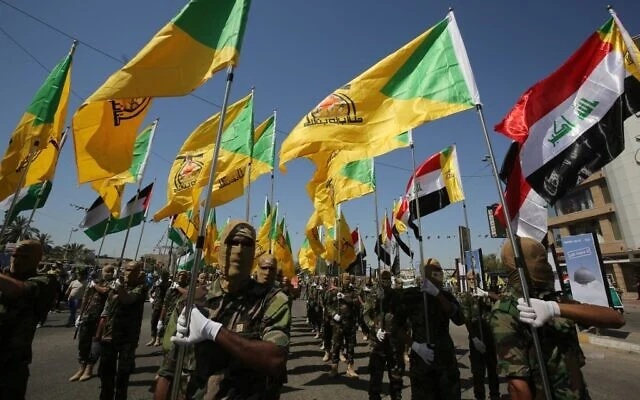
Strategic corridors stretching from Jadida Yabous through al-Qusayr to Tartous have been identified as potential axes of movement. Meanwhile, approximately 4,000 former regime fighters are said to have been transferred to Iraq, with expectations that they could re-enter Syria via the Iraqi border under the cover of the Popular Mobilisation Forces.
Russian involvement adds another layer of instability. The Hmeimim airbase and Tartous naval base reportedly host large numbers of former regime officers. At the same time, Moscow is accused of preparing indirect military action designed to weaken the current authority without overt attribution.
In this environment, Alawite civilians are trapped between extremist violence, infiltrated security structures, and an administration incapable—or unwilling—of providing genuine protection.
International Politics and the Instrumentalisation of Suffering
Alawite suffering has not gone unnoticed abroad. Alawite lobbying networks in the United States are reported to have become more organised and influential, particularly with respect to sanctions policy. Conditions linked to the lifting of the Caesar Act reportedly included explicit guarantees against repression of minorities, especially in the coastal regions.
The violent handling of recent protests has undermined these guarantees. As a result, the al-Sharaà administration has not only failed its citizens but has also provided foreign actors with a powerful tool to justify the perpetuation of sanctions and external pressure.
At the same time, regional and international rivalries continue to play out over Syrian territory. Israel, Russia, and the United Arab Emirates are widely perceived as pursuing long-term strategies that keep Syria unstable. Turkey, Qatar, and Saudi Arabia, by contrast, are seen as losing influence. Amid these shifting alliances, Alawite civilians are reduced to bargaining chips in struggles far beyond their control.
A Dangerous Cycle Takes Shape
One of the most ominous warnings to emerge from this crisis is the threat of retaliatory violence. Every act of random killing, kidnapping, or sectarian targeting of Alawites is likely to provoke disproportionate retaliation against Sunnis, particularly in the coastal regions, Homs, Hama, and Daraa. This dynamic risks locking Syria into a spiral of revenge that will consume communities indiscriminately.
What began as a terrorist attack in Homs has thus evolved into a broader indictment of governance under al-Sharaà. Extremist violence lit the fuse, but it was the administration’s response—or lack of it—that allowed the explosion to spread.
Today, Alawite civilians are paying the price for a political order that neither protects them nor tells the truth about their suffering. Until accountability replaces denial and responsibility replaces repression, the cost will continue to be measured in civilian lives.



Thank you for this well-written and insightful article. ISIS' fingerprints are observed in these atrocities against the Alawites.