Some political ideas disappear when their historical moment does. Others wait. Zionism has always belonged to the second category.
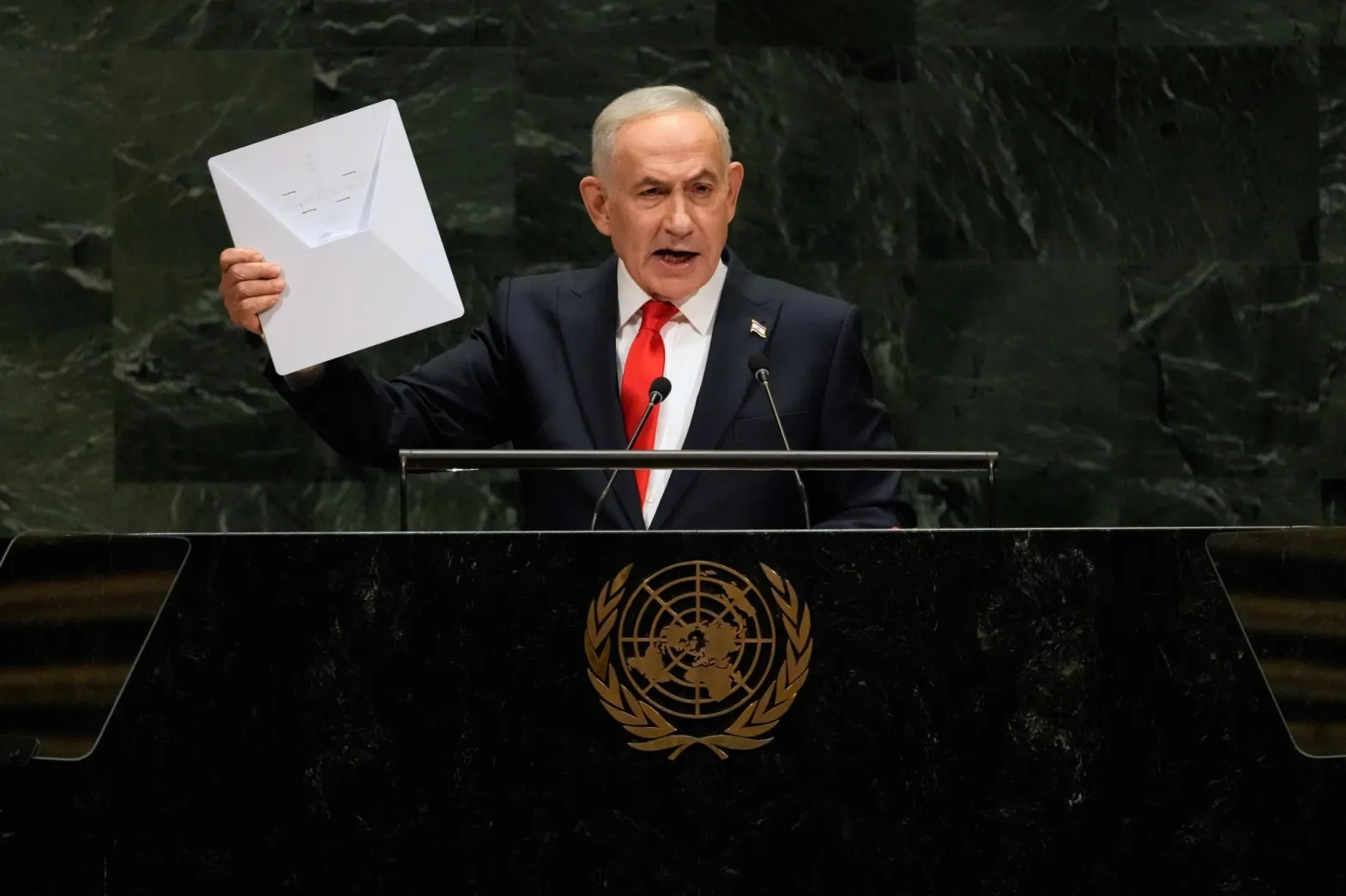
To understand the Israel of Benjamin Netanyahu, it is tempting to begin with Netanyahu himself: the speeches, the wars, the elections, the arguments over territory and security. But Netanyahu did not invent the political language in which much of contemporary Israel speaks. People fought over that language long before the State of Israel existed.
By Rami Audi
Zionism was never one idea wearing different uniforms. From its beginning, it was an argument about what a Jewish return should mean.
The Hebrew word aliyah means “ascent.” It became the language of Jewish immigration to the Land of Israel, but it carries something older than a demographic movement. Jews were not simply moving from one country to another. The movement was imagined as an upward return, away from Galut, exile and dispersion, toward Eretz Yisrael, the Land of Israel.
But what kind of political existence should emerge from that return?
For much of the pre-state period, Labour Zionism shaped the answer. Its leaders operated in a world in which socialism was one of the great political languages of the age. The Yishuv, the Jewish community in Palestine before statehood, became a remarkable laboratory of institution-building.
The Histadrut, founded in 1920, was far more than a trade-union federation. Alongside the kibbutzim, workers' organisations and political institutions, it helped create the economic and social machinery from which a state could eventually emerge. The vocabulary was avodah, work. Jewish national renewal would be built through labour, agriculture, collective organisation and settlement.
This was not merely romantic socialism. It was political construction.
Labour Zionism understood that a nation without institutions remained an aspiration. It built institutions. Its dominance was therefore not simply a consequence of socialist ideas' popularity. It had created a functioning political and economic infrastructure suited to the Yishuv and, later, to the young state.
But another Zionism waited in the wings.
Ze'ev Jabotinsky was born in Odessa in 1880. The Kishinev pogrom of 1903 became an important turning point in his political development. A journalist, writer, soldier, and organiser, he became the central figure of Revisionist Zionism and helped establish the movement in the 1920s. His politics challenged both the strategy and the socialist assumptions of the dominant Labour movement.
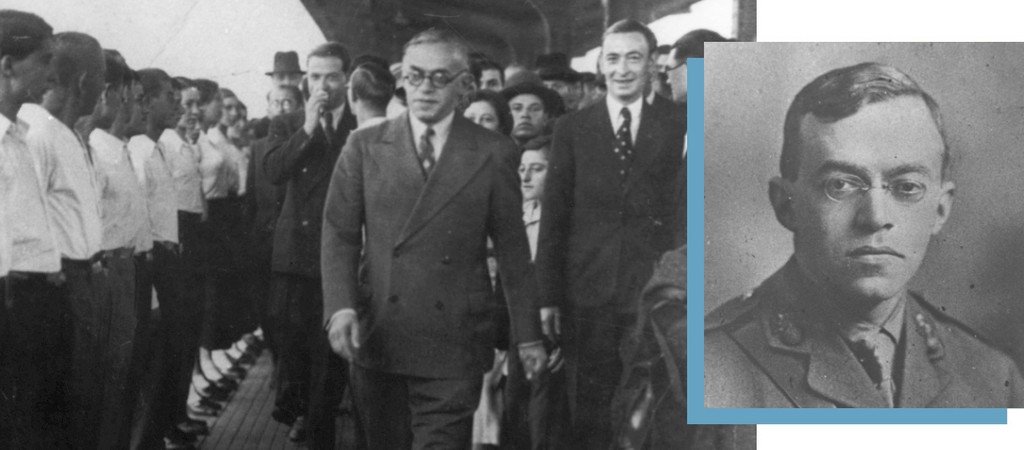
Jabotinsky's argument was not simply that Zionism should move from left to right. It was more fundamental. What happens when a national movement believes that political sovereignty is not the reward at the end of history, but the condition for surviving history?
His answer was uncompromising.
In his 1923 essay “The Iron Wall,” Jabotinsky argued that the Zionist movement had to be strong enough to withstand Arab opposition before an agreement could become possible. His own text also affirmed citizenship equality and national self-determination, while rejecting the expectation that the Arab population would accept the Zionist project voluntarily.
The metaphor was unforgettable: an Iron Wall.
Strength first. Negotiation from a position of strength later.
Revisionism also separated Zionism from the assumption that socialism had to be the natural economic philosophy of Jewish national revival. Jabotinsky placed greater emphasis on national sovereignty, individual liberty, private enterprise and the creation of a Jewish state with a Jewish majority.
The disagreement was therefore about more than economics. It was about what kind of civilisation Zionism was trying to build.
There was Am Yisrael, the people of Israel. There was Eretz Yisrael, the Land of Israel. Eventually, there would be Medinat Yisrael, the State of Israel.
But which one should determine the others? That question sounds ancient because it is.
Jabotinsky died in 1940, before the state he fought for existed. Yet political traditions rarely disappear as neatly as their founders.
Menachem Begin carried the Revisionist inheritance into state politics. A former Betar leader, Begin later led Herut and eventually Likud. In 1977, as Likud leader, he won the election and formed a government, ending decades of Labour-led political dominance. Likud won 43 seats to the Alignment's 32.
The symbolism went beyond one election.
Political language that had spent decades outside the centre of power had entered government.
Yet Begin also demonstrated why political inheritance should never be confused with political repetition. His government negotiated with Egypt and signed the Camp David Accords. The Revisionist tradition could therefore reach power without simply replaying Jabotinsky's politics.
That is the first warning against drawing a straight line from Jabotinsky to Netanyahu.
The line exists. It is simply not straight.
Between them came the Holocaust, the creation of Israel, wars, the Cold War, the Six-Day War, the Yom Kippur War, economic transformation and the collapse of Soviet communism. The world in which Netanyahu came of age was already very different from Jabotinsky's.
Netanyahu was born in 1949. His father, Benzion Netanyahu, was active in Revisionist Zionist circles and became Jabotinsky's personal secretary in New York before continuing his Revisionist political work after Jabotinsky's death.
That family connection is significant, but it is not destiny. Benjamin Netanyahu is not Jabotinsky reborn. He belongs to another century.
Yet something recognisable survived the journey: the conviction that Jewish political existence cannot safely depend upon somebody else's guarantee. And here the ancient world begins to appear behind the modern one.
Israel is a parliamentary democracy. It has a Knesset, elections, courts, a president and a prime minister. It is not a biblical monarchy. Yet the language of kingship has never completely disappeared from Jewish political memory.
David. Solomon. Hezekiah. The Melech, the king.
The modern Israeli state did not restore the monarchy. What survived was something subtler: the memory of Jewish sovereignty itself.
That memory matters because Zionism was never merely a twentieth-century response to European antisemitism. It was also an attempt to turn an ancient peoplehood into a modern political fact.
This is why the different schools of Zionism matter.
Labour Zionism emphasised collective work, settlement, and institution-building. Revisionist Zionism placed political sovereignty, national power and Jewish self-determination much closer to the centre. Religious Zionism connected national revival with religious meaning and the return to the Land.
Later currents complicated the picture further. Post-Zionism questioned whether Zionism should remain the central organising idea once a sovereign state already existed. Neo-Zionist currents placed renewed emphasis on Jewish national identity and the state's historical meaning. Kahanism represented a distinct and far more radical nationalist current and should not simply be folded into Revisionism.
These traditions should not be confused with one another. They are arguments within the larger argument. Before 1948, the central question was largely: how do we create a Jewish state?
After 1948, the question became harder: What is the Jewish state for? That question changes the entire political landscape.
The old Labor-versus-Revisionist division therefore cannot simply be transported into the twenty-first century. The kibbutz and the Histadrut belonged to a particular historical moment. Revisionism emerged from another. Netanyahu governs in another still.
The political world that produced Jabotinsky has disappeared.
His question has not. And that is where Europe enters the story.
For much of the postwar period, Western Europe tried to place national sovereignty inside larger structures. The memory of war made nationalism something to be managed, restrained and, in some cases, transcended.
But Europe is arguing about sovereignty again.
By 2025, parties challenging traditional political establishments were exerting growing influence on European foreign-policy debates, though their positions differed considerably. Their common ground was less a single ideology than a challenge to assumptions that had dominated European politics for decades.
Israel has consequently become part of a wider European political conversation.
For parts of the European right, Israel is seen through the questions of national identity, security, migration, borders and the confrontation with Islamist movements. But the relationship is neither uniform nor uncomplicated. Some parties have changed their attitudes toward Israel.
At the same time, analysts have also pointed to the political tensions surrounding the attempt by some movements to distance themselves from earlier antisemitic or extremist associations.
That complexity is precisely why the comparison deserves attention.
Europe is not Israel. European nationalism is not Zionism. Netanyahu is not Jabotinsky.
But both Europe and Israel are now forced to revisit an old political question: how much sovereignty can a people surrender before sovereignty itself becomes difficult to recover?
For Israel, sovereignty was the destination.
For postwar Europe, sovereignty became something to be shared, limited and embedded in institutions designed to prevent the return of old conflicts.
Those are opposite historical experiences. Yet they now meet in an unexpected place.
Europe is again debating borders, national identity, military power, migration and the authority of supranational institutions. Israel has spent much of its modern history arguing about what a sovereign Jewish state should defend, preserve and become.
The attraction Israel holds for parts of the European right therefore says something about Europe as well as Israel. It reflects a renewed interest in political continuity, national decision-making and the belief that a state must possess enough confidence in its own identity to defend it.
The comparison has obvious limits. Israel's history is uniquely Jewish, Middle Eastern and shaped by exile, persecution and the Holocaust. European nationalism has its own histories, including histories that produced catastrophe. Zionism cannot simply be imported as a European political template.
But the conversation itself matters.
The left once possessed much of the vocabulary of historical progress. Labour Zionism belonged to that world. It built, organised, and transformed.
The Revisionists asked another question: what happens when a people places political independence above the ideological fashion of its age?
Begin carried one version of that inheritance from the margins into government.
Netanyahu carried another into the twenty-first century.
And beneath both, almost strangely, the old memory remains.
The kings. Not as a constitutional programme. Not as nostalgia for monarchy. As memory.
Perhaps this is why the image of the king still carries such unusual force in Jewish political imagination. A Melech was not merely a ruler occupying an office. The word belongs to a civilisation that remembers having possessed political sovereignty, losing it, and imagining its return.
Zionism translated that memory into modern politics. Labour Zionism translated it through work, institutions and collective construction. Revisionism translated it through sovereignty, national independence and political strength.
Begin carried the inheritance into power. Netanyahu transformed part of it for another age.
And Europe, after decades of treating sovereignty as a problem to be contained, is once again arguing about how much of it a civilisation can afford to give away.
Jabotinsky could not have known our century. Netanyahu could not have known his. David could not have known either. Yet the same political question keeps changing its clothes: Who has the right to decide a people's future?
That is why the journey from Jabotinsky to Netanyahu is not really a story about one Israeli politician. It is the story of an idea surviving its own transformations.
The modern state speaks in the language of constitutions, elections and geopolitics. Beneath that language, older words remain: Melech, king; Eretz Yisrael, the Land; Am Yisrael, the people.
Zionism did not erase that older grammar. It translated it.
And perhaps that is why, after all these years, the kings keep returning.