Part II of the series: The New Eurasian Order, Part I, can be read here
Three interlocking forces are shaping Eurasia’s geopolitical future. Russia bears the historical cross of confrontation, China builds its quiet roads of economic connectivity, and Iran projects the crescent of fire, extending influence across the Middle East through strategy, patience, and regional alliances. Standing at the pivot of this triangular system, Iran demonstrates how a nation can leverage geography, culture, and networks to shape outcomes far beyond its borders.
By Nadia Ahmad
In today’s turbulent geopolitical landscape, three forces increasingly shape the future of Eurasia.
Russia carries what might be called the cross of the world — the weight of history and the burden of military confrontation that stretches from the steppes of Eastern Europe to the frozen frontlines of Ukraine.
China advances through the new Silk Roads, building corridors of trade, ports, railways, and digital infrastructure that quietly link Asia, the Middle East, and Europe. Iran, meanwhile, projects the crescent of fire, extending its reach through alliances, regional networks, and strategic patience across the Middle East.
Understanding how these three forces interact is essential to understanding the emerging global order. At the intersection of these dynamics stands Iran — volatile, resilient, and strategically positioned between two larger powers reshaping Eurasia. History rarely moves in straight lines. Sometimes it moves through fire. Sometimes through patience.
Iran, the ancient heart of Persia, has long stood at the crossroads of civilisations. From the imperial visions of Cyrus and Darius to the Islamic caliphates that later ruled from this plateau, Persia has been both a bridge and a battlefield linking East and West. Armies marched through its mountains and deserts, empires rose and fell around it, yet the strategic relevance of the Persian plateau never disappeared.
Even the streets of modern Tehran echo with this memory. Walking along the bazaar in the capital, one can see merchants trading Persian rugs alongside Chinese electronics, a subtle reminder that Iran has always been a node connecting civilisations, commerce, and ideas.
Today Iran again occupies a pivotal position — not only geographically but geopolitically. It lies between Russia’s northern sphere of influence and China’s expanding economic corridors, while simultaneously projecting power across the Middle East. In this emerging triangular structure of power, Iran represents the most volatile element: a regional actor capable of shaping outcomes far beyond its borders.
For European observers, understanding Iran’s role in this system is no longer optional. It is increasingly central to understanding the future balance of power across Eurasia.
The crescent of influence
Iran’s power radiates outward in what analysts have long described as a crescent — a geopolitical arc extending from Tehran through Iraq toward Lebanon and the eastern Mediterranean, while also projecting influence across the Gulf region. For many years, this arc passed firmly through Damascus, forming what observers described as a strategic corridor linking Iran to the Mediterranean coast.
Yet the prolonged fragmentation of the Syrian state and the weakening of centralised authority there have complicated that corridor. What once appeared to be a solid axis has become a more contested and uncertain chain of influence.
Even so, several pillars of the crescent remain strong. Hezbollah in Lebanon remains one of Iran’s most powerful regional partners. In Iraq, a network of Shiite militias and political movements aligned with Tehran plays a major role in shaping the country’s internal balance of power. Across the Gulf and wider Middle East, Iranian diplomacy and ideological influence extend Tehran’s reach into regional politics.
A recent anecdote illustrates this: an Iranian engineer working with Iraqi partners on electricity infrastructure quietly facilitated communication channels between Tehran and Baghdad’s local authorities — a small, almost invisible act of influence, yet one that reinforces Iran’s soft power in the region.
The strategic logic behind this crescent is straightforward. It provides buffers against adversaries, expands political leverage across key energy corridors, and complicates the calculations of rival powers such as Israel, Saudi Arabia, and the United States. Yet the crescent is not static. It adapts constantly to crises, fragmentation, and shifting alliances.
From ancient Persia to strategic culture
Iran’s geopolitical behaviour cannot be understood without acknowledging the long memory of Persian history. Few nations carry such a deep awareness of foreign invasion. Persia endured conquests by Alexander the Great, Arab armies, Mongol forces, Ottoman expansion, and later interventions by European powers.
In the twentieth century, the Anglo-Soviet occupation of Iran during the Second World War reinforced the country’s historical suspicion toward outside domination. These experiences helped shape a strategic culture built on resilience and caution.
Modern Iran, born from the Islamic Revolution of 1979, combines ideological conviction with pragmatic statecraft. The revolutionary leadership framed Iran as a state resisting Western domination, yet Tehran simultaneously developed a sophisticated understanding of indirect power.
Rather than relying solely on conventional military strength, Iran invested heavily in asymmetric strategies — alliances, proxy forces, intelligence networks, and missile capabilities. Drones, cyber capabilities, and rapid-response missile deployments are all part of a toolkit designed to influence outcomes without triggering full-scale war.
While Israel relies on rapid military action and technological superiority, and the United States projects global power through alliances and bases, Iran often works differently. It slowly shapes conditions, tests its opponents’ limits, and expands its influence without always triggering open confrontation. In this sense, Iran reflects a hybrid strategic tradition: patient when necessary, but capable of sudden escalation when threatened.
Russia’s war and Iran’s calculations
The war in Ukraine has reshaped geopolitical calculations across Eurasia. For Russia, the conflict became a test of endurance. What Moscow expected to be a short demonstration of power evolved into a prolonged confrontation involving sanctions, economic strain, and military attrition.
For Iran, however, the war has also served as a strategic lesson. Tehran closely observes how Western alliances operate, how sanctions affect national economies, and how modern military technologies reshape battlefields. Cooperation between Russia and Iran has expanded partly because both states face pressure from Western governments.
Yet this relationship contains an important paradox. Russia, burdened by its own geopolitical ambitions, finds itself locked in a costly struggle. By sharing experience and intelligence with Tehran, Moscow inadvertently offers Iran insights into Western military doctrine and economic pressure.
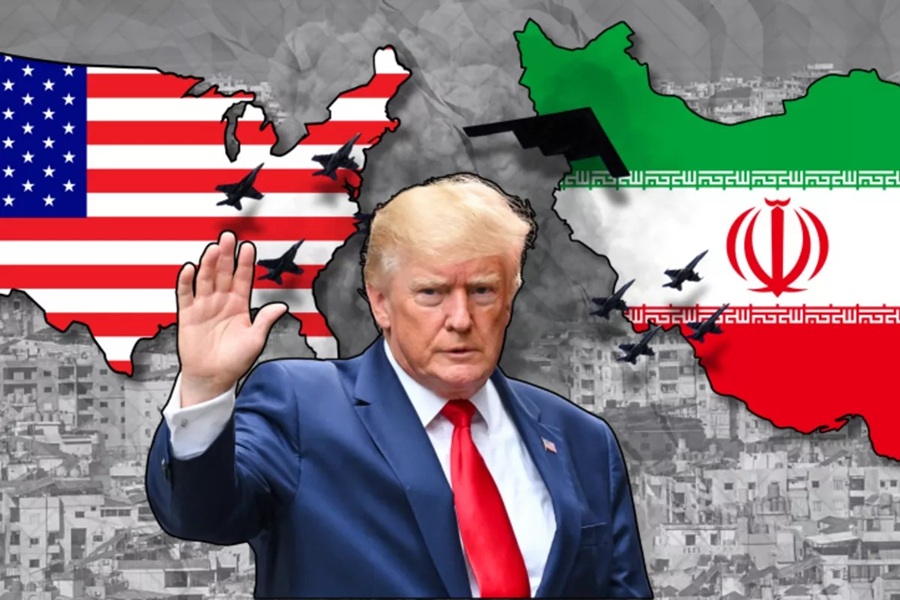
The situation escalated further on 28 February 2026, when Iran’s Supreme Leader Ali Khamenei was assassinated during a coordinated strike targeting Iran’s leadership infrastructure, reportedly carried out by United States and Israeli operatives. The attack killed several senior officials, and Mojtaba Khamenei, son of the slain leader, was selected as Iran’s new Supreme Leader.
The event marked both a symbolic blow and a test of the Islamic Republic’s institutional resilience, demonstrating Tehran’s capacity to absorb shocks and continue to exercise influence across the Middle East.
Observers reported that Tehran immediately convened a council of advisors. By the end of the week, regional coordination with Hezbollah and Iraqi Shiite militias resumed almost seamlessly — a quiet but clear display of operational continuity. Iran watches carefully, learning how to advance its interests without becoming trapped in a similar large-scale conflict.
Israel and the contested arena
No state views Iran’s regional strategy with greater concern than Israel. For decades, Israeli security planners have considered Iran’s missile programs, nuclear ambitions, and regional alliances as the most serious long-term threat to Israel’s security.
This has produced an ongoing shadow conflict involving cyber operations, intelligence activities, and targeted strikes. Israel has repeatedly targeted logistical networks and facilities in Syrian territory associated with Iranian forces or weapons transfers.
A humanising anecdote: in one operation, Israeli drones struck a weapons convoy near Damascus, but reports later showed that local Syrian civilians were evacuated days in advance through an informal warning system — a subtle reminder of the complex web of actors involved, and how ordinary people are caught in the strategic chessboard.
The strategic contrast between the two states is striking. Israel acts rapidly to neutralise perceived threats. Iran prefers patience, shaping influence slowly over time. This asymmetry creates a volatile equilibrium across the region.
The Cross, Dragon, and Crescent
When viewed together, Russia, China, and Iran form a triangular system shaping the emerging geopolitical order. Russia carries the cross of history, projecting influence through military power while bearing the burden of confrontation with the West.
China advances along the new Silk Roads, building economic corridors that link Asia, the Middle East, and Europe through trade and infrastructure. Iran projects the crescent of fire, relying on regional alliances, ideological influence, and strategic patience.
Each of these forces influences the others. Russian overextension opens strategic space elsewhere. Chinese infrastructure reshapes economic geography across continents. Iranian manoeuvring alters the balance of power in the Middle East. In such a system, no conflict remains purely local. Wars and alliances ripple outward, reshaping calculations far beyond their immediate geography.
A merchant in Tehran’s Grand Bazaar may feel it first-hand: Chinese trucks loaded with electronics arrive at Iranian ports secured through a mixture of local contracts and regional influence, while nearby, reports of skirmishes in Syria or missile tests across the Gulf are discussed with hushed intensity. The lives of ordinary people intersect, often invisibly, with the grand strategies of the cross, the dragon, and the crescent.
Eurasia’s strategic pivot
Iran’s position also intersects with China’s vast infrastructure initiatives across Eurasia. Beijing’s connectivity strategy seeks to link Asia, the Middle East, and Europe through railways, ports, pipelines, and digital networks. Several of these routes pass through regions influenced by Iran or its partners.
Iraq and the Persian Gulf form potential bridges between Chinese economic corridors and European markets. Syria once appeared likely to serve a similar role before years of war and instability complicated its future.
For China, stability is essential. For Iran, the challenge is maintaining influence without becoming dependent on any external power. Tehran, therefore, seeks economic engagement with China while preserving its strategic independence.
Iran’s strategy illustrates an important lesson about contemporary geopolitics. Power today is exercised not only through armies but also through networks, alliances, and patience. Russia’s experience in Ukraine demonstrates the risks of confrontation with a united coalition of adversaries.
China’s global expansion reveals the advantages of long-term economic planning.
Iran operates somewhere between these models. It adapts quickly, watches carefully when larger powers are distracted, and moves in ways that amplify its regional influence without overcommitting resources.
The story of a drone deployment in the Persian Gulf last year encapsulates this approach: unmanned systems were launched from a remote desert site, monitored by Tehran, and strategically positioned to influence shipping lanes — an exercise in quiet, calculated projection of power, far from open warfare.
The crescent in the Eurasian balance
Iran’s crescent of fire sits between Russia’s historical burden and China’s expanding economic corridors. This position is both dangerous and powerful.
The cross, the Silk Roads, and the crescent together form a map of the emerging Eurasian order. Russia represents historical weight and military confrontation. China represents economic connectivity and infrastructure power. Iran represents regional influence and strategic resilience.
Their interaction will help define the geopolitical landscape of the coming decades.
Eurasia is no longer merely a collection of borders. It is a system of competing visions, trade networks, and strategic rivalries. Within this system, the Crescent of Fire remains one of its most dynamic and unpredictable forces.
The streets, ports, and deserts of Iran today may seem quiet to an outside observer. Yet they pulse with strategy, influence, and the silent calculation of power. In the interplay of the cross, the dragon, and the crescent, the future of Eurasia — and perhaps the world — is being quietly written.