Kyrgyzstan is a young, modern state – open, dynamic, and filled with optimism. For decades, it was labelled Central Asia’s “island of democracy.” Despite this, the authorities in Bishkek recently made a controversial decision to ban the wearing of the niqab.
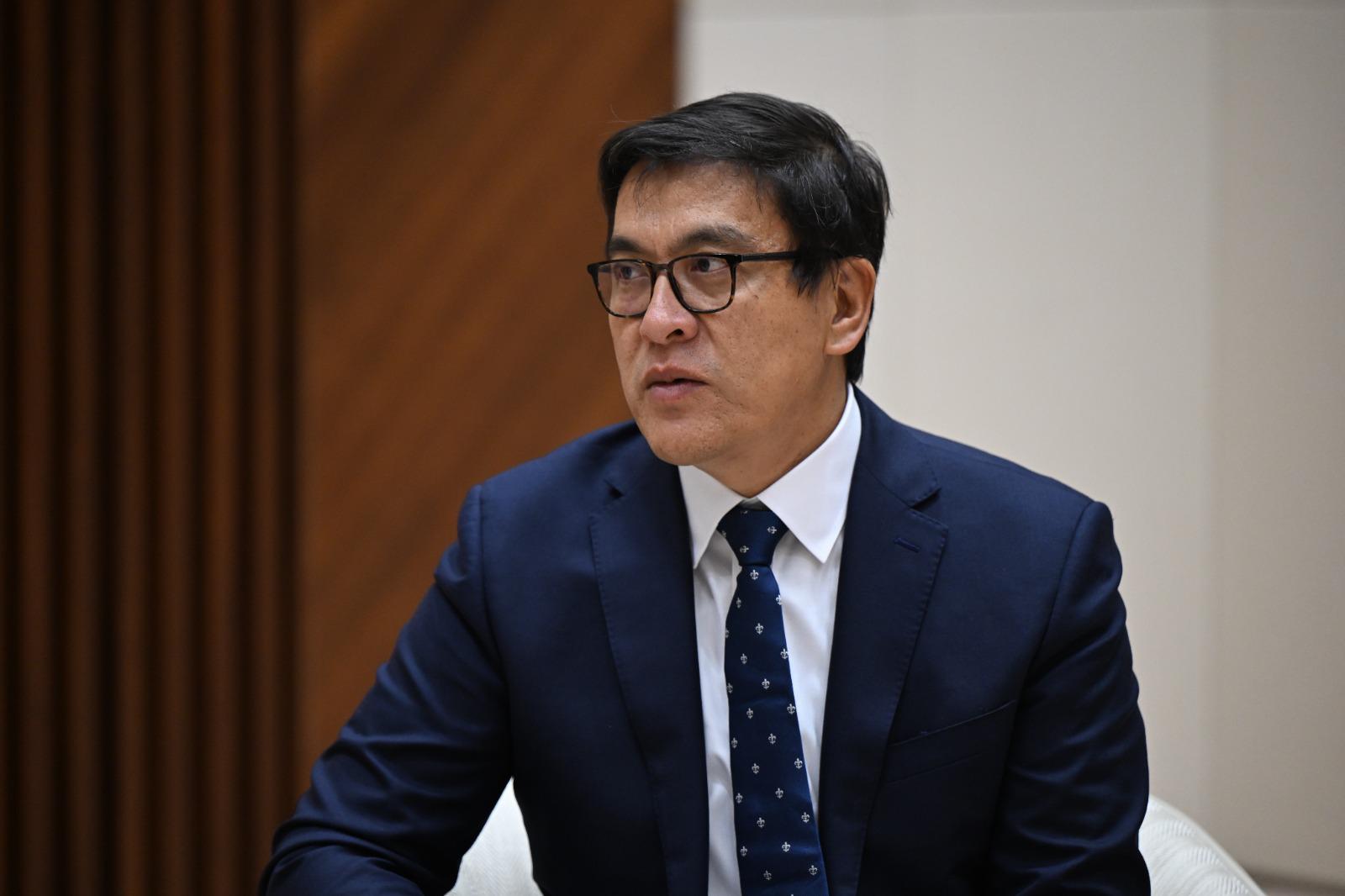
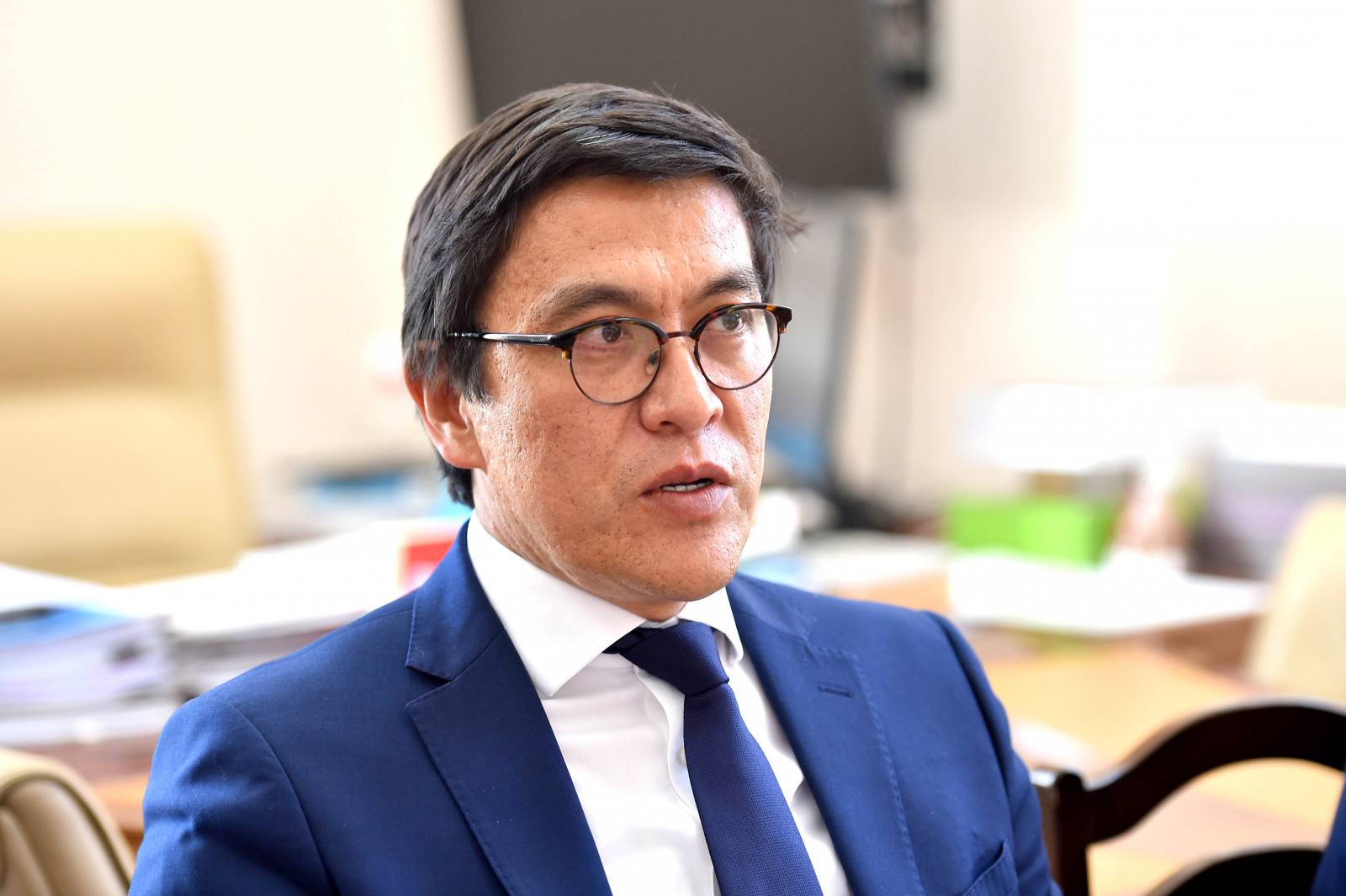
In an exclusive interview with The Liberum, Edil Baisalov, Deputy Chairman of the Cabinet of Ministers of the Kyrgyz Republic, discusses what prompted this measure, how it aligns with the country’s democratic principles, and what Kyrgyzstan’s foreign and energy policies are likely to look like in the coming year.
By Nikola Mikovic
In Baisalov’s view, in recent decades, specific foreign-funded networks exploited poverty in Kyrgyzstan to push unfamiliar religious practices, at times creating confusion and social tension. Bishkek’s policy, he explains, is not directed against religion, but is intended to protect Kyrgyzstan’s cultural heritage, social cohesion, and traditional form of Islam. Several other Central Asian nations are taking similar steps to preserve their identity and societal balance.
How do you explain that Russia and most European countries have not adopted similar policies?
It is not my place to comment on the internal policies of other countries. Each state has its own history, sensitivities, and societal debates. Some carry complex legacies, including racism or imperialism, and may be cautious about actions that could be interpreted through that lens. But I do not wish to judge or evaluate their decisions. Kyrgyzstan’s policy reflects our own history, culture, and social realities – nothing more.
What is the cultural or religious reasoning behind Bishkek’s niqab policy?
Kyrgyzstan deeply respects freedom of religion and takes pride in being a harmonious, multi-ethnic and multi-confessional society. But our traditional form of Islam has never included clothing associated with desert cultures of the Middle East. Those garments evolved for climate-specific reasons that do not apply to our environment. Kyrgyz women have always held a strong status in society. Our Islamic tradition values openness, education, tolerance, and modest inward practice – not public displays through imported attire.
With parliamentary elections over, will Kyrgyzstan remain Central Asia’s island of democracy?
Kyrgyzstan most certainly remains a beacon of democracy in Central Asia. We have developed the region’s most advanced electoral institutions, and our parliamentary and presidential elections consistently receive high marks as free and fair. As a small, tightly knit society – where people are often relatives, neighbours, or classmates – we take pride in our nomadic heritage, which never relied on centralised, autocratic rule.
More importantly, Kyrgyzstan has a living history of resisting attempts to impose systems that serve only a narrow elite. Our people have repeatedly defended their rights, dignity, and democratic choice.
Today, President Sadyr Japarov has proven many critics wrong. His mandate is rooted in the broad interests of the entire population, and the results speak for themselves. Our GDP grew by 9% in 2022 and 2023, and new estimates show an impressive 11.5% growth rate for 2024. State budget revenues have tripled, supporting a nationwide boom in schools, hospitals, roads, public services, rising wages, expanded social benefits, and higher pensions. Kyrgyzstan strives to remain a country its citizens are proud of – where democracy delivers real, continuous improvements in people’s lives.
Kyrgyzstan spent its first 30 years of independence trying to copy a Western-style parliamentary system. Are you now developing a system that is uniquely Kyrgyz?
It is essential to understand the context. We emerged from a totalitarian Soviet system and swung abruptly toward ultra-liberalism, inspired by the then-fashionable neoliberal thinking. We privatised almost everything, dismantled public services, and embraced the idea that people should rely on the “invisible hand” of the market. This did not bring prosperity. The country became impoverished, industries vanished, and a purely hands-off model proved unsustainable.
Today, we seek balance. In a competitive world, every nation functions almost like a national corporation – and this requires responsible, strategic leadership focused on long-term success.
We are not trying to invent an exotic “uniquely Kyrgyz model,” nor are we rejecting lessons from East or West. We want to build a prosperous, stable state based on what works. What we have left behind is a system where a few wealthy clans hijacked democratic institutions. Democracy in Kyrgyzstan must work for the people, not for the privileged few.
Amid global turbulence, will Kyrgyzstan continue its multi-vector foreign policy?
Absolutely. There is no reason why Kyrgyzstan cannot continue its multi-vector foreign policy. We are a sovereign nation with constructive relations with all our neighbours and major global powers. Our approach is rooted in peaceful diplomacy, the UN Charter, and international law.
Our compass is simple: the national interest of building a successful state for our people. We do not interfere in the internal affairs of others, and we do not accept interference in ours. Therefore, the idea that Kyrgyzstan must “choose sides” is simply unacceptable to us.
We will continue cooperating and trading with all partners while firmly rejecting any neo-imperialist attempts to undermine smaller nations. Our foreign policy will remain pragmatic, stable, and development-focused.
Beijing is one of Bishkek’s principal foreign policy partners. Yet you have recently expressed concern about the growing anti-China rhetoric in Kyrgyzstan. In your opinion, who is behind it?
The recent flare-up was clearly artificial – a sudden spike on social media manipulated from outside. I cannot name the source, but I can say with absolute confidence that over the past 30 years, the Kyrgyz people have come to respect and appreciate our great neighbour, China, deeply.
We are fortunate to have such a strong and friendly partner. As someone who once criticised earlier administrations for not fully unlocking the potential of our bilateral ties, I know how widely this positive sentiment is shared across society.
A few irresponsible activists domestically also tried to exploit false patriotism for political gain. They failed. Attempts to provoke anti-China sentiment will not succeed. Kyrgyzstan’s partnership with China is strong, strategic, and future-oriented. We expect it to expand tenfold in the coming decade.
How has Kyrgyzstan’s membership in the China-led Shanghai Cooperation Organisation influenced its standing ahead of the 2026 SCO Summit in Bishkek?
Kyrgyzstan is proud to be among the six founding members of the Shanghai Cooperation Organisation. Over the years, the SCO has grown into one of the most influential regional organisations, representing a significant share of the world’s population and economic output.
We have already hosted SCO summits twice. In 2026, we will welcome SCO leaders on a historic date – the 35th anniversary of Kyrgyzstan’s independence, August 31st.
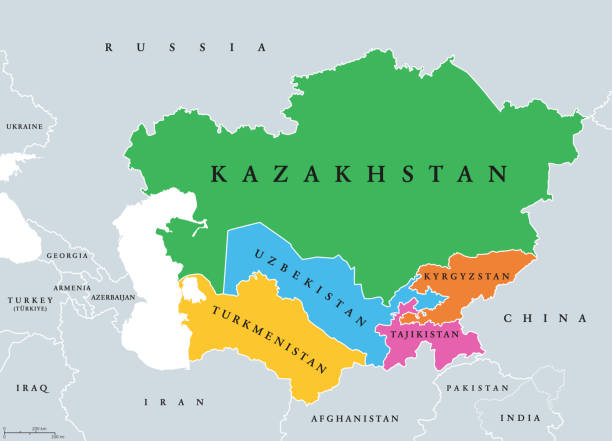
Kyrgyzstan lies at the heart of the SCO region. This year, Central Asia achieved a significant milestone: the successful delimitation and demarcation of the borders among Kyrgyzstan, Tajikistan, and Uzbekistan, finalised in a historic agreement in Khujand. This achievement turns Central Asia into a region of peace, friendship, and cooperation.
Hosting the 2026 summit allows us to showcase our rapid socio-economic progress and our confidence as a young, ambitious nation. The SCO began as a border-security mechanism and has evolved into a powerful platform for security, economic cooperation, and cultural diplomacy – with many countries now seeking to join this prestigious framework.
At the same time, the European Union is seeking to strengthen its presence in the strategically important region of Central Asia. What are your expectations for cooperation with the 27-nation bloc?
Bishkek maintains strong relations with the European Union – both as a bloc and individually with its 27 member states. Our ties are deep, especially with Eastern Europe, Germany – where more than 80,000 citizens trace their roots to Kyrgyzstan – France, and others.
This year, we signed a Comprehensive and Enhanced Partnership and Cooperation Agreement with the EU. We also benefit from the Generalised Scheme of Preferences Plus (GSP+), which supports our export growth. We seek expanded cooperation in education, technology, innovation, and access to EU labour markets. Opportunities for young people to work and study in Europe help them gain modern skills and return to contribute to Kyrgyzstan’s development.
Central Asia has always been a natural crossroads between East and West. Together with our neighbours, we look forward to deepening this role in partnership with the EU.
Given Kyrgyzstan’s occasional power shortages, how can the country contribute to the EU’s green energy corridor connecting Central Asia and Europe via the South Caucasus?
I am somewhat sceptical that our electricity will be exported to Europe – that route is more relevant for some of our neighbours. Our domestic and regional demand is robust.
Kyrgyzstan’s current electricity shortages stem from decades of underinvestment and the surge in consumption driven by strong economic growth. But we are now addressing this decisively. We have launched the Kambarata-1 mega-hydropower project, supported by hundreds of additional hydro, solar, and wind projects. We will eliminate the power deficit within two years and expect to double our generation capacity within five.
Kyrgyzstan aims to become a global hub for mega data centres, powered entirely by affordable green hydropower. The AI era requires massive volumes of carbon-free electricity, and we are ideally positioned to supply it. We will also power energy-intensive industries such as aluminium production and other value-added manufacturing.
We also warmly welcome guests from around the world. I hope that many readers of The Liberum will take the opportunity to visit our country in the coming year.