The 21st century belongs to Asia, with its southeastern region expected to play an essential role in the years and decades ahead. Nowhere is this more visible than in tourism, where Europe and the United States, despite their wealth, are not seen as major markets for Southeast Asian states.
By Nikola Mikovic
Most, if not all, members of the Association of Southeast Asian Nations (ASEAN) see tourism as a key driver of their development. The numbers speak for themselves. The Philippines – host of this year’s ASEAN Tourism Forum (ATF) and the Travel Exchange (TRAVEX) trade show in Cebu – has made enormous progress in tourism.
From just 163,879 arrivals in 2021, the country saw significant growth in 2024 and 2025, reaching almost 6.5 million tourists in 2025. As a result, it earned approximately $11.6 billion in tourism revenue. Vietnam, meanwhile, is targeting 25 million visitors this year, while in Indonesia, 26.9 million people work in the tourism industry.
However, none of these countries, nor the other ASEAN members – Brunei, Cambodia, Laos, Malaysia, Myanmar, Singapore, Thailand, and Timor-Leste – rely particularly on Western tourists. For Indonesia, for instance, no Western country is among its top target markets. Its priority is to attract more tourists from countries such as Malaysia, Singapore, India, Saudi Arabia, the United Arab Emirates, and China.
Still, the fact that 31 per cent of the media attending the ATF were from Europe indicates that Indonesia, as well as other ASEAN states, does not intend to close the door to European tourists. It only reflects the fact that ASEAN integration, along with the growing economic strength of China and India, has prompted the region to shift its focus from Europe to Asia.
At the same time, platforms such as the ASEAN Tourism Forum (ATF) bring together business, government, and media representatives from dozens of countries, helping to promote cooperation and partnerships and expand ASEAN’s reach and influence in the global arena.
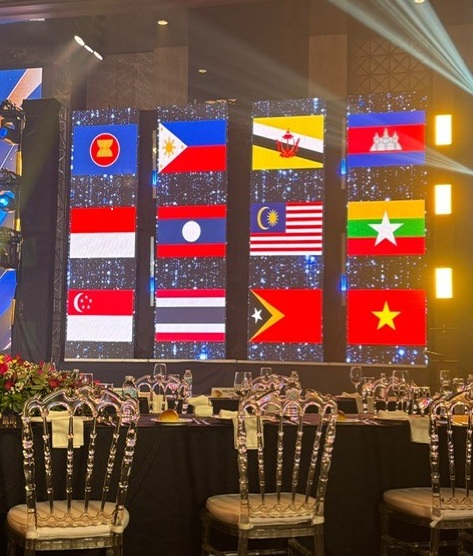
“Indonesia sees every tourist as a potential ambassador, leveraging personal experiences and social media to promote the nation’s culture,” Indonesia’s Deputy Minister of Marketing said at the ATF.
Other ASEAN nations have similar ambitions, which is why Southeast Asia is expected to eventually achieve its goals and highlight its soft power and vibrant culture on the world stage. That, however, is going to be a long-term process. In the meantime, ASEAN is likely to focus on developing closer ties with other Asian states – namely China, India, and South Korea – in the hope that tourists from these countries will significantly contribute to the region’s economic growth.
In parallel, ASEAN members plan to develop their own infrastructure, fully aware that it can boost tourism flows, improve connectivity, and support long-term economic growth. As Maria Margarita Montemayor Nograles, Chief Operating Officer of the Tourism Promotions Board (TPB) Philippines, stressed, Manila remains determined to strengthen ASEAN tourism, while simultaneously implementing programs that drive sustainable growth in the country.
“The Philippines is using its ASEAN Chairship to strengthen cooperation beyond borders, ensuring that ASEAN remains competitive in a rapidly evolving global travel landscape,” Philippine Tourism Secretary Christina Garcia Frasco emphasised.
Although Vietnam – viewing itself as Asia’s leading tourist destination – aims to work with the Philippines to make ASEAN “one destination,” Hanoi appears more focused on building airports and railways to attract 25 million tourists this year. But what these two countries – along with the remaining nine ASEAN members – have in common is that they see each other, rather than the outside world, as their primary market.
This can be attributed to ASEAN’s strong economic growth – 4.3% in 2025. By comparison, the European Union’s economies are projected to grow by a more modest 1.5% in 2026. Moreover, approximately half of the ASEAN population, over 300 million people, is under the age of 30, which represents a significant demographic dividend for the region.
All these factors position ASEAN as a rising soft-power hub in Asia. While Europe and the United States remain important, ASEAN is expected to continue focusing on its Asian neighbors, strengthening itself through regional ties and soft power rather than relying on Western markets.
Finally, in the decades ahead, tourism may prove to be more than an economic engine. It could become one of ASEAN’s most effective instruments for diplomacy, cooperation, and projecting a regional influence, even in a world still dominated by Western powers.