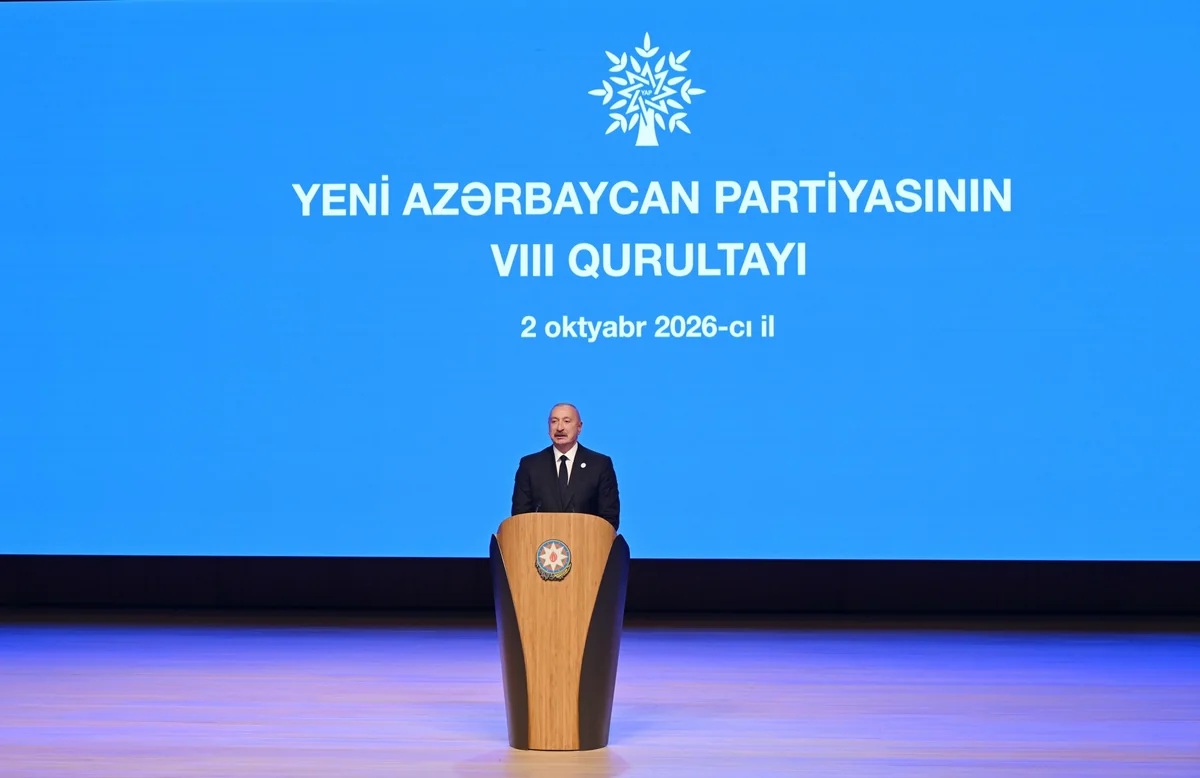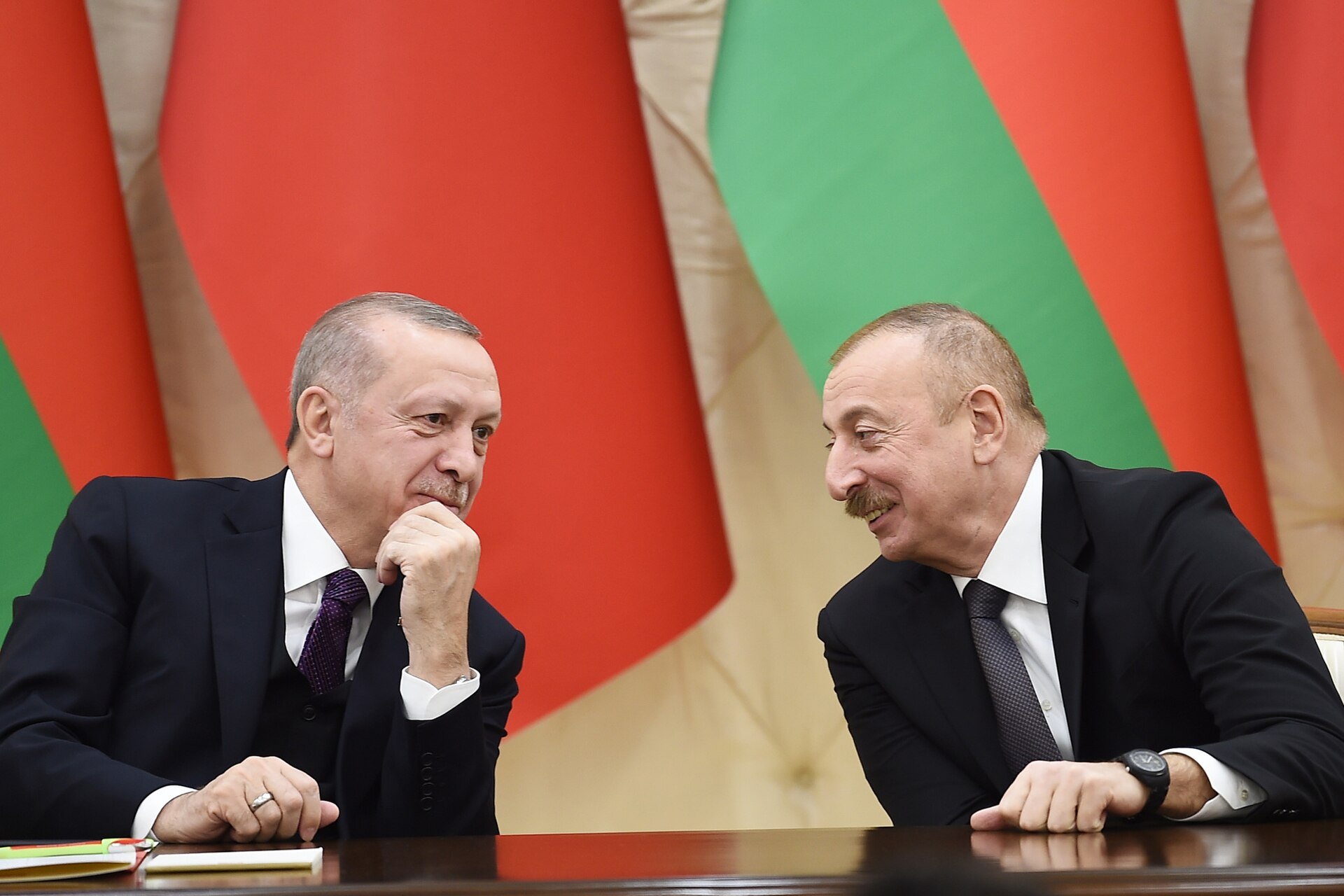
When Azerbaijani President Ilham Aliyev addressed participants at the annual Shusha Global Media Forum, he made a striking observation. Across the world, he noted, countries sharing common ethnic origins, languages or religions have often experienced rivalry, even war. Azerbaijan and Türkiye, by contrast, have transformed their shared history into one of the most durable strategic alliances of the twenty-first century[1].
By Ilyas Huseynov
Aliyev’s remark deserves attention beyond the South Caucasus. For many Western observers, Azerbaijan–Turkey relations are frequently interpreted through the narrow lenses of ethnic solidarity or cultural affinity. While these elements certainly matter, they do not adequately explain why the partnership has evolved into a comprehensive alliance spanning diplomacy, security, energy, transportation, technology, humanitarian cooperation and regional governance.[2].
The relationship has become something far more significant: a model demonstrating how historical identity, when combined with political leadership and institutional coordination, can produce lasting geopolitical stability.
Shared identity does not automatically translate into strategic partnership
International relations provide numerous examples where common identity failed to prevent conflict. The Arab world has witnessed decades of rivalry among states sharing language, religion and historical traditions.
The wars in the Balkans illustrated that common Slavic heritage could not prevent violent fragmentation. The conflict between Russia and Ukraine further demonstrates that linguistic and cultural proximity alone offers no guarantee of peaceful coexistence.
History repeatedly confirms a fundamental principle: identity creates potential—but political choice determines outcomes. This is precisely where Azerbaijan and Turkey differ. Their partnership has never relied solely on emotional rhetoric.
Instead, Azerbaijan and Turkey have transformed their cultural affinity into a structured strategic partnership built on institutionalised cooperation, coordinated foreign policy, integrated infrastructure, and deepening defence collaboration[3].
The famous principle articulated by Azerbaijan's leader – “One Nation, Two States” – has gradually evolved from a symbolic slogan into an operational doctrine of interstate relations[4].
From strategic partnership to formal alliance
A decisive turning point came with the signing of the Shusha Declaration on 15 June 2021. The declaration institutionalised an already deep relationship by establishing mutual commitments in defence, foreign policy coordination, regional security, transportation, economic cooperation and technological development[5].
Unlike many alliance treaties formed primarily in response to external threats, the Shusha Declaration reflected decades of accumulated trust. Its implementation has since extended across multiple sectors.[6]. Joint military exercises became more sophisticated.[7].
The Shusha Declaration expands on agreements previously signed between the two countries and is based on the principle of mutual defence, as in Article 5 of NATO.[8].
According to the declaration, any threat or attack against one of the parties will be considered an attack against the other, and in such a case the two countries will respond jointly and decisively. It also envisages joint production and technology exchange in the defence industry.[9].
Defense-industrial cooperation expanded from procurement toward joint research, development and production.[10]. Energy cooperation entered a new phase through coordinated investments in natural gas infrastructure and electricity interconnectivity.
Transportation initiatives—including the Baku–Tbilisi–Kars railway[11], the Middle Corridor and the emerging Zangezur connectivity projects—further integrated the strategic geography of the South Caucasus with Central Asia and Europe. The alliance therefore functions not merely as a security arrangement but as a comprehensive geopolitical ecosystem.
Political coordination rather than political dependence
One of the least appreciated characteristics of Azerbaijan–Türkiye relations is the nature of their policy coordination. In many alliances, smaller states become strategically dependent on larger partners.
This has not occurred here.
Both governments consistently emphasise sovereign equality while maintaining exceptionally close consultation mechanisms. Whether addressing regional crises, energy security, post-conflict reconstruction, Syria, the Middle Corridor or the institutional development of the Organisation of Turkic States (OTS), Baku and Ankara increasingly formulate complementary rather than competing policies.[12].
Coordination has become institutional rather than episodic. This distinction matters because sustainable alliances depend less on identical interests than on effective mechanisms for managing shared interests.[13].
The alliance has also redefined Eurasian connectivity. As global supply chains diversify and geopolitical competition intensifies, transport routes linking Europe and Asia have acquired unprecedented importance.
Azerbaijan and Turkey occupy the central segment of the Trans-Caspian International Transport Route—widely known as the Middle Corridor.[14]. Rather than competing for transit advantages, both countries have pursued integrated infrastructure planning. Pipelines, railways, ports, highways and digital customs systems increasingly operate as interconnected components of a broader regional architecture.
For Europe, this cooperation contributes to greater supply-chain resilience. For Central Asia, it expands access to global markets. For the wider Turkic world, it strengthens economic integration without creating exclusive geopolitical blocs.
Humanitarian solidarity beyond diplomacy
Perhaps the strongest evidence that the alliance extends beyond traditional diplomacy emerged during moments of crisis. Turkey’s political support for Azerbaijan during the Second Karabakh War demonstrated strategic solidarity under extraordinary circumstances[15].
Equally significant was Azerbaijan's response following the devastating earthquakes that struck Turkey in February 2023. Beyond emergency assistance, Azerbaijan financed the construction of the “Azerbaijan Quarter” in Kahramanmaraş, including housing, schools, public facilities and social infrastructure[16].
Such initiatives reflected not transactional diplomacy but societal solidarity. The relationship operates simultaneously at governmental, institutional and public levels–a characteristic relatively uncommon in contemporary international politics.
The Azerbaijan–Turkey partnership increasingly serves as one of the principal engines of the Organisation of Turkic States. Both governments consistently advocate deeper regional integration in trade, transportation, digital transformation, green development, education and institutional cooperation.
Rather than pursuing exclusive regional leadership, Baku and Ankara have sought to create frameworks capable of benefiting all member states. This cooperative approach has accelerated initiatives including the Turkic Investment Fund, digital economic cooperation, transport harmonisation, customs simplification and sustainable connectivity projects. In this sense, bilateral cooperation increasingly generates multilateral outcomes.
Lessons for International Relations
Western foreign policy debates often distinguish between value-based alliances and interest-based alliances. The Azerbaijan–Türkiye case suggests that this dichotomy may be overly simplistic.
Successful alliances can emerge when shared identity reinforces strategic interests, while institutional cooperation transforms historical affinity into long-term political resilience. Neither cultural proximity nor geopolitical necessity alone explains the durability of the partnership.
Its strength derives from the interaction of several mutually reinforcing factors:
This combination is comparatively rare in international politics. The international system is entering an era characterised by strategic uncertainty, fragmented globalisation and intensifying regional competition. In such an environment, alliances founded solely upon temporary interests often prove fragile.
The Azerbaijan–Turkey relationship presents an alternative model. It illustrates how historical identity, democratic legitimacy within each country's political system, strategic pragmatism and institutional cooperation can together generate durable regional stability.
As President Aliyev observed in Shusha, many societies sharing common language and history have nevertheless fought destructive wars[17]. Azerbaijan and Türkiye chose a different path. Their experience demonstrates that brotherhood in international relations is not created by shared ancestry alone.
It is sustained through political vision, mutual respect, strategic coordination and consistent action. For a world searching for stable regional partnerships amid increasing geopolitical fragmentation, that may be the most important lesson of all.
[1] Ilham Aliyev attended opening of 4th Shusha Global Media Forum // “President.az”, 2026, 13 July. Access address: https://president.az/en/articles/view/72945
[2] Cəfərli, B. “20-ci əsrin sonlarında Azərbaycan ilə Türkiyə arasında keyfiyyətcə yeni münasibətlər formalaşıb” - İlyas Hüseynov // “Hərbi and”, 2022, 14 Yanvar. Müraciət ünvanı: https://herbiand.az/post.php?id=21970
[3] Aliyev: Türkiye-Azerbaijan Ties a Global Model // “Iha News”, 2026, 13 July. Access address: https://iha.news/aliyev-turkiye-azerbaijan-ties-a-global-model/
[4] Rahimli, G. Azerbaijan - Turkey: Commitment To “One Nation, Two States” Doctrine // “Azertac.az”, 2019, 27 June. Access address: https://azertag.az/en/xeber/azerbaijan___turkey_commitment_to_one_nation_two_states_doctrine-1299851
[5] Shusha Declaration on Allied Relations between the Republic of Azerbaijan and the Republic of Turkey // “President.az”, 2021, 16 June. Access address: https://president.az/en/articles/view/52122
[6] Bu münasibətləri pozmaq istəyənlər bilməlidir ki... – ŞƏRH // “Publika.az”, 2022, 04 Fevral. Müraciət ünvanı: https://publika.az/news/nida/385099.html
[7] Zülfüqaroğlu, Ə. “Şuşa Bəyannəməsində Silahlı Qüvvələrin güc və idarəetmə strukturlarının əlaqələndirilmiş fəaliyyətinin təşkilinin qeyd olunması...” // “Xalq Cəbhəsi” qəzeti. 2022, 18 İyun. Müraciət ünvanı: https://www.xalqcebhesi.az/news/politics/80741.html
[8] Rzayeva, A. Şuşa Bəyannaməsi ilə ölkələrimiz arasında əməkdaşlıq yeni mərhələyə qədəm qoydu – Politoloq // “Anews.az”, 2023, 16 İyun. Müraciət ünvanı: https://www.aznews.az/news/surveillance_point/317683.html
[9] Türkiyənin inkişafında yeni mərhələ // “Yeni Azərbaycan” qəzeti, 2023, 13 Aprel. Müraciət ünvanı: https://www.yeniazerbaycan.com/Arxiv_e83528_az.html
[10] Hüseynli, G. Azərbaycan Türkiyə Birgə Universitetinin yaranması türk ailəsinin inkişafıdır - İlyas Hüseynov // “Metbuat.az”, 22 Fevral 2024. Müraciət ünvanı: https://metbuat.az/news/1493232
[11] Huseynov, I. Baku-Tbilisi-Kars railway: New phase for Eurasian connectivity // “Daily Sabah”, 2026, 08 June. Access address: https://www.dailysabah.com/opinion/op-ed/baku-tbilisi-kars-railway-new-phase-for-eurasian-connectivity
[12] Ekspertlər: Azərbaycan–Türkiyə münasibətləri yeni strateji mərhələyə qədəm qoyub // “Azərtac”, 2025, 08 Noyabr, Müraciət ünvanı: https://azertag.az/xeber/ekspertler_azerbaycan_turkiye_munasibetleri_yeni_strateji_merheleye_qedem_qoyub-3850531
[13] İbrahimov, M. Bizim Şuşa – beşinci söhbət // “1905.az”, 2022, 26 Aprel. Müraciət ünvanı: https://1905.az/bizim-susa-besinci-sohb%C9%99t/#
[14] İlyas Hüseynov. Beynəlxalq nəqliyyat dəhlizləri kontekstində Zəngəzur dəhlizinin əhəmiyyəti. “Sosial Tədqiqatlar” jurnalı. Cild 4, №1, 2024. s.201- 219. Müraciət ünvanı: http://stm.gov.az/frq-content/plugins/socialjournal_x1/item/file/20250227173928_60259400.pdf
[15] Azərbaycan Türkiyə münasibətləri son 30 ilin ən parlaq dövrünü yaşayır // “Turkic World”, 2022, 14 Yanvar. Müraciət ünvanı: https://turkic.world/az/articles/politics/27963
[16] Cumhurbaşkanı Erdoğan, Azerbaycan Mahallesi’nde 250 Bininci Afet Konutu Anahtar Teslim Töreni’nde konuştu // “Iletişim Bakanlığı”, 2025, 19 Haziran. Erişim adresi: https://www.iletisim.gov.tr/turkce/haberler/detay/cumhurbaskani-erdogan-azerbaycan-mahallesinde-250-bininci-afet-konutu-anahtar-teslim-toreninde-konustu
[17] Aliyev Türkiye ve Azerbaycan'ın dostluğunu dünyaya örnek gösterdi: Örnek alınması gereken model // “Huriyyet.com.tr”, 2026, 13 Temmuz. Erişim ünvanı: https://www.hurriyet.com.tr/dunya/aliyev-turkiye-ve-azerbaycanin-dostlugunu-dunyaya-ornek-gosterdi-ornek-alinmasi-gereken-model-43237850