From Bab al-Mandeb to Damascus, a struggle for regional supremacy is redrawing alliances, exposing rival ambitions and bringing the Middle East closer to a historic confrontation.
The Middle East is entering one of the most consequential periods in its modern history. Beneath the familiar language of diplomacy, military cooperation and regional security, a far more complex struggle is unfolding. Saudi Arabia and the United Arab Emirates are competing for influence, Israel is seeking to reshape its strategic environment, Iran is expanding its military reach, Turkey is pursuing its own regional ambitions, and Washington is recalibrating the terms on which it supports its partners.
By Rafic Taleb
At the centre of these intersecting rivalries stands Syria, a country whose future will help determine the balance of power across the Levant and the wider Middle East. What appears to be a series of disconnected crises is, in reality, part of a broader contest over territory, political survival and strategic independence.
Yemen's western coastline, the security of the Gulf, the future of Damascus and the prospect of a confrontation with Iran are bound together by relationships that extend well beyond conventional alliances. The decisive developments may not always occur on the battlefield.
They may emerge from networks of influence, political bargains, and covert manoeuvres that determine when armies advance, when they withdraw, and which governments are permitted to consolidate their authority.
Yemen provides a revealing illustration of this new regional order. The struggle over Mokha, Bab al-Mandeb and the western coastline has never been merely a territorial dispute. Bab al-Mandeb is a strategic maritime chokepoint connecting the Red Sea with the Gulf of Aden, while control of the surrounding coastline carries enormous military and economic significance.
Whoever controls this corridor gains leverage over international shipping and the broader security architecture linking the Arabian Peninsula to the eastern Mediterranean.
The rapid changes in control along the western coast must therefore be understood in the context of the rivalry between Riyadh and Abu Dhabi. The UAE has spent years building military, political, economic and tribal networks across Yemen and beyond.
Its influence extends through local armed formations and political movements, including relationships that cut across the conventional divisions of the Yemeni conflict. These networks give Abu Dhabi options that cannot be measured simply by the number of aircraft deployed or targets struck.
Saudi Arabia's attempt to reassert its position has exposed the limits of military power when confronted by an opponent with deeply embedded local relationships. The speed of territorial advances and withdrawals along the coast reflects a struggle in which political arrangements can be as consequential as firepower.
The return of Emirati-aligned forces through the Southern Transitional Council and the Giants Brigades, alongside the withdrawal of Houthi forces from key positions, marks a significant development in the contest for Yemen's western approaches.
The relationship between Mohammed bin Salman and Mohammed bin Zayed remains central to understanding these developments. Their partnership has never eliminated the underlying divergence between Saudi Arabia's security priorities and the UAE's wider ambitions.
Riyadh seeks to secure its borders, contain the Houthi threat and preserve its regional leadership. Abu Dhabi has pursued a more dispersed network of influence, built around strategic ports, maritime corridors, local partners and political movements.
The two projects can coexist only so long as their interests remain aligned. Once that alignment breaks down, Yemen becomes a theatre in which each capital seeks to improve its position at the other's expense. Israel's role in facilitating a rapprochement between the Saudi and Emirati leaderships would be a striking illustration of how far regional diplomacy has moved beyond traditional Arab channels.
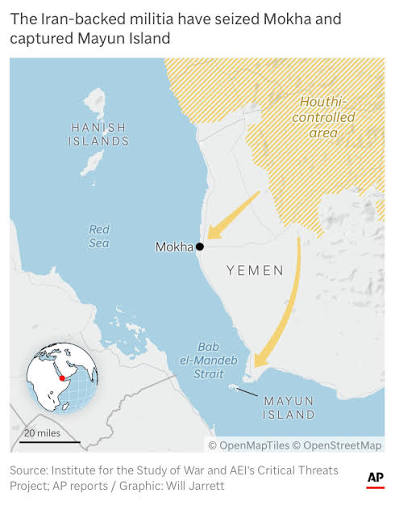
Yet the decisive measure of success in Yemen remains Sana'a and Hudaydah. Control of the western coastline, however important, cannot resolve the conflict on its own. Sana'a is the political centre of Houthi power, while Hudaydah remains crucial to the balance along the Red Sea.
Without a fundamental change in these cities' status, territorial gains elsewhere risk producing a temporary redistribution of influence rather than a decisive strategic outcome.
Saudi Arabia consequently faces a choice between managing a limited settlement and pursuing a more comprehensive military solution. A sustained campaign supported by Pakistan and Turkey would alter the regional equation, but it would also require Riyadh to confront the costs and consequences of a prolonged conflict.
The UAE, for its part, would have been better positioned to advance its ambitions in southern Yemen, Somaliland and Socotra had the campaign against the Houthis produced a decisive outcome in Sana'a.
The Houthis remain a formidable adversary, and their strategic priorities extend beyond the international attention surrounding Bab al-Mandeb. Taiz remains an important theatre, while Jazan and Asir continue to occupy a sensitive place in Saudi Arabia's security calculations.
The kingdom's threat cannot be understood solely through the shifting balance along the coast. The deeper question is whether the Houthis retain the capacity to threaten Saudi territory and sustain pressure on the kingdom's southern approaches.
For Riyadh, the danger is that a temporary improvement in its position could create the illusion of strategic security while leaving the central problem unresolved. Syria faces the same danger: the appearance of political consolidation may conceal an enduring dependence on external powers whose interests do not necessarily coincide.
Ahmad al-Sharaa's position illustrates the dilemma facing the new Syrian leadership. His government must navigate between Saudi Arabia, Turkey, the United States, Israel and European capitals, each of which approaches Syria with its own priorities. Diplomatic recognition and external support provide opportunities for consolidation, but they also create obligations that can limit Damascus's freedom of action.
Al-Sharaa's visit to Saudi Arabia carries significance beyond the immediate relationship between the two governments. Riyadh's decision to request the visit and arrange a royal aircraft underscores its importance to the Syrian leadership at a moment of regional uncertainty.
The visit also positions Saudi Arabia as an intermediary between Damascus and Western powers seeking changes in the Syrian state's direction.
The central issue is whether al-Sharaa can preserve political autonomy while satisfying the demands of the external actors on whom his government depends. A strategy based on delay, tactical accommodation and balancing competing partners may offer short-term flexibility, but it becomes increasingly difficult when those partners demand incompatible outcomes.
The reference to Cyprus in the wider regional calculations captures the uncertainty surrounding the future of the Syrian leadership and its associated assets. The question is not simply whether Damascus can maintain its present political arrangement, but whether the terms of that arrangement will remain acceptable to the powers that helped create the conditions for its emergence.
Israel occupies a particularly consequential position in this equation. Its security priorities do not necessarily align with Washington's preferred political settlement, and the distinction between American and Israeli objectives could prove decisive for Syria.
The former Syrian army's withdrawal from key positions during Hay'at Tahrir al-Sham's advance, and the subsequent transformation of the political order, remain central to understanding the strategic environment in which al-Sharaa now operates.
The prospect of a comprehensive understanding between Damascus and Jerusalem has exposed the difficulty of translating tactical accommodation into a durable political settlement. Even when a government makes concessions, the other side can still change its calculations. For Syria, this means that compliance with external demands cannot automatically be equated with security or political survival.
Washington's position adds another layer of uncertainty. American policy towards the Middle East is shaped by competing priorities, from containing Iran to protecting Israel, preserving maritime security and managing relationships with Gulf partners. Syria matters in this framework, but it is not necessarily the dominant concern.
A shift in American priorities could therefore leave Damascus exposed precisely when it believes its external relationships have become more secure.
Turkey faces a different calculation. Ankara has substantial interests in Syria's political future, its border security and the regional balance of power. Yet Turkey's own domestic pressures and strategic commitments limit its ability to guarantee a stable outcome for Damascus.
Saudi Arabia can provide diplomatic and economic weight, but its priorities remain tied to the security of the Arabian Peninsula. European governments may support institutional reconstruction and political stabilisation, but their capacity to determine the regional balance is limited.
Syria must therefore contend with a fundamental contradiction: the surrounding powers may all prefer some stability, yet they disagree on what that stability should look like and how influence should be distributed. A settlement acceptable to one capital may be insufficient for another. A concession intended to secure external support may create new vulnerabilities elsewhere.
The problem extends into the Syrian security establishment itself. The ministries of defence and interior, the officer corps, former opposition factions and the institutions of the new state operate within an environment shaped by years of conflict and competing external relationships.
Security threats within such a system can have consequences far beyond the individuals directly affected. The integrity of the security apparatus is inseparable from the government's ability to consolidate authority.
Particular concern surrounds reports of unexplained heart attacks among personnel associated with the defence and interior ministries, alongside questions about foreign-supplied materials and equipment.
The potential use of covert methods against officials would introduce a dangerous dimension to the struggle over Syria's future. Former jihadists, defected officers, political figures, activists and long-serving members of Hay'at Tahrir al-Sham occupy positions of particular sensitivity within the emerging state.
The broader lesson is that consolidating political authority requires more than controlling territory. It demands reliable institutions, secure communications, trusted personnel, and the ability to distinguish genuine partners from sources of vulnerability. A government that cannot protect its own officials or establish confidence in its internal security arrangements will struggle to withstand sustained external pressure.
The possibility of contingency preparations in northern Syria further illustrates the uncertainty surrounding the country's future. Plans to relocate prisoners, documents, financial assets, and essential government functions would reflect the need to preserve administrative continuity if Damascus becomes untenable. Hama's strategic position makes these preparations even more significant, particularly if the government must maintain its institutions amid severe military or political disruption.
These considerations are inseparable from the wider confrontation taking shape around Iran. Any major escalation between Tehran and its adversaries would transform the environment in which Syria's leadership operates.
Israel would reassess its military priorities, Washington would face pressure to expand its regional commitments, Turkey would have to reconsider its security posture, and the Gulf monarchies would confront the consequences of a conflict extending beyond their immediate borders.
Saudi Arabia's vulnerability is particularly acute. Attacks attributed to the Houthis against Saudi territory have demonstrated the difficulty of securing the kingdom through conventional military superiority alone. The debate in Riyadh is therefore not simply about the conduct of the Yemen campaign, but about the architecture of regional defence and the extent to which the kingdom can rely on external partners.
A broader Arab-Gulf security arrangement involving Egypt, Jordan, Syria, Lebanon, and Sunni political constituencies in Iraq would seek to place regional defence on a more institutional footing, with Riyadh at its centre. Pakistan and Turkey could provide additional military and diplomatic weight. Such a structure would aim to reduce dependence on Washington while creating a coordinated response to Iranian influence and the activities of its regional partners.
The political obstacles are considerable. These countries have different strategic priorities, different relationships with Iran, and different levels of willingness to commit to a common military framework.
A coalition built around Saudi leadership would have to reconcile those differences before it could function as an effective security arrangement. Its success would depend not merely on shared concerns but on agreement over command, resources, political objectives and the limits of collective intervention.
Saudi Arabia's relationship with the United States and Israel remains central to this calculation. Washington offers hard-to-replace capabilities, but American support can come with strategic and political expectations. The pressure surrounding normalisation with Israel illustrates the tension between external security guarantees and independent regional decision-making. Riyadh must decide whether its existing partnerships provide enough protection without compromising its ability to set its own priorities.
Saudi state stability is itself part of the wider strategic equation. Questions about the future of the royal establishment, succession, and the kingdom's long-term political cohesion take on greater significance when viewed alongside external pressure and regional instability. Any serious disruption within Saudi Arabia would affect the balance of power across the Gulf, Yemen and the wider Arab world.
Iran, meanwhile, can exert pressure across multiple theatres. Its missile programmes, regional partnerships and relationships with armed movements create a strategic environment in which a confrontation cannot easily be contained within one geographical area. The prospect of a major American strike against Iran, particularly in the presence of a carrier strike group, raises the possibility of retaliation extending across the Gulf.
The arrival of the USS Theodore Roosevelt has therefore gained significance in broader calculations about a potential escalation. The danger is not limited to the initial exchange of fire. A major strike could trigger retaliatory attacks against American assets, Gulf infrastructure and regional partners, potentially drawing Bahrain, Kuwait, Qatar, the UAE and Saudi Arabia into a rapidly expanding confrontation.
The Fattah-2 hypersonic missile has also entered the strategic debate. The possibility of advanced Iranian systems being employed against Saudi targets rather than Israel would underscore the extent to which the Gulf monarchies could find themselves on the front line of a confrontation whose origins lie elsewhere. The issue is as much about deterrence as capability: each side must calculate whether an attack can achieve its objectives without provoking a response that fundamentally alters the regional balance.
The presence of Iran-aligned armed groups in Iraq adds another dimension. Their movements could extend a confrontation beyond the Gulf and toward Jordan and Saudi Arabia, adding pressure on already vulnerable borders. In such circumstances, the distinction between a direct Iranian operation and the actions of regional partners would become strategically consequential, even as the practical consequences converged.
The coming months could therefore prove decisive. Developments in Ukraine, a possible escalation involving Iran, and security preparations across Europe all point to a period of heightened international uncertainty. The European Union's emphasis on emergency preparedness, including household supplies sufficient for 72 hours, reflects an awareness that major disruptions can have consequences far beyond the immediate theatre of conflict.
Similar preparations in the Gulf would underscore how far governments are considering contingencies beyond ordinary diplomatic or military crises.
Donald Trump's statements about the scale of the coming American response to Iran have added to this uncertainty. American policy will depend on more than presidential rhetoric, but the language around a possible confrontation matters because it shapes the calculations of allies and adversaries alike.
Tehran must consider the consequences of escalation, while Gulf governments must determine whether American military action would strengthen their security or expose them to retaliation.
For Syria, the implications are profound. A confrontation with Iran could alter the balance of power across the Levant, disrupt existing diplomatic arrangements and force the Syrian leadership to choose between competing external demands.
Damascus could find itself under pressure to accommodate Israeli security priorities, Turkish concerns, Saudi expectations and American objectives at the same time. If the regional environment deteriorates rapidly, the space for independent decision-making would narrow.
The Syrian state also risks a wider confrontation that redirects its external partners' resources and attention. Governments that currently regard Damascus as a strategic priority may suddenly find their attention consumed by the Gulf, Iran or other theatres. Support that seems dependable in a period of relative calm can become conditional when a larger crisis reshapes national priorities.
This is why Syria's future cannot be separated from the evolving relationship between Riyadh and Abu Dhabi, the confrontation between Iran and Israel, or the changing terms of American engagement. The same networks of influence that shape events in Yemen also shape the political environment in which Damascus operates. The same uncertainty surrounding external guarantees that confronts Saudi Arabia also confronts Syria's leadership.
The central danger is that regional actors may mistake temporary arrangements for durable solutions. The return of forces to Bab al-Mandeb does not settle Yemen's future. A diplomatic visit does not guarantee a political settlement in Syria will survive.
An American military deployment does not establish the final limits of Iranian retaliation. And an agreement between regional leaders does not eliminate the rival ambitions that brought them to the negotiating table.
The Middle East is moving towards a period in which military pressure, political realignment and covert competition may converge. Syria remains one of the most exposed states in this environment because its institutions are still consolidating while the powers surrounding it are pursuing competing strategic objectives.
For Ahmad al-Sharaa, the challenge is to preserve a functioning state without letting external partners' demands determine every aspect of its future. For Saudi Arabia, the challenge is to secure its territory and regional position without becoming dependent on arrangements that give others leverage.
For the UAE, it is to maintain its extensive network of influence while managing its rivalry with Riyadh. For Israel, it is to reshape its security environment without triggering a regional confrontation whose consequences become impossible to contain. For Iran, it is to preserve deterrence while avoiding a sequence of retaliatory actions that could threaten its own strategic position.
For Turkey and the United States, it is to reconcile their wider ambitions with the limits of their ability to determine outcomes across the region.
These are not separate challenges. They are components of a single struggle over the future distribution of power in the Middle East.
From Yemen's coastline to the corridors of Damascus, the coming period will test the durability of alliances, the resilience of governments, and regional powers' ability to distinguish tactical advantage from strategic success. The question is no longer simply who controls a particular city, port or border crossing. It is who will define the political order that emerges when the current arrangements are tested.
The storm gathering over the Middle East will not necessarily begin with a single declaration of war. It may emerge through a sequence of local confrontations, diplomatic reversals, military deployments and unexpected shifts in allegiance. By the time its full dimensions become apparent, the strategic landscape may already have changed.
For Syria, the consequences will be existential. Its future will depend not only on what happens within its borders, but on whether the powers competing for influence around it can accommodate one another without turning the country into the principal casualty of their ambitions. The struggle for Damascus is ultimately a struggle over the architecture of the Middle East itself, and the outcome will shape the region long after the present crisis has passed.