Syria may have escaped Bashar al-Assad's rule, but the end of one regime has not necessarily marked the beginning of national sovereignty. Instead, the country appears increasingly caught between competing foreign agendas, opaque political arrangements and a transitional authority whose decisions are raising serious questions about its commitment to the Syrian people. The country is once again becoming a theatre in which regional and international powers pursue their interests at the expense of its population.
By Rafic Taleb
The developments unfolding across southern Syria are particularly troubling. Israel's gradual consolidation of control over strategic areas. Combined with discussions surrounding a proposed humanitarian corridor linking Hadar in Quneitra to Sweida, could fundamentally alter the political and geographical balance in the south.
Such an arrangement would not simply constitute a humanitarian intervention. It could create new spheres of influence, separate Daraa from territories further south and establish another mechanism through which Israel shapes the security architecture of post-Assad Syria.
The implications extend well beyond the immediate border areas. Washington's increasingly confrontational posture towards Tehran raises the possibility of a wider regional escalation. Any American or Israeli military campaign against Iran could provoke retaliation against American interests and regional allies, potentially drawing Syria, Jordan and the Gulf states into a conflict whose consequences would be difficult to contain.
Eastern Syria, particularly Deir ez-Zor, could become vulnerable to military operations, while Damascus and other population centres would face the possibility of Iranian missile retaliation.
It is against this increasingly volatile backdrop that reports of preparations to deploy Syrian fighters to Yemen deserve particular attention. The alleged mobilisation of combatants for a six-month deployment raises fundamental questions about the priorities of Syria's transitional leadership.
Yemen's conflict is deeply complicated, and its future cannot be secured simply by importing armed formations from another country. More troubling are allegations of an arrangement involving Saudi Arabia, Washington and Damascus under which former jihadist fighters would be transferred to Yemen, with promises of financial assistance and eventual resettlement.
If such an arrangement exists, it would represent an extraordinary transformation of Syria's security problems into an instrument of regional policy. Fighters who participated in Syria's internal conflict could become expendable assets in another country's war. The historical record offers ample reason to be cautious about foreign promises to armed movements once their usefulness to powerful patrons expires.
Meanwhile, Syria's relationship with Jordan has become another source of political tension. Recent military operations against suspected Islamic State targets have exposed the fragility of coordination between the two neighbours. Jordan possesses substantial intelligence capabilities and remains an important security partner for Western governments.
Yet the persistent threat posed by Islamic State demonstrates that intelligence gathering alone cannot defeat an organisation whose structure, recruitment methods and operational networks are designed to evade conventional security approaches.
The political handling of civilian casualties is equally consequential. When military operations result in civilian deaths, governments are judged not only by the circumstances of the incident but also by their response.
A responsible Syrian administration would demand transparency, establish the facts, seek accountability and ensure that affected families receive appropriate compensation. Instead, Damascus's perceived reluctance to confront sensitive issues openly risks reinforcing the impression that preserving diplomatic relationships has become more important than defending Syrian citizens.
This is a dangerous political calculation. A government that cannot show it will defend its population's dignity and rights will struggle to establish the legitimacy needed for long-term stability. Syria's transitional leadership must understand that sovereignty is not measured by international recognition or diplomatic photographs. It is measured by the willingness and ability to protect citizens, defend national interests and hold public officials accountable.
The economic dimension makes the situation even more concerning. Allegations surrounding foreign commercial interests in Syria's energy sector, particularly the proposed Baniyas–Kirkuk pipeline, raise questions about who will ultimately control the country's strategic resources.
Reported connections between influential American figures and companies seeking access to regional infrastructure have intensified concerns about conflicts of interest and the potential privatisation of political influence.
More serious are claims that Syrian oil production exceeds officially acknowledged figures and that substantial revenues are being diverted through opaque financial arrangements benefiting foreign intermediaries and individuals close to the transitional leadership. If substantiated, these allegations would point to a system in which national wealth is being transformed into private political capital.
The reported involvement of influential American political and business interests makes the matter particularly sensitive. Syria's recovery should not become an opportunity for foreign investors with privileged political access to extract wealth while ordinary Syrians struggle with poverty, unemployment and deteriorating public services. Nor should the removal of international sanctions become a bargaining instrument through which personal fortunes are accumulated at the expense of national accountability.
The controversy over managing sovereign wealth raises a more fundamental question: who controls Syria's financial future? Without parliamentary oversight, independent auditing, transparent contracts and meaningful public scrutiny, even the country's most valuable resources can disappear into networks that citizens have no means of investigating.
Allegations of corruption involving senior officials, unexplained appointments and questionable financial decisions cannot simply be dismissed as political attacks.
The experience of other transitional states demonstrates that replacing a dictatorship without dismantling the structures of unaccountable power rarely produces genuine political transformation. It merely changes the individuals occupying the positions of authority.
Saudi Arabia's approach to Yemen also illustrates the contradictions shaping regional policy. Reports of an unsuccessful offer of one billion dollars to the Houthis in exchange for a year-long truce suggest that Riyadh may be reconsidering the costs of a prolonged confrontation. Yet financial concessions alone cannot resolve a conflict rooted in competing political ambitions, military calculations and regional rivalries.
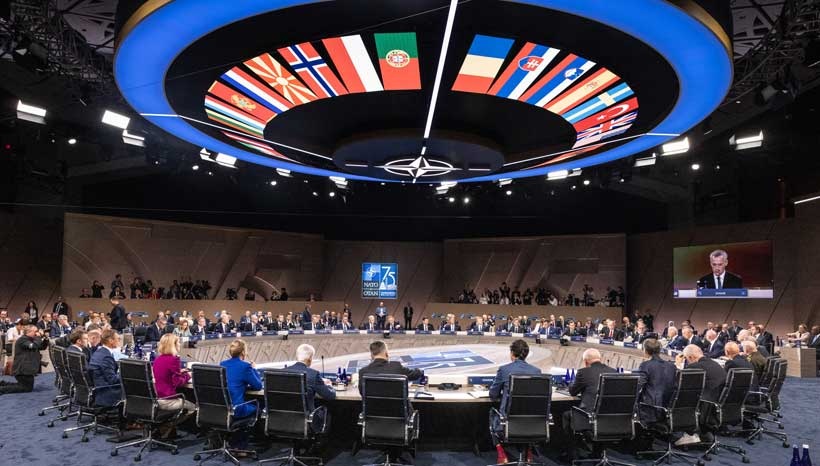
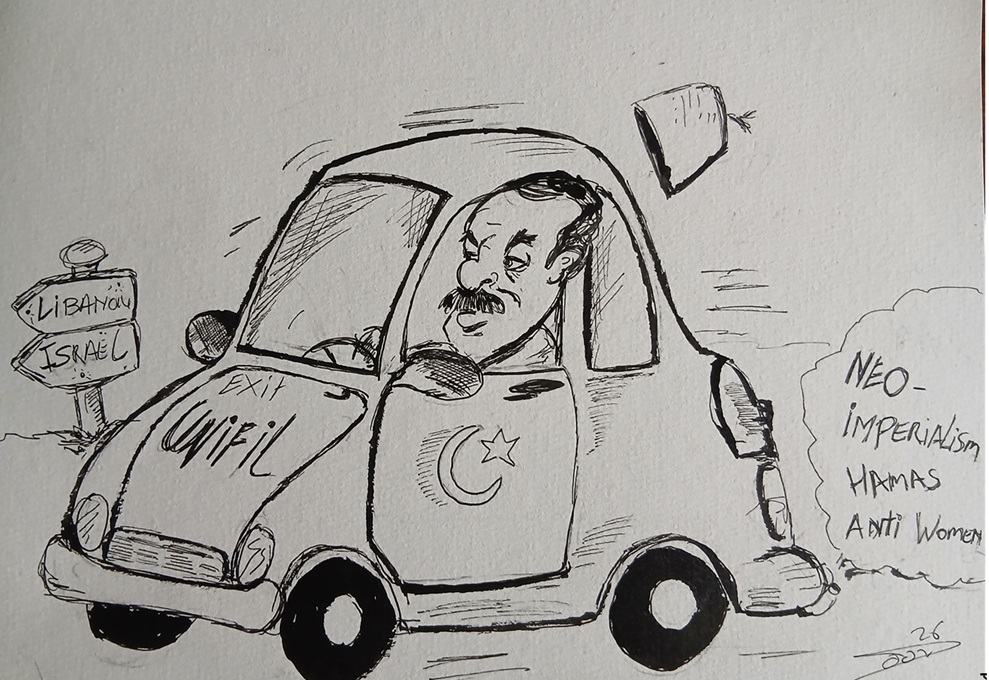
The broader strategic picture suggests that Saudi Arabia, Turkey and Pakistan are increasingly concerned about a potential confrontation between Iran and the American-Israeli alliance. Their diplomatic engagement with Tehran reflects an effort to prevent the conflict from spreading across the region.
However, the Houthis remain an important component of Iran's regional strategic network, and any settlement that ignores their military capabilities and political ambitions is unlikely to provide lasting security.
For Saudi Arabia, Yemen is therefore not simply a neighbouring security problem. It is a strategic vulnerability with implications for maritime trade, regional influence and national security. Any sustainable solution requires a combination of military preparedness, political reconciliation and support for legitimate Yemeni institutions.
Ultimately, Syria's predicament is part of a much larger regional crisis. Israel seeks strategic depth along its northern frontier. Iran seeks to preserve its regional influence. Washington is attempting to reshape the balance of power, while Ankara, Riyadh and other regional capitals are calculating how to protect their interests in an increasingly unstable environment.
Caught between these competing agendas is a Syrian population that has already endured years of war, displacement, economic collapse and political repression.
The greatest danger is that Syrians may discover that the departure of Assad did not end the struggle for control over their country. It merely opened a new chapter in which foreign influence operates through different political relationships, commercial agreements and security partnerships.
Syria does not need another strongman, another externally sponsored political arrangement or another generation of armed men sent to fight wars beyond its borders. It needs institutions capable of controlling public finances, defending national territory, protecting civilians and holding the highest offices of government accountable.
A revolution that removes a dictator but leaves citizens powerless before their new rulers has not completed its political mission. True liberation begins when the state belongs to its people, its resources serve the national interest and no president, minister, or foreign patron stands above the law.
Until that principle becomes the foundation of Syria's political order, the country will remain vulnerable to others' ambitions, regardless of who occupies the presidential palace in Damascus.