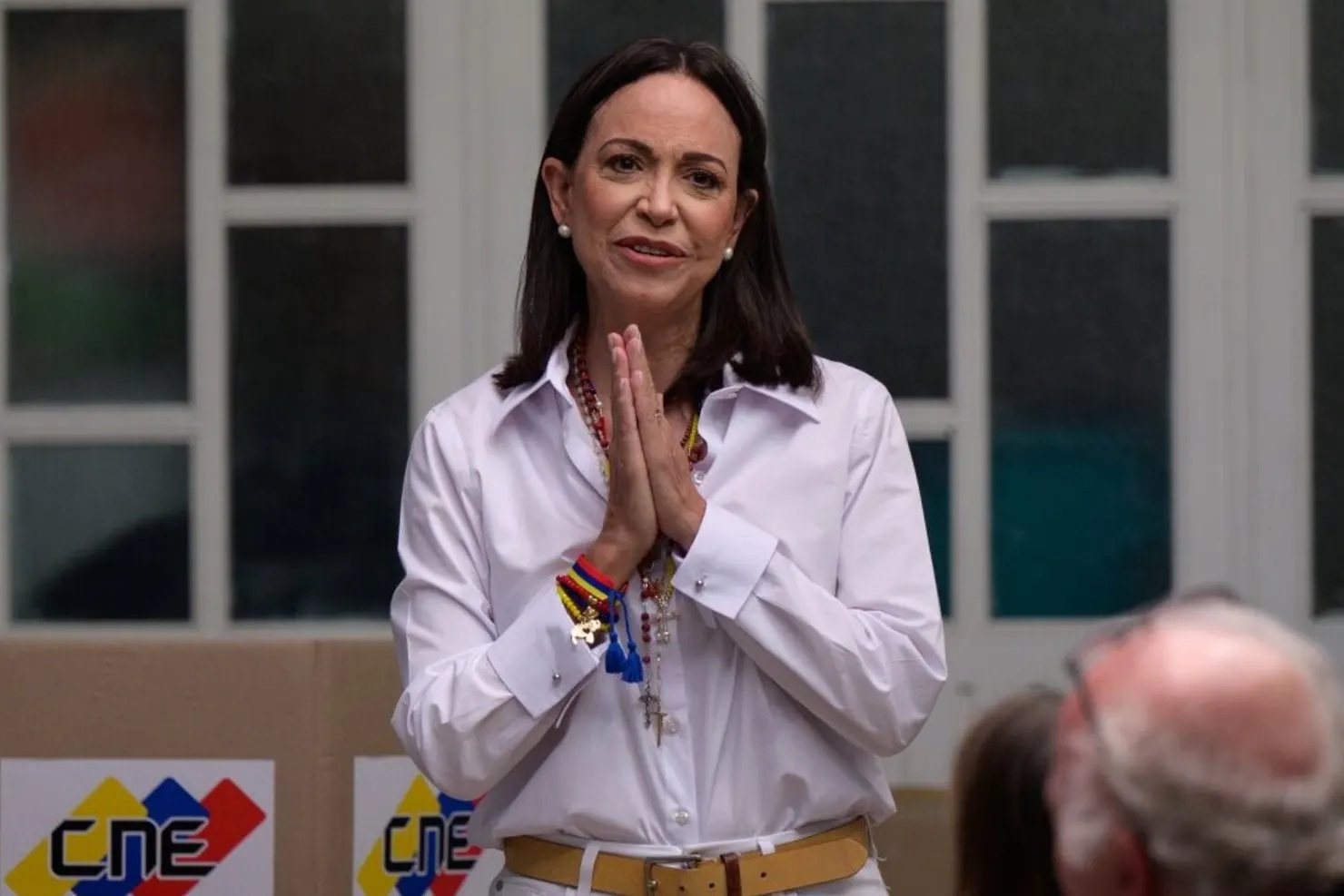
In October 2025, Venezuelan opposition leader María Corina Machado was awarded the Nobel Peace Prize for her unwavering commitment to democratic principles in the face of authoritarianism. From her hiding place, she dedicated the award to the Venezuelan people and former U.S. President Donald Trump, acknowledging his support for Venezuela's democratic cause.
Her recognition underscores the global importance of defending democratic values and highlights the need for a reimagined approach to governance. One that transcends traditional ideologies and embraces a human-centric model. However, many would frame her recognition differently, of course. The noise of our time…
When virtue disappears, liberty loses its form and degenerates into appetite
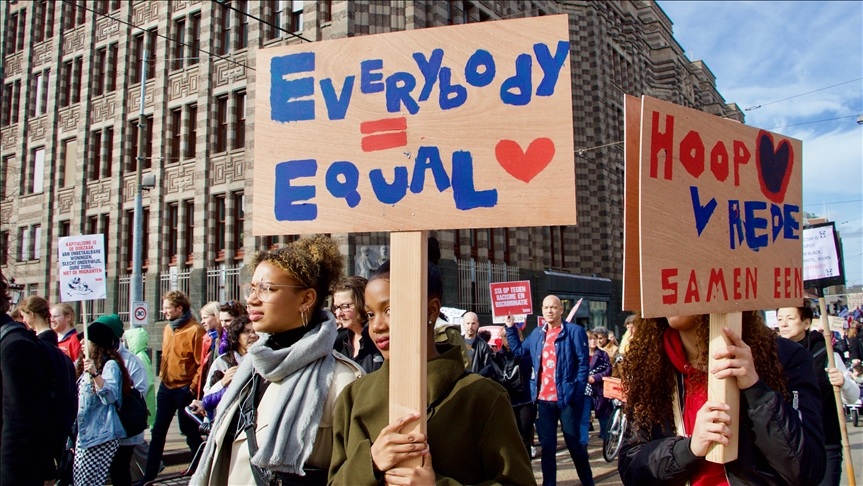
Democracies worldwide are facing unprecedented challenges. The erosion of democratic norms on the left, the rise of populism on the right, and the increasing influence of technocratic elites have led to a crisis of legitimacy and trust. In Venezuela, Machado's struggle against the Maduro regime exemplifies the broader global trend where democratic institutions are under siege, and the moral and spiritual foundations of liberty are weakening.
Classical liberalism (my orientation), in its deepest form, was never the celebration of unbounded choice. It was the recognition that self-government requires moral self-mastery. Liberty was inseparable from duty, and reason from conscience.
The liberal project, from Locke to Tocqueville, assumed that freedom would be sustained by virtue, and that individual autonomy would rest upon a shared ethical horizon. When virtue disappears, liberty loses its form and degenerates into appetite. When truth is replaced by opinion, democracy becomes a contest of noise.
The Humanetic Alternative
In response to this crisis, my concept of humanecy offers a compelling alternative. Humanecy is a moral and open-source design that takes spirituality as its foundation, ensuring that no one can claim ownership of it. It begins with the recognition that no doctrine grants human dignity. It is intrinsic. Every person has the capacity for transcendence, self-awareness, and compassion.
Spirituality is the direct experience of that capacity. It doesn't need a priesthood or a matrix, especially not created by yet another man. It requires political, legal, and cultural protection against the forces that would again turn it into dogma. And it needs women, more than ever, to support the humanecy challenges of our time.
Humanetic stands on three pillars:
See also this previous article.
Pragmatic approach to international alliances in the pursuit of democratic values
Machado's leadership exemplifies some principles of humanetic. She has consistently advocated for a democratic Venezuela in which power derives from the people, not authoritarian elites. Her dedication to democratic norms, even at significant personal risk, reflects a commitment to the intrinsic dignity of every individual.
Her decision to dedicate the Nobel Peace Prize to Trump, despite his controversial (to some extent, dark triad) tenure, signals a pragmatic approach to international alliances in pursuit of democratic values. It underscores the need to transcend ideological divides to uphold the fundamental principles of liberty and justice.
The recognition of Machado's efforts serves as a reminder that the fight for democracy is ongoing and requires continuous renewal. It also highlights the importance of developing governance systems grounded in human dignity and moral responsibility.
Humanecy offers a framework for such systems. Ones that aren’t bound by dogma or ideology, but are guided by shared ethical principles and a commitment to the common good.
Democracy is not a static institution but a living practice
In a world where traditional democratic institutions are faltering, the principles of humanecy provide a pathway forward. They offer a vision of governance that is inclusive, accountable, and deeply connected to the moral and spiritual dimensions of human life.
María Corina Machado's Nobel Peace Prize is a call to action for all who believe in the power of democracy to uphold the values that sustain it. It’s a reminder that democracy is not a static institution but a living practice that requires constant nurturing and renewal.