The Netherlands is slipping toward one of the lowest levels of consciousness in its modern history. Those words lingered after a spiritual mentor shared them with me a while back. He didn’t intend to say them as provocation, but as a diagnosis that echoes what many Dutch people have sensed for years, yet rarely dared to articulate. Anyone who observes with clarity can see a society increasingly caught in inversion.
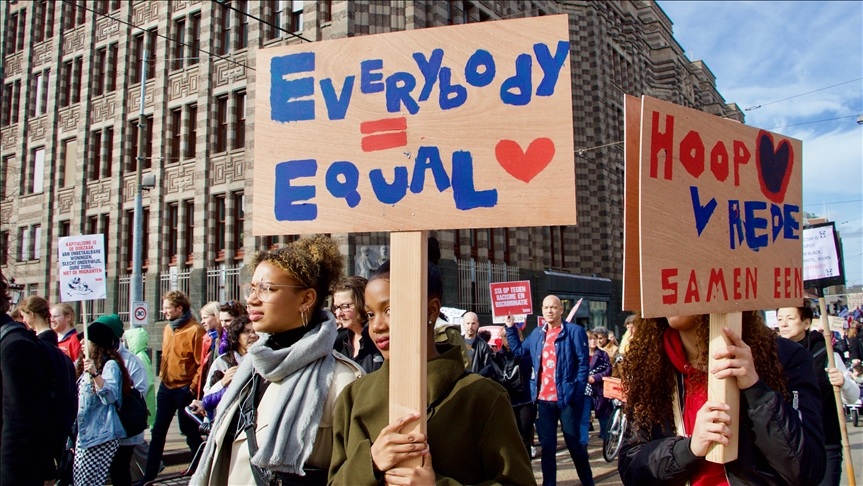
Values once considered self-evident are eroding at their foundation. A tension has emerged between freedom and control, and between individuality and an imposed notion of ‘equality’. Various forms of extremism have become so embedded in daily life that a growing number of people willingly submit to dogma rather than nuance, and to doctrine rather than dialogue. The contagion of hatred, once thought to be fading, has returned to society's bloodstream.
Perhaps my sensitivity to these shifts is rooted in a memory that isn’t entirely my own. On my father’s side, my ancestors lived through the eras of Lenin and Stalin in what are now Ukraine, Belarus, and Russia. I know, both intellectually and viscerally, what ideological utopias can become. Change in itself is not the problem, but direction matters. When it veers off course, the result is a deep and pervasive alienation within the collective psyche. In my experience, it has manifested as a profound aversion unlike anything I have felt in my forty-one years.
Against this backdrop, I find myself in the process of leaving the Netherlands and relocating permanently to Cyprus. This isn’t an impulsive decision, but the outcome of years of deliberate research and reflection. Both an inner and outer journey toward a place where my values, work, and my way of living can truly align. A place I feel willing to contribute to, unlike my current relationship with the Dutch state, which I distinguish clearly from the individuals within it.
Greek Cyprus evokes something I no longer find in the Netherlands. A sense of beauty, grace, openness, and a culture deeply rooted in Greek mythological imagination, while remaining receptive to diversity and inclusion in a way that doesn’t undermine integrity. There, under the sun, with the sea as a constant presence and a cuisine that balances simplicity with richness, life seems to move to a different rhythm.
I can only hope that Greek Cyprus, despite its geographical position, remains untouched by the more corrosive currents I perceive elsewhere, including the spread of hatred. Its location led me to consider southern Portugal as an alternative, but everything within me points toward Greek Cyprus. When your entire being signals a direction, you listen. And so I take this step with conviction, even as I carry concern for the loved ones I leave behind.
Transitions of this magnitude come with practical challenges. While navigating the logistics of emigration, I’m also meant to organise the launch of my philosophical novel, Memos from the Edge. In truth, my attention is divided, and time is scarce. Interviews will be limited. The launch on April 9 will therefore remain local, with a global release planned for later this year, once I’m settled and able to give it the presence it deserves.
Perhaps you recognise a moment like this in your own life. A threshold where honesty becomes unavoidable. A space where you are called to acknowledge where you stand, what you feel, and what choices follow from that awareness.
As I explore in my novel, sometimes you must approach the edge to realise that you are not falling but learning to fly. Moving to Greek Cyprus feels like a flight. The greatest gift I could offer myself. And if I’m honest, it’s only the beginning. As Hanneke van de Water, one of the Netherlands’ most respected book reviewers, wrote to me recently, “A beautiful manuscript, how much you have grown.” More than she could know. Farewell to toxic loyalty. Welcome to a deeper sense of self-sovereignty.