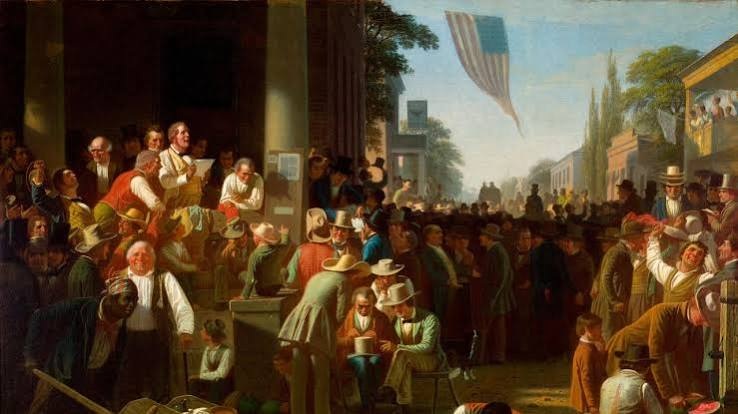
There was a time when America saw itself as the final destination of history. The Roman Empire with fast food, aircraft carriers, and Netflix. Washington made the rules. Wall Street controlled the economy. Silicon Valley shaped the future. And Europe? It applauded obediently from the sidelines like a junior partner in an endlessly running Hollywood script.
But empires have a peculiar habit: they always believe their peak is permanent.
The British once believed that, too, when the sun supposedly never set on the Empire. Until that same sun suddenly disappeared behind American dollar debts and crumbling colonies. The Soviet Union also believed itself untouchable, right before the superpower imploded between empty store shelves and bureaucratic madness.
And now America looks at China the way old aristocracies once looked at rising merchants: first with contempt, then nervousness, and finally with a slowly growing panic.
Because China is building ports, infrastructure, railways, chip factories, and trade routes, while Washington increasingly seems occupied with sanctions, identity conflicts, and exporting moral lectures that hardly anyone still wants to hear.
That is what makes Taiwan so explosive.
For Beijing, Taiwan is not some exotic island dispute. It is unfinished history. A scar from the Civil War. A symbol of China’s “Century of Humiliation,” during which foreign powers carved up China, occupied it, and dictated what it was allowed to do.
For Washington, meanwhile, Taiwan has become far more than just a matter of defending democracy. The island forms the nerve centre of the global semiconductor industry. Without Taiwanese chips, a large part of the modern economy grinds to a halt: cars, smartphones, AI systems, defence technology, data centres, and satellites.
So nowadays you suddenly hear everywhere that the future is about “democratic values,” while by sheer coincidence the same region turns out to be crucial for artificial intelligence, military technology, and economic dominance. Geopolitics always produces remarkable coincidences.
Meanwhile, ordinary citizens pay the price.
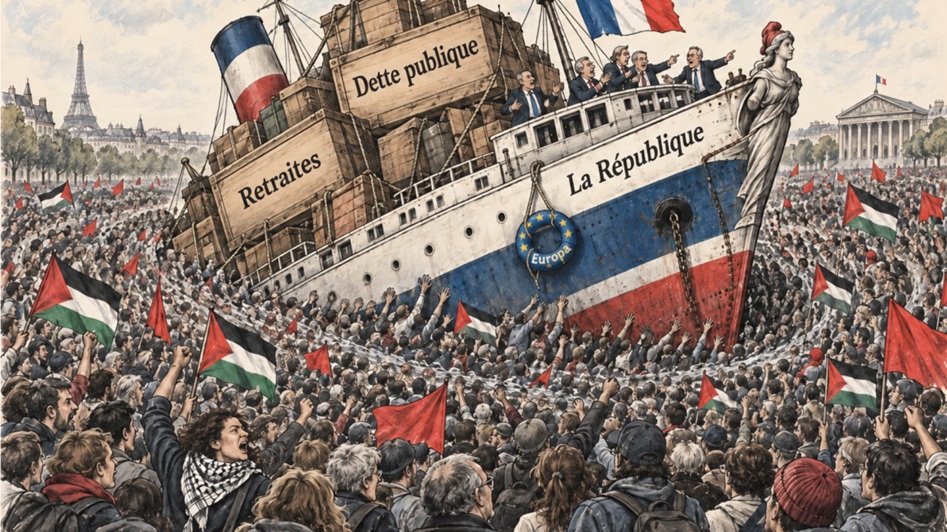
American workers lose purchasing power while hundreds of billions disappear into military industries and geopolitical confrontations. European citizens are sold higher energy prices, inflation, and permanent war tension as a moral necessity. And politicians present every escalation as a defence of “freedom,” just as previous empires once packaged their expansion as a civilising mission.
That does not automatically mean China is the noble saviour of the world order. Beijing also thinks in imperial, strategic, and hard-power terms. Great powers are rarely driven by altruism. Interests drive them.
But what is becoming visible is that the unipolar world of the 1990s is slowly crumbling.
America can still project enormous power — militarily, financially, and culturally. Yet something is gradually emerging that Washington barely had to experience for decades: limits to that power.
And that may be the real reason the rhetoric keeps becoming more hysterical.
Because hegemonies rarely panic when they are winning.