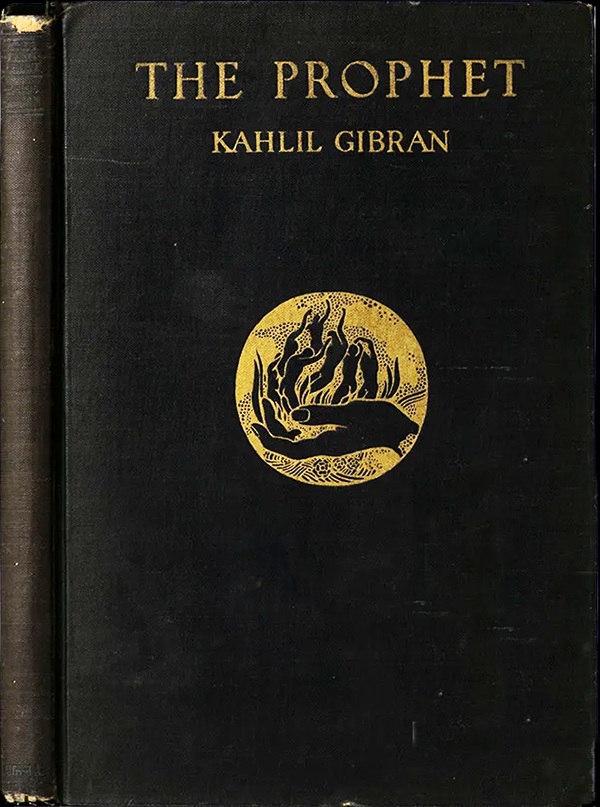
In a world that seems to be spinning faster every day, the words of Kahlil Gibran's "The Prophet" continue to resonate across time and cultures, providing solace and guidance to millions of readers. As we mark the 103rd anniversary of this masterpiece, we invite you to explore its profound influence on the global community and consider how Gibran's wisdom is more pertinent than ever as we navigate a future of rapid growth and unprecedented challenges.
By Arthur Blok
Kahlil Gibran, born in 1883 in Bsharri, Lebanon, was a poet, philosopher, artist, and writer who captivated the world with his work. In 1895, he moved to the United States, where he wrote most of his literary works in Arabic and English, including "The Prophet." Throughout his life, Gibran explored themes of love, spirituality, and humanity, drawing on his rich cultural heritage and experiences as an immigrant in America.
"The Prophet" was first published in 1923, and since then it has been translated into more than 100 languages and has sold over 100 million copies worldwide. The book's popularity and enduring appeal can be attributed to its unique blend of Eastern and Western philosophies and its profound insights into the human experience.
The story of "The Prophet" revolves around Almustafa, the eponymous prophet who, on the eve of his return to his homeland after 12 years of exile, shares his wisdom with the people of the city of Orphalese. Through a series of poetic essays, Almustafa addresses topics including love, marriage, children, work, joy and sorrow, freedom, friendship, and more. His words serve as a powerful reminder of the interconnectedness of all aspects of life and the need for balance, understanding, and compassion.
Throughout the years, the impact of "The Prophet" has extended far beyond the literary world. Its ideas have inspired many artists, musicians, and thinkers, while its verses have been quoted in countless speeches, ceremonies, and other occasions. The book has also been a source of comfort during times of personal and global strife, providing solace and hope to those in need of spiritual guidance.
As we reflect on the 100-year journey of "The Prophet," it is important to recognise the significance of Gibran's words in our contemporary world. Today, we face myriad global challenges, including climate change, political unrest, social inequality, and the rapid advancement of technology. These issues test the limits of our resilience, forcing us to confront our shared humanity and our responsibilities to one another.
In the face of these challenges, the wisdom of "The Prophet" remains strikingly relevant. Gibran's emphasis on love, compassion, and understanding speaks to the core of our human experience, reminding us of the importance of empathy and unity in an increasingly divided world.
His insights into the nature of sorrow and joy, for instance, encourage us to embrace the full range of our emotions, acknowledging that both are essential to the human experience and that one cannot exist without the other.
Similarly, Gibran's thoughts on work and the importance of finding meaning and purpose in our daily lives serve as a timely reminder in an era characterised by rapid technological advancements and the changing nature of employment. He urges us to approach our work with love and to strive for excellence in all that we do, regardless of the task at hand.
As we head into a future marked by unparalleled growth and challenges, the need for Gibran's words of wisdom has never been greater. In a world where rapid change often leads to feelings of disconnection and isolation, "The Prophet" offers a beacon of hope and light.