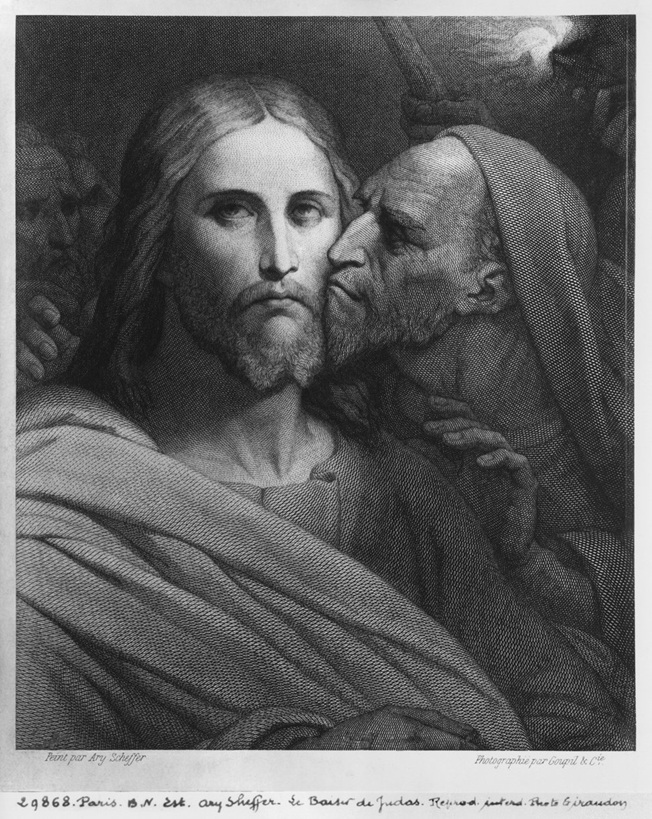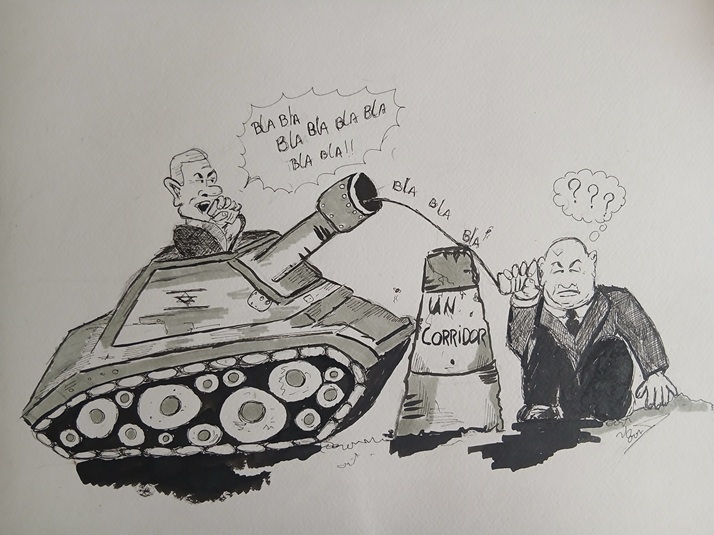
The Middle East is often transformed less by treaties than by thresholds. Some moments alter reality not because agreements are immediately signed, but because political actors cross lines that entire generations were taught could never be crossed. For decades, this has defined the relationship between Lebanon and Israel: the absence of direct political engagement. Even the possibility of a meeting between Lebanese President Joseph Aoun and Israeli Prime Minister Benjamin Netanyahu carries consequences far beyond diplomacy itself. It would represent a psychological rupture in regional politics and perhaps the beginning of a broader realignment.
By Arthur Blok & Nadia Ahmad
The die increasingly appears cast. Lebanon and Israel are holding a new round of direct talks in Washington this week. Diplomatic circles close to the White House insist that a direct meeting between Aoun and Netanyahu is no longer considered politically impossible.
It is expected to be held in the near future.
Such a meeting would mark the first public encounter of its kind between leaders of both countries in decades. It would reopen one of the region’s oldest and most emotionally charged political questions: whether Lebanon is finally approaching the end of its permanent state of war with Israel.
For years, the mere suggestion of dialogue with Israel was enough to trigger accusations of treason inside Lebanon. Political culture transformed diplomacy into taboo. Lebanon’s public discourse treated even symbolic gestures between Lebanese and Israeli officials as unimaginable. Yet history shows that some of the most consequential geopolitical shifts begin precisely when societies start questioning what they once considered untouchable.
To understand why the possibility of an Aoun-Netanyahu encounter generates such intense reactions, one must revisit the unfinished legacy of Lebanon’s civil war and the regional order that emerged after it. During the Lebanese Civil War (1975-1990), Lebanon briefly attempted to formalise relations with Israel through the May 17 Agreement of 1983 under President Amine Gemayel.
The treaty aimed to normalise relations between the two states and secure the withdrawal of Israeli troops from Lebanese territory. Yet less than a year later, amid Syrian pressure and internal political fragmentation, the Lebanese Parliament revoked the agreement without new elections.
By burying the treaty, Lebanon effectively buried the idea of normalisation itself for generations.
End of the Civil War
The end of the Civil War did not resolve that contradiction. The 1989 Taif Agreement officially ended the war and established a framework for rebuilding the Lebanese state. In March 1991, Lebanon adopted a formal decision to disarm and demobilise all militias operating on its territory. Most armed groups eventually surrendered heavy weaponry, military headquarters and barracks to the Lebanese state. Thousands of former militia fighters were gradually integrated into military institutions, security agencies and civil administration structures.
Yet the process was highly selective. Syria, which dominated post-war Lebanon politically and militarily, exercised decisive influence over how demobilisation unfolded. Militias aligned with Syrian interests benefited most from rehabilitation and state integration. Others, particularly Christian factions that had opposed Damascus, found themselves marginalised politically and institutionally.
Most importantly, Hezbollah was exempted from disarmament altogether. Alongside certain Palestinian armed groups, Hezbollah retained its military infrastructure under the justification of “resistance” against Israel’s occupation of southern Lebanon.
That exemption would fundamentally reshape Lebanon’s post-war trajectory. Instead of consolidating a monopoly of force, the Lebanese state entered the post-war era, sharing strategic authority with an increasingly powerful armed organisation, ideologically and militarily aligned with Iran.
Born from the ideological momentum of the Iranian Revolution, Hezbollah evolved throughout the 1980s and 1990s into Tehran’s most important regional proxy. Through guerrilla warfare, anti-tank attacks, roadside bombs and rocket operations against the Israeli Defence Forces and the South Lebanon Army, Hezbollah cultivated an image across the Arab world as the embodiment of armed resistance.
Criticising Hezbollah’s weapons gradually became politically dangerous inside Lebanon. The organisation framed its arsenal not simply as a strategic necessity, but as a sacred national mission. Local and regional media reinforced that narrative for years, transforming Hezbollah from a Lebanese militia into a symbol deeply embedded within broader Middle Eastern political identity.
Occupation of South Lebanon
Israel’s occupation of southern Lebanon also came at a growing strategic cost. Throughout the 1990s, southern Lebanon became trapped in a cycle of escalation and retaliation between Hezbollah and Israel. Yet when Israel finally withdrew unilaterally from southern Lebanon in 2000 under Prime Minister Ehud Barak, an unexpected paradox emerged. Hezbollah had achieved the central objective around which its military legitimacy had largely been constructed.
But victory did not produce peace.
Instead of transitioning into a purely political movement after the Israeli withdrawal, Hezbollah expanded further. The organisation rapidly transformed from a resistance force focused on occupation into a regional military actor deeply integrated into Iran’s broader strategic architecture. The militia immediately declared victory over Israel, but within days it also began constructing new justifications for preserving its weapons, inflating border disputes and unresolved territorial questions into existential national causes.
For many Lebanese, this marked the moment when Hezbollah’s role fundamentally changed. The central issue was no longer resistance to occupation, but whether Lebanon itself retained the sovereign right to decide questions of war and peace through its own state institutions.
That tension exploded dramatically in 2006. Following Hezbollah’s cross-border operation into Israel that resulted in the kidnapping of Israeli soldiers and the killing of others, the region descended into a devastating 34-day war. The destruction inflicted upon Lebanon was enormous. Entire neighbourhoods were reduced to rubble, infrastructure collapsed, and thousands of civilians were killed, wounded or displaced.
The conflict ended with the adoption of United Nations Security Council Resolution 1701, which called for the cessation of hostilities and the establishment of a demilitarised zone south of the Litani River under the authority of the Lebanese Armed Forces and UNIFIL. Yet the resolution never fully achieved its strategic objective.
Hezbollah rebuilt rapidly and emerged politically stronger inside Lebanon than before the war. For many Lebanese citizens, the 2006 conflict intensified a painful national question: could Lebanon survive indefinitely while a non-state military actor retained the independent authority to trigger regional wars?
That question reached its most explosive internal manifestation on May 7, 2008. The events of that day remain among the most traumatic moments of Lebanon’s post-war era. After the Lebanese government attempted to dismantle Hezbollah’s private telecommunications network and remove the security chief of Beirut International Airport, Hezbollah and allied factions launched a rapid armed takeover of large sections of West Beirut. The significance of May 7 went far beyond the violence itself.
For years, Hezbollah had maintained an implicit understanding that its weapons were directed against Israel rather than against fellow Lebanese citizens. The Beirut takeover shattered that perception permanently. It demonstrated that Hezbollah was willing to deploy its military superiority domestically to preserve its strategic autonomy against decisions made by the Lebanese state. The message was unmistakable: no Lebanese government would be allowed to challenge Hezbollah’s military structure fundamentally.
That memory continues to shape Lebanon’s political psychology today. It also explains why discussions surrounding a possible Aoun-Netanyahu meeting provoke such intense reactions. The issue is not simply diplomacy with Israel. It touches the deepest, unresolved question within Lebanon itself: who ultimately determines the country’s sovereignty, strategic direction, and future relationship with war?
This is why the rhetoric emerging from President Aoun is so significant. Unlike many Lebanese leaders before him, Aoun has publicly challenged the longstanding political taboo surrounding dialogue with Israel. Responding to critics who accused him of undermining national consensus, Aoun argued that negotiation is not treason and questioned whether those who repeatedly dragged Lebanon into regional conflicts had ever possessed a genuine national consensus.
Such language would have been politically unthinkable inside Lebanon only a few years ago.
Meanwhile, Hezbollah’s leadership continues to condemn any movement toward normalisation or direct engagement with Israel as a dangerous betrayal capable of destabilising the country.
Yet the Middle East of 2026 is no longer the Middle East of 2006. The collapse of Lebanon’s economy, the exhaustion generated by decades of conflict, shifting regional alliances, and the broader transformation of Arab political priorities have altered public calculations across the region.
Increasingly, many ordinary citizens no longer romanticise perpetual confrontation. They view endless war less as ideological heroism and more as national exhaustion. None of this means that the obstacles to a breakthrough are disappearing. Lebanon remains politically fragmented, Hezbollah retains enormous influence, and public opinion surrounding normalisation remains deeply sensitive. Israel, meanwhile, continues to calculate its policies through the lens of security threats, regional instability and decades of accumulated distrust.
Yet diplomacy often begins precisely where impossibility starts to weaken. A direct meeting between Aoun and Netanyahu would not magically resolve generations of bloodshed, trauma and ideological hostility. It would not erase the wars, occupations, or political wounds that continue to shape both societies. But such a meeting would represent something potentially just as significant: the collapse of one of the Middle East’s oldest psychological barriers.
Political systems are shaped not only by armies, treaties and borders, but also by collective assumptions about what is considered possible. Once those assumptions begin to shift, history itself can begin shifting with them. This is why even the discussion of such a meeting carries geopolitical significance far beyond the event itself. It forces Lebanon, Israel and the broader region to confront uncomfortable but unavoidable questions.
Can Lebanon indefinitely balance between state sovereignty and armed parallel authority? Can Israel achieve long-term stability on its northern frontier without direct political engagement with Beirut? And can the Middle East continue sustaining conflicts whose original strategic foundations have already fundamentally changed?
These are no longer theoretical questions. The region today is entering a period of profound transformation. Old alliances are weakening, regional powers are recalculating priorities, and populations exhausted by war increasingly define political success not by ideological slogans but by stability, economic survival, and the restoration of normal life.
Within such an atmosphere, symbolic diplomatic gestures acquire extraordinary weight. This is why the possibility of an Aoun-Netanyahu meeting matters. Not because it guarantees peace. Not because it resolves every dispute. But because it would signal that one of the region’s oldest political taboos may no longer be untouchable.
For decades, Lebanon and Israel existed within a diplomatic architecture built on silence, intermediaries and carefully maintained distance. A direct encounter between Aoun and Netanyahu would not erase those realities overnight. But it would introduce something potentially more transformative than any single agreement itself: the collapse of the assumption that such a meeting could never happen.
In the Middle East, history is often reshaped not when the impossible is fully achieved, but when the impossible first becomes politically imaginable.