A man blows himself up in a crowded shopping street. In the ensuing chaos, people scream, smoke rises, and the scent of burnt flesh mingles with the dust of a collapsed façade. Somewhere, a photograph is hung up on the wall of a small house on the outskirts of the city. The hero, the martyr. His name will be repeated, his face printed on posters, his family praised, perhaps even compensated.
By Rafael Baroch
Martyrdom—the ultimate marketing campaign. Not conceived by an advertising agency but by history itself. Elevated for centuries, cultivated, and spread as a noble ideal. A man who dies for a higher cause is no longer just a man but a symbol. And symbols do not die.
The irony is striking. In some cultures, life is sacred, something to be protected at all costs. In others, death is the ultimate act of meaning. Where Judaism has a law stating that all commandments, except for three, maybe broken to save a life, Islamic martyrdom follows the opposite logic: life only becomes truly valuable when it is sacrificed.
The shahid (“the martyr”) does not die; he transcends.
Let’s not delude ourselves: martyrdom is no longer just a religious concept. It has detached itself from its theological origins and become a political instrument. Nationalism has hijacked death, leaders use martyrs as pawns, and movements build their identities on the bodies of the fallen. Death becomes a weapon, and those who die are not remembered as individuals but as messages.
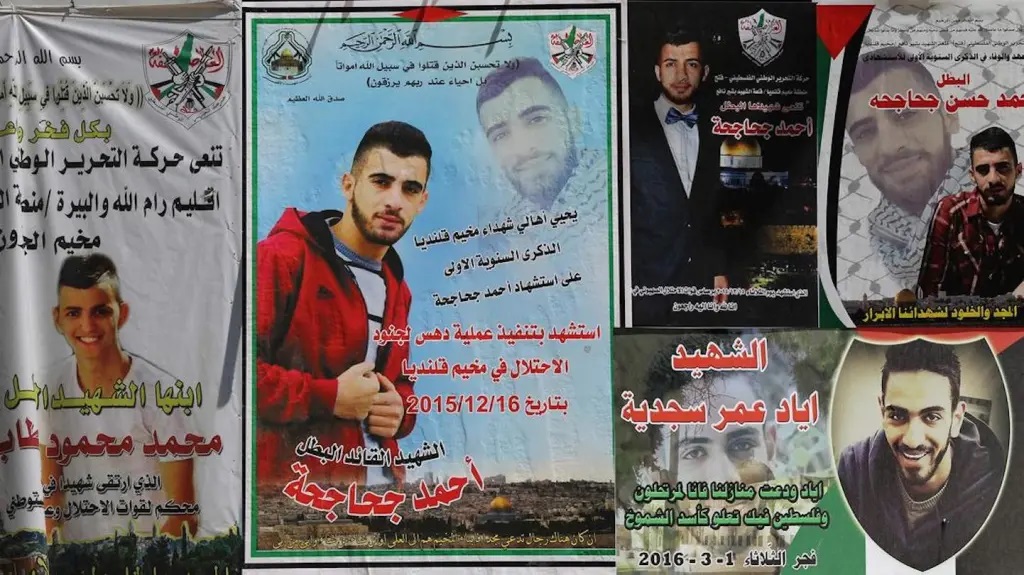
In the Israeli-Palestinian conflict, martyrdom is not just a phenomenon—it is an industry. Children grow up with images of heroes who sacrificed themselves, and posters of young faces with the date of their ‘transition’ marked as an honour. On one hand, it is a source of inspiration; on the other, it is an existential threat. The martyr not only destroys himself but also the possibility of dialogue. A dead man cannot negotiate.
The Israeli response to martyrdom is inextricably linked to a deep historical experience of persecution and survival. Jewish tradition knows the concept of Kiddush Hashem, the sanctification of God's name, sometimes interpreted as martyrdom.
Unlike the Islamic notion of self-sacrifice in armed struggle, Judaism prioritises the preservation of life. The emphasis is on Pikuach Nefesh, the obligation to protect life, even if it means breaking religious laws.
This fundamental valuation of life is reflected in Israel’s defence philosophy. Every Israeli soldier is trained to protect their life and that of civilians, not to sacrifice themselves for the cause. Terrorist attacks that glorify martyrdom have made Israel a nation that lives in a permanent state of vigilance.
The Iron Dome, high-tech security walls, and pre-emptive security measures are direct responses to a culture where martyrdom is used as a strategic weapon against Israeli civilians. Yet, paradoxically, this strategy only reinforces the cycle of fear and reaction.
The glorification of self-sacrifice fuels Israel’s defensive stance, just as Israel’s heightened security fuels the martyrdom narrative. It becomes a vicious circle: the more martyrdom is embraced as a weapon, the stronger the defensive mechanisms become, perpetuating an ever-escalating cycle of violence and mistrust.
Martyrdom demands a response. It thrives on it. The explosion is not just an act of destruction but an invitation. The intended audience is not just those who perish in the blast but the ones who remain, who must decide how to react.
A checkpoint is reinforced, a new security law is enacted, and another neighbourhood is placed under surveillance. Each measure feeds the fear, validates the urgency, and justifies the next act of martyrdom. The cycle does not break; it accelerates. The war on martyrdom ensures its survival.
And yet, people continue to talk about peace as if it were within reach. As if there is something to reconcile when one side believes in protecting life and the other in elevating death. What future can exist when self-destruction is considered the highest form of identity? When martyrdom is no longer a tragic side effect but a goal in itself?
Israeli philosopher Avishai Margalit wrote about humiliation as the ultimate political force, shaping conflict dynamics and resistance. Perhaps martyrdom is the ultimate revenge for that humiliation—a desperate assertion of agency, a way to transform powerlessness into a final, irreversible act of defiance.
It is an attempt to reclaim dignity through destruction, to rewrite history in blood when no other means seem available. But in a struggle where the price is complete annihilation, does anyone win? Or does martyrdom merely perpetuate the cycle, ensuring that each act of self-sacrifice births the next in an endless chain of suffering and retaliation?
Martyrdom holds history hostage. Each death plants the seed for the next as long as it is glorified. A blood sacrifice that brings no peace—only more blood.
The glorification of martyrdom is not just a strategic weapon; it is a means of hardening ideological battle lines. It transforms individuals into abstract symbols and merges personal suffering with a collective narrative of heroism.
In that transformation, the martyr's humanity disappears. His name is no longer whispered by loved ones but chanted in public squares. His death is no longer mourned by his family but celebrated by a political movement pursuing its agenda.
What remains when martyrdom becomes the norm? A society in which life loses its value. Young men and women no longer dream of a future but only of a ‘meaningful’ death. A world where the only path to immortality runs through death.
If we ever want to escape the endless repetition of this tragedy, we must stop pretending that death is sacred. Martyrdom is not sacrifice but manipulation, a carefully constructed narrative that turns those without a future into soldiers. The only way to defeat it is to make it meaningless, to make life more attractive than death. But who dares to start that revolution?
Perhaps the only actual act of defiance is not dying for a cause but refusing to die. Possibly, real courage is not the explosion but survival, building instead of destroying. Martyrdom can finally die only in a world where life is valued more than death.