Dear members of the parliamentary factions in the House of Representatives and members of the government,
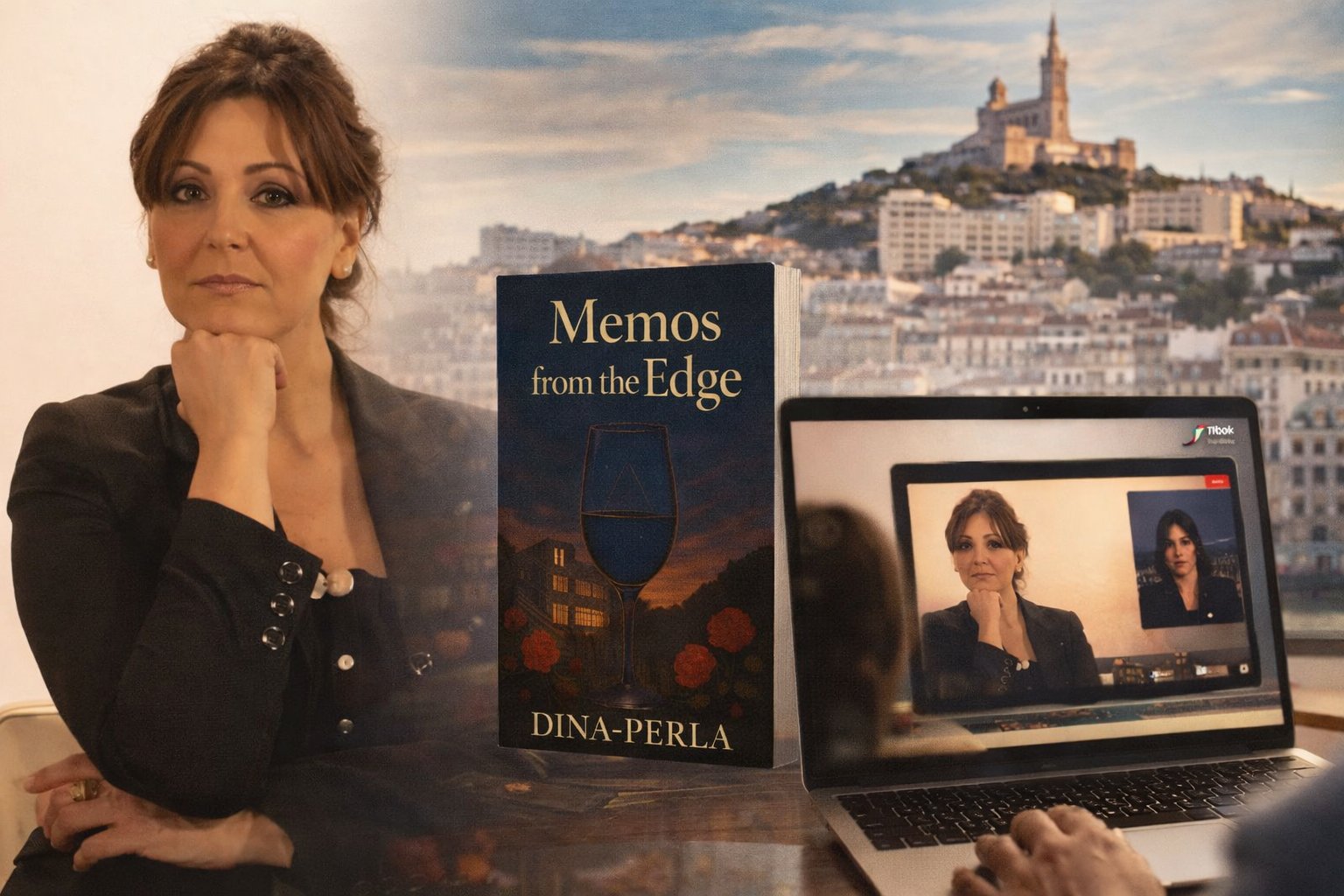
Allow me to invite you to the digital book launch of my philosophical novel, Memos from the Edge, on April 9, 2026. This evening isn’t merely a celebration of engaging, commercially oriented work with international connections, but also a call to adhere to what I call humanecy. A philosophy that I’ve developed for this era. One that moves beyond the empty rhetoric about values that many politicians are guilty of.
You will find the information at the bottom of this email, as well as instructions on how to register. You are welcome to attend and to share the invitation. You will certainly take something meaningful away from it.
At the same time, I urgently want to draw your attention to the historical patterns of pogroms throughout the centuries. I ask you not only to study the well-known and widely discussed pogroms, but also the hidden ones. Such as those in Romania, one of the darkest and least discussed episodes in human history.
It’s time that you study how these methods function, carried out literally from door to door, and allocate capacity and time to this. That is your responsibility as a government, as underscored in the constitution, especially because pogroms may become the direct future consequences of your failures during this period.
Stop now with the hollow words about there being no place for antisemitism in the Netherlands. Your additional security measures aren’t enough. I’ll leave this country as soon as possible. The Netherlands won’t earn another cent from me as an entrepreneur after a lifetime of being treated here as a second-class citizen, and by now effectively a fifth-class one.
The Netherlands no longer deserves my loyalty. And when people like me leave, the Netherlands truly has a problem. This country isn’t even capable of safeguarding the most basic standards.
I choose to connect my future to a society where higher standards in public and institutional life are still genuinely upheld, where secularism within government institutions is taken seriously. Where police stay away from religious gatherings in which people call upon their god as the only god and promote partisanship and superiority.
Where political leaders clearly distance themselves from religious or ideological calls that legitimise violence in the broadest sense of the word. But for the Jews who still wish to remain in the Netherlands, and in the spirit of addressing not only the symptoms but the core of the issue, I wish to point you to the following.
If governments truly want to make a difference, they must be willing to address the core of the problem. Additional protection, endless coffee meetings, dialogue programs, and political statements are insufficient when the ideological source of violence remains untouched. In several ancient religious books, some passages literally call for the extermination of specific groups of people, such as the Jews.
As long as such passages are considered untouchable and certain groups are allowed to interpret and follow them literally, a structural risk of violence against minorities such as Jews will remain. The harm that accompanies religion in these forms will only increase. The Dutch constitutional state is completely unprepared for this. Within a few years, laws and regulations will be discarded like toilet paper by increasingly large groups.
My proposal is therefore clear. Not the banning of entire religious traditions or books, but the legal prohibition of those specific passages that explicitly call for destruction, extermination, or violence against groups of people. It must be prohibited for people to act on such passages literally, and not dismissed with the claim that our constitutional state already addresses this. Otherwise, each of you will very quickly have blood on your hands. Consider this a warning.
At the moment, you are ‘only’ responsible for the fact that Jews are increasingly unable to flourish in this country. Responsible for all the insecurity, psychological harm, financial damage, and other consequences of recent years. Above all, they are responsible for the immense inversion of truth, the lies, and the delusions.
Nevertheless, people may search for meaning, mysticism, ethics, and comfort in ancient texts. People may believe. That right is not in question here. But when texts are literally used to justify or inspire violence, to the point of full conviction that entire groups must be exterminated, a constitutional state must be willing to assess and enforce this explicitly through the law, with clauses that will need to be added.
Again, when governments continue to avoid this question, they ultimately bear the moral responsibility for the consequences that follow. In a time of complete inversion and moral decline, this may well be the dream of a few among you. But the majority of you, once again, bear the full responsibility to push for what is right and.
If you don’t take these words seriously and don’t translate them into action, beginning with making this the most urgent agenda item for the coming period, then the entire Netherlands will ‘reap the consequences’ far sooner than you think. In other words, I would think twice before dismissing this political issue with laughter.
Respectfully,
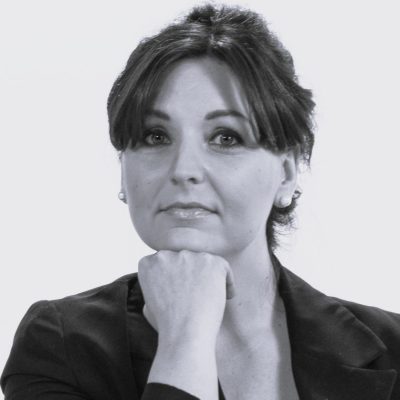
Dina-Perla Portnaar
(Invite)
Book launch: philosophical novel Memos from the Edge (April 9, 2026 | 18:00 – 22:00 CET)
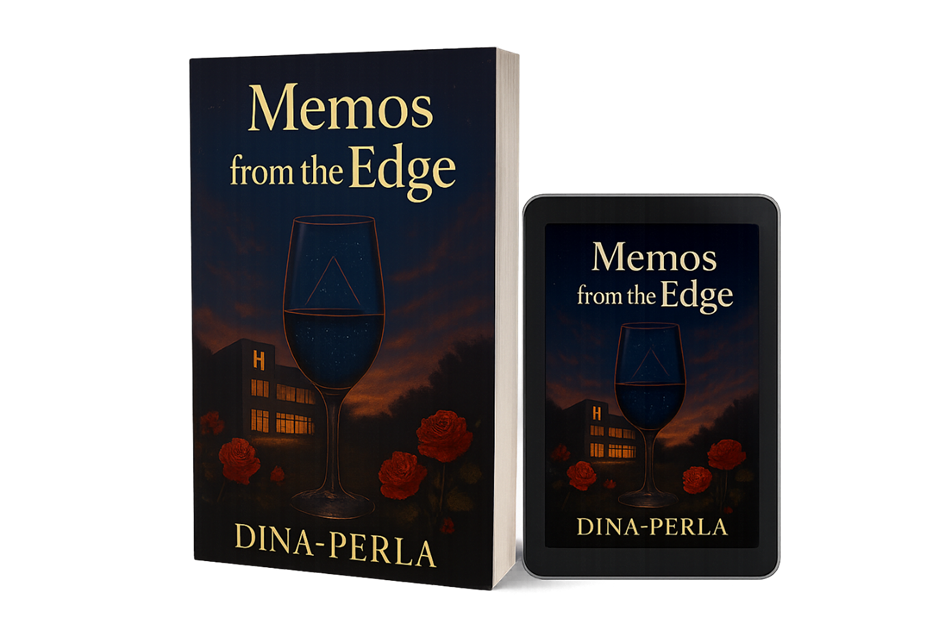
They accused her of murder, but the real crime is what she uncovered inside the fertility clinic. And someone tries to kill to keep it hidden.
Save the date for the book launch.
| You’re invited to join the digital book launch on April 9, 2026, from 18:00 to 22:00 CET. Inspirational quotes via http://medium.com/@dina-perla. |
| If you have a TikTok account, you can comment and submit questions during the TikTok Live. If not, you can join via the link, but you won’t be able to interact. |
| To register, send an email, and you will receive the event link closer to the date. If needed, feel free to send questions in advance via email. You can also request a synopsis or an advanced copy. |
The public debate over the past few years has been very challenging, to say the least. The satirical, philosophical, and mystical novel Memos from the Edge, therefore, invites readers to pause and reflect on where we’re going and whether we’re heading in the right direction. Memos from the Edge explores how identity intersects with larger social forces, and how truth-telling can transform both individual lives and collective consciousness.
Memos from the Edge is very much dialogue-driven. The author continually changes the balance between descriptive passages and dialogue. It’s almost a screenplay in the beginning. Through the dialogue, she maintains a balance between the philosophical and the realistic, deliberately bending conventions in the process. Expect rich wording, depth, and a compelling narrative structure.
The author draws bold parallels with current geopolitical conflicts, inverting familiar dynamics to offer a fresh, unsettling perspective. This creates a satirical framework for examining what it means to seek belonging as a highly sensitive person in today’s fractured world. The story is grounded in the everyday, to the point of being mundane, making it evocative. It reads like a glass of champagne: light and sparkling.
The title Memos from the Edge carries multiple meanings, which gradually reveal themselves throughout the work. One reference is that the title reflects the inner experience of the main character, Imane-Safae, a highly gifted and highly sensitive young woman who navigates life from a psychological and emotional ‘edge’—a place of heightened perception, vulnerability, and insight.
The ‘memos’ also refer to fragments of thought, memory, and feeling, transmitted from the margins of what society deems normal. These messages give voice to the often-invisible intensity of giftedness: the existential loneliness, overwhelm, and deep need to make sense of a world that frequently misreads Imane-Safae’s depth. The edge isn’t just where Imane-Safae stands; it’s where she sees more clearly than most.
What the book is about
When Fertility Doctor Imane-Safae is accused of throwing a newborn in a glass recycling container, her world fractures overnight. The accusation is unthinkable, yet the truth she carries is more dangerous than the accusation itself. In the fertility clinic where she works, medicine and ideology intertwine in ways that threaten to destroy society.
As pressure from the investigation mounts, Imane-Safae’s longing to belong collides with her refusal to stay silent about her discovery. Betrayed by those she had to trust and shadowed by questions she never knew she needed to ask, she begins to confront the hidden threads of her life. Each revelation forces her to choose between safety and truth, and complicity and justice. She uncovers parts of herself that had long remained buried.
While the nation watches her trial unfold, Imane-Safae’s personal reckoning becomes a public battle over power, belonging, and the right to know the truth. Out of ruin and loss, she must find the courage to reclaim her sense of self, to redefine what it means to be human in a system built to divide.
Memos from the Edge is a provocative, philosophical novel about the fragile border between justice and revenge. Ideal for book club discussions about life’s dilemmas and the price of integrity.