Your talent opens the door, but your daily habits decide if you stay. You can be the smartest person in the room, but if your habits leak energy, focus, and discipline, you'll stay stuck.
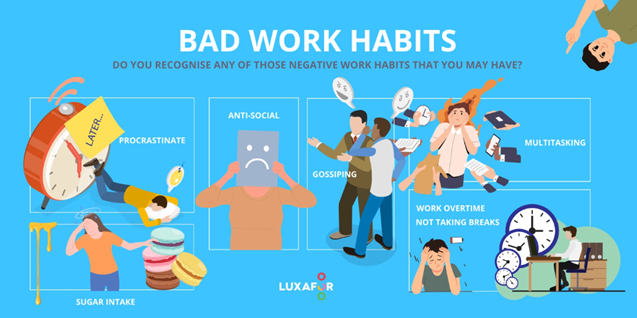
Bad habits look like:
Good habits look like:
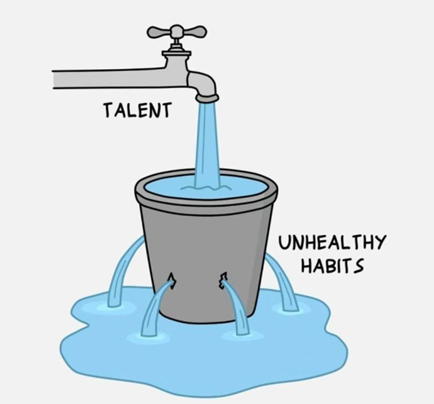
In today’s competitive environment, being intelligent, experienced, or technically strong is no longer enough. Many professionals reach a plateau not because they lack capability, but because their daily habits quietly undermine their potential.
The uncomfortable truth is this: success at work is less about what you know and more about how you do it.
Unhealthy habits rarely appear dramatic. They are subtle, repeated behaviours that slowly erode trust, performance, and credibility. Over time, these patterns send a clear signal — not about your intelligence, but about your reliability.
On the other hand, high performers operate differently. Their advantage is not necessarily superior knowledge, but disciplined habits that compound over time. They understand that consistency builds reputation.
They proactively update stakeholders, eliminating uncertainty. They actively seek feedback, even when it is uncomfortable, because they see it as an investment in growth. They review and plan their tasks, reducing last-minute pressure and improving quality. And most importantly, they keep learning — even in small increments — because they know that progress is cumulative.
Research and executive education insights consistently highlight that sustained performance is driven by disciplined routines, self-awareness, and the ability to adapt behaviours over time — not just raw talent or experience.
At its core, professional success is a game of habits.
To simplify this, focus on three critical shifts:
These shifts may seem simple, but they are powerful. They transform how you are perceived, how you perform, and ultimately, how you progress.
The workplace does not reward potential — it rewards consistency, and consistency is built through habits.
If you reflect honestly, you will likely find that the gap between where you are and where you want to be is not due to a lack of opportunity, but to small behaviours repeated daily. The good news is that habits are within your control. They can be redesigned, improved, and strengthened with intention.
I prefer to start small, send that proactive update. Ask for that feedback. Plan your next day before it begins. Learn one new thing, even if it takes just ten minutes.
Over time, these small actions compound into something far more powerful than talent alone — they build trust, credibility, and momentum. Because in the end, talent may open the first door, but habits decide how far you go.