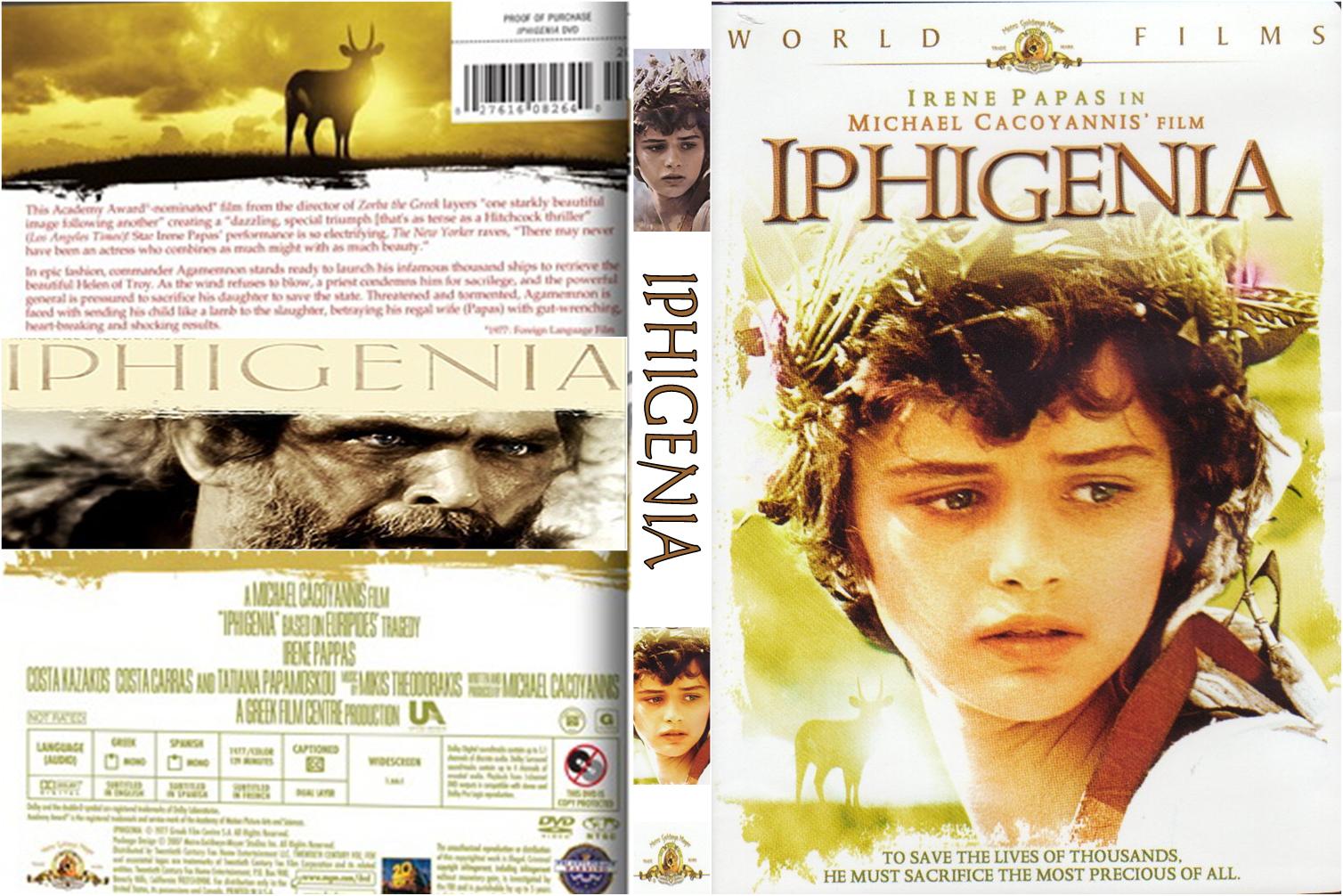
By happenstance, I didn’t get to watch a special screening of the classic Greek-made movie Iphigenia (1977). Agamemnon’s fleet of a thousand ships can’t set sail to Troy without the winds blowing. The oracle tells this so-called tyrant that he has to sacrifice his own favourite daughter, Iphigenia, to get the gods to help him out.
By Emad Aysha
At first, the king agrees, with some prodding from his lovelorn brother Menelaus, then he changes his mind. Even Menelaus realises how wrong he was, blinded by rage over Helen, and tries to repair things, but it’s too late.
Menelaus had corrupted the army, promising them the gold of Troy, so that the soldiers wouldn’t back down. Odysseus is trying to take Agamemnon’s place to lead the alliance, and he tells the weary warriors about the oracle’s deal.
Even the heroic Achilles can’t save Iphigenia, with his own greedy troops disobeying him. The poor girl finally agrees to hand herself over, refusing Achilles’ offer to die defending her. It’s one of the most heartbreaking scenes in cinema history, accentuated further by the brilliant performance of her mother, Clytemnestra, played by the immortal Irene Papas.
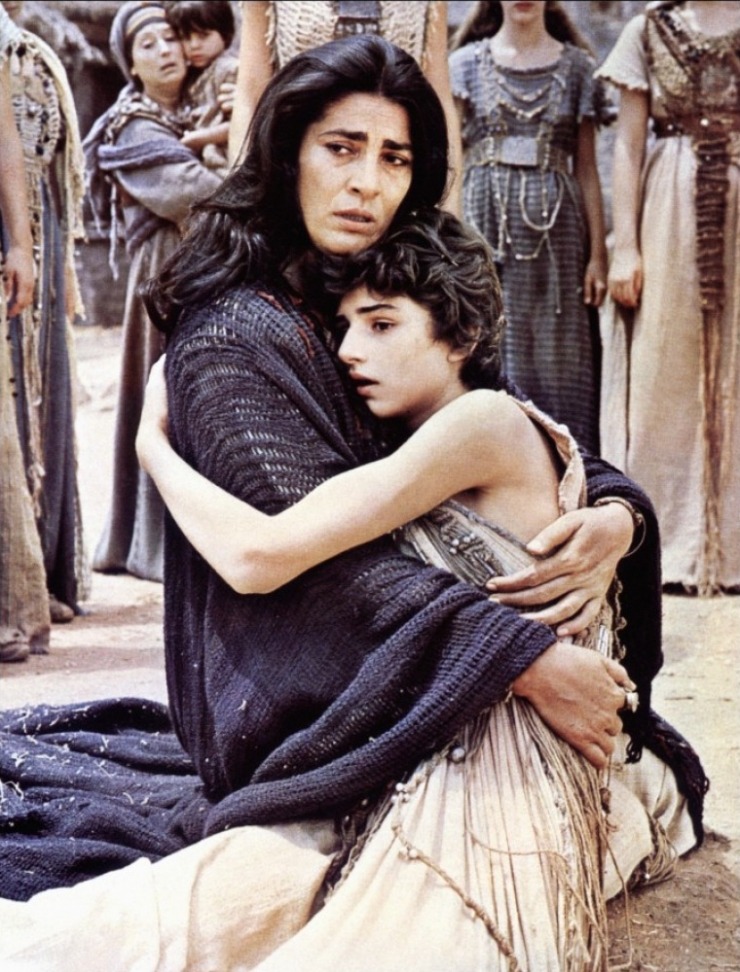
COLLATERAL DAMAGE: Irene Papas as the loving mother but tortured wife, embracing the delicate flower that is her daughter, to no avail.
The movie is pure genius, offering a darker, more realistic depiction of ancient Greece, with the titular Agamemnon as the quintessential tragic figure. He’s a loving father despite all his foibles, and he got into this pickle because of his tempestuous brother.
The language is pure poetry, borrowed verbatim from the original text by Euripides. The movie's even better. Intense performances bring the characters to life in this depiction of the insanity that is war and the twisted politics behind it that force people to make irrational and amoral decisions.
This brings me to the second topic here, Hollywood. Not so much the comical badguy duo of Agamemnon and Menelaus in Troy (2004) but the surprising anti-Semitic stereotypes found in erstwhile pro-Israeli cinema!
Namely, Eyewitness (1981) with William Hurt and Rollover (1981) with Jane Fonda. Hurt plays a janitor who is a witness to a murder, and it all tracks back to, amazingly enough, the Israelis.
A shady (South) Vietnamese businessman was helping get Jews out of the Soviet Union, and threatened to expose the man behind the operation, Christopher Plummer, if he didn’t pay him more. Now Plummer goes after Hurt when he approaches a TV reporter, Sigourney Weaver, who is also Plummer’s de facto fiancée.
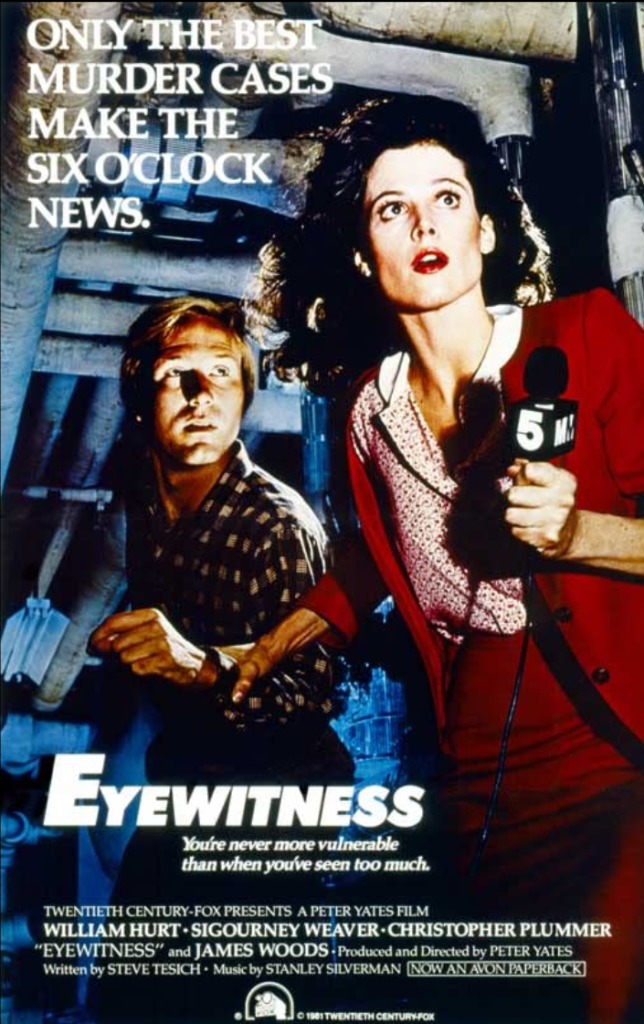
ROUGE TRADER: Harmless William Hurt (RIP) only goes on the run once he meets the sassy Sigourney Weaver. All in the days of Hollywood stereotypes, before multimedia.
Talk about jealousy. While exceedingly blond, Plummer’s Israeli ‘associate’ in all this is dark-haired. Hurt is even blonder, and you’ll notice his sleazy friend is played by James Woods, the sweaty, ‘greasy’ dark-haired dude who turns out to be working for Plummer.
Woods is a fellow janitor, but not content with his lot in life, a former Vietnam vet who never killed anybody. Hurt by contrast, a former Marine is a decorated hero and has been forced into this degrading job that he nonetheless likes, even if it means working for a South Vietnamese double-dealer.
At first, we are made to suspect the Vietnamese profiteers, since they follow Hurt and almost kidnap Weaver, only to find out who the real villain is. Orientalism turning into anti-Semitism.
Rollover is even more blatant in its stereotypes. Fonda plays a businesswoman who falls afoul of a Saudi money plot, with petrodollars deposited into bank accounts that are later turned into gold.
Fonda’s husband was about to expose this, was silenced, and now she’s next. On the surface, this looks racist against Arabs, and it is, but the ‘face’ of this conspiracy is nonetheless the prototypical Jewish New York banker, played very competently (and sympathetically) by Hume Cronyn.
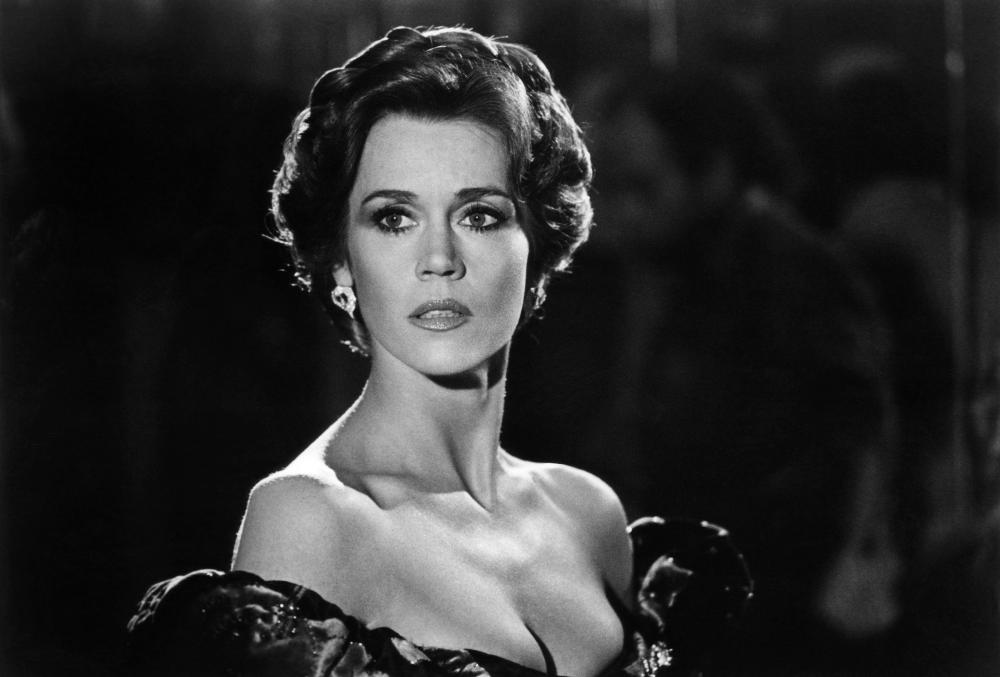
UP FOR GRABS: The regal Jane Fonda as the much sought-after-widow in the soon-to-be defunct country.
This guy greases the palms, knows about the murders even if he didn’t initiate them, and worst of all, justifies the destabilisation (or desecration) of the dollar to the media. And, if that isn’t bad enough, the good-guy banker counterpoint to this dude is Kris Kristofferson.
Yep, the good old boy, just minus the beard and stuffed in a two-piece suit. He invests in productive capital rather than making money from money, and becomes the loverboy and self-appointed guardian of the now-widowed Fonda. (That was quick. The dead husband has just been buried!)
To rub it in further, he was Hume Cronyn’s protégé, and when the world economy collapses – Saudis pull their money out of all Western banks – the old hand kills himself in dishonour. Not so Kristofferson. The closing scene has him telling Jane Fonda he needs a partner.
It’s a business term but a tongue-in-cheek reference to marriage. The firm stands in for the family in a money-crazed country like the USA.
I’ll say one thing in the movie’s favour, chiefly the economics of it and the not-so-crazy sci-fi scenario with the global financial meltdown. That’s a pretty accurate portrayal of the petro-dollar system and how it props up much of the world's capitalist system.
One Chinese researcher, Professor Jiang, insists the reason Iran is attacking Gulf Arab oil infrastructure is to undercut the US economy. Oil transactions have propped up the dollar since the 1970s, when Nixon closed the gold window, with the Gulf Arabs as the linchpin.
Recollect our review of the semi-science fiction novel The Petro-Dollar Takeover (1975), a propaganda novel in which the Iranians are the baddies and the Saudis the saviours. And this was the Iran of the Shah!
Rollover puts it all into perspective, while Eyewitness helps expose the hypocrisy of Hollywood portrayals of the Other. Arabs and Iranians are just stand-ins for anti-Semitic stereotypes, with the red-blooded, self-made American getting off scot-free.
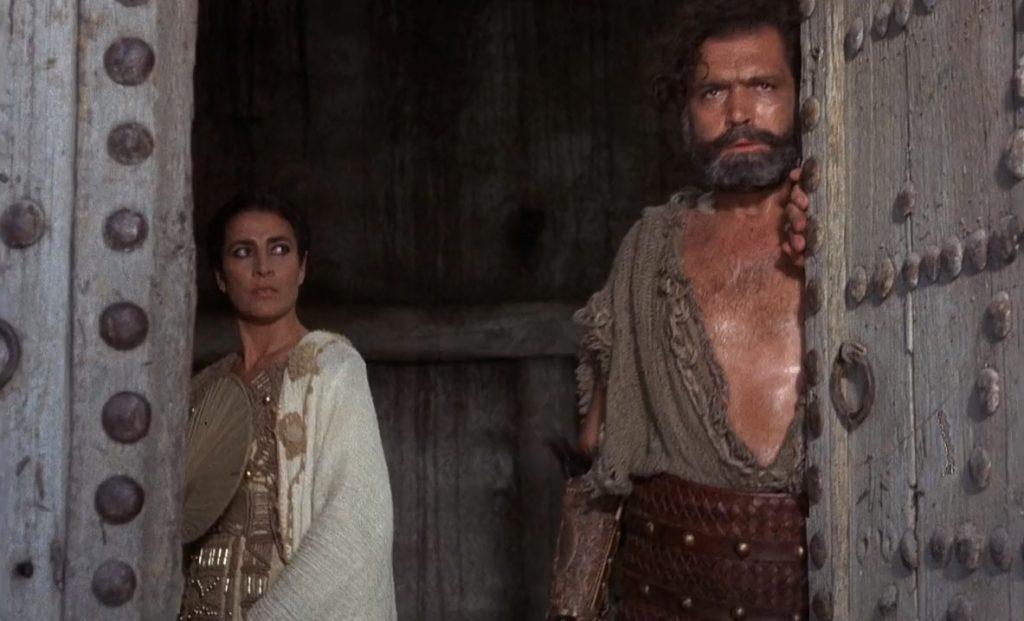
DOORS OF FATE: The titular Agamemnon [right], leader of a patchwork quilt alliance fraying at the political seams. Talk about the tapestry of freewill.
Oh, wouldn’t you know it, oil is also known as black gold. Troy all over again. Let’s hope we don’t have to wait to miss another Greek tragedy screening about the current mini-world war.
At least the actor Kostas Kazakos did a great job showing us Agamemnon as a tortured, conflicted man. Who would they get to play Mr Trump?
Probably someone with deliberate dark hair!