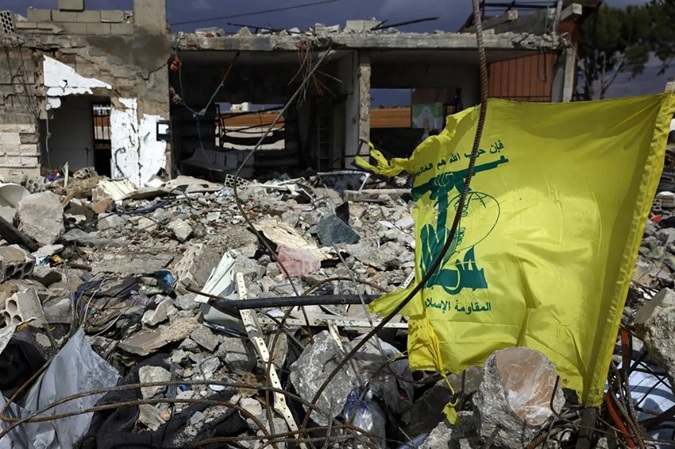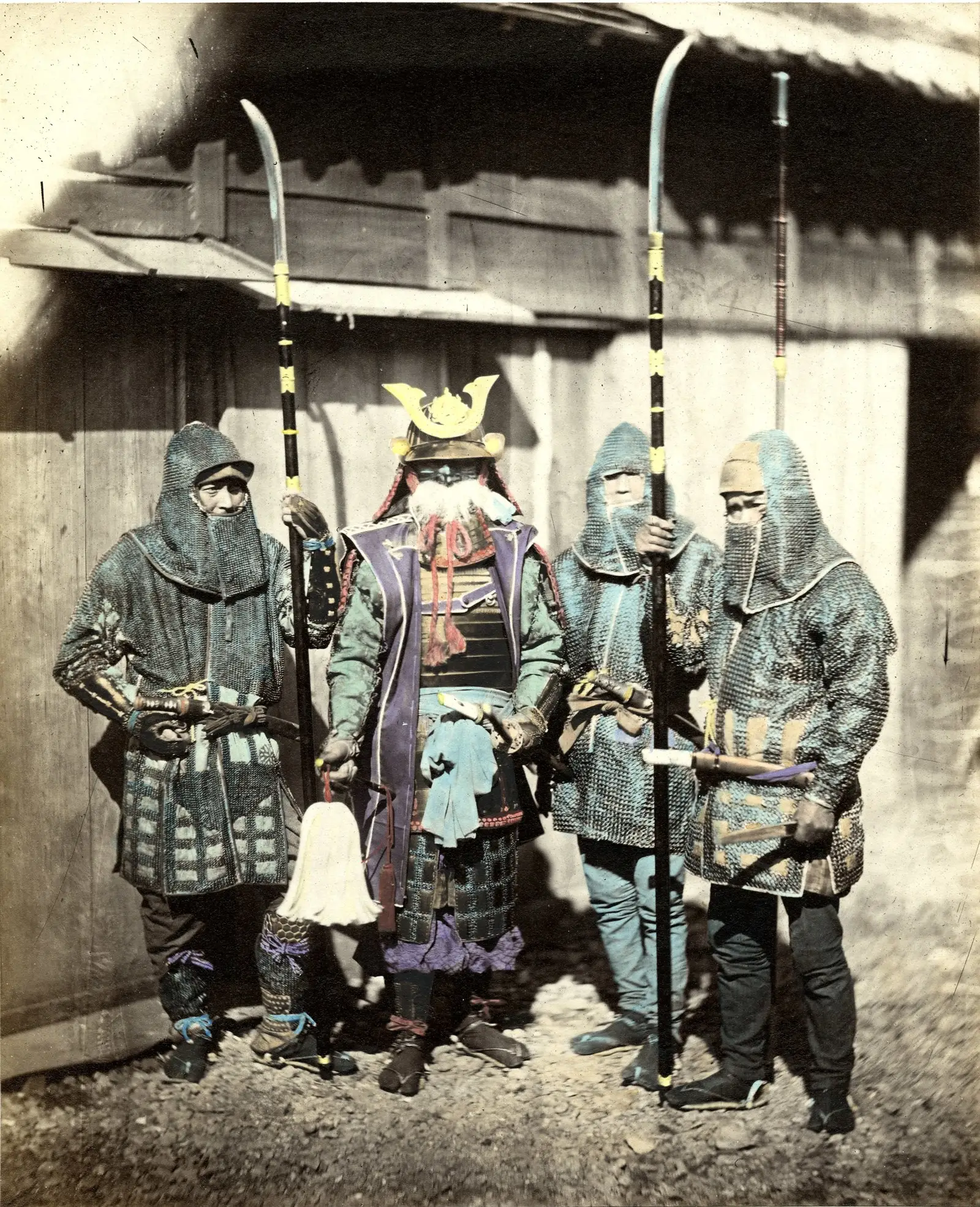
History often gives revolutions their own Samurai. In feudal Japan, they carried swords in the Emperor of the Sun's service. In modern Iran, they wear the uniform of the Islamic Revolutionary Guard Corps (IRGC), sword to the Supreme Leader of the moon. Every warrior caste believes it alone defends the soul of its civilisation. In Japan, the Samurai did so for centuries. In Iran, the Revolutionary Guards may play that same role today, standing between history and the storm of modern geopolitics.
This is not a simple analogy. It is a story of honour, ideology, and the perilous intersection of civilisation and warfare.
By Nadia Ahmad
Behind the revolutionary language of the modern Tehran lay the long shadow of Persia’s ancient civilizational memory. Centuries before the Islamic Republic, Persian sages, including Zarathustra, imagined a world guided by cosmic order, where the sun, as the manifestation of Ahura Mazda, and the Mah (moon) shaped the destiny of men, warriors, and Kings.
The Islamification of Persia led to the adoption of the Mah (moon) as a symbolic guide of the new order. That mythic legacy did not dictate modern policy. Still, it infused the region’s strategic culture with a sense of destiny, shaping the worldview around the authority of the Supreme Leader Ali Khamenei, until his assassination.
The Samurai and the shock of the West
For centuries, Japan was dominated by the Samurai, a hereditary military class bound by the code of Bushido. Loyalty, honour, and readiness for death formed the spine of their identity. Their allegiance belonged ultimately to the emperor, whose throne descended from the sun goddess Amaterasu, a symbol of divine continuity.
Many Samurai, led by Saido Takamori, viewed this not as reform, but as betrayal. Their final stand in the Satsuma Rebellion became legend, a testament to unbroken devotion. Figures such as Yamamoto Tsunetomo, author of Hagakure, codified Bushido as a philosophy of life and death, while Katsu Kaishu negotiated modernisation, embodying the tension between tradition and progress.
When Western powers forced Japan open in the 19th century, the country faced a stark choice: embrace modernisation or resist it. The Meiji Restoration modernised institutions, economy, and military, dismantling the Samurai’s traditional privileges.
Yet, the Samurai spirit did not vanish. It survived in nationalism and martial culture, shaping Japan’s trajectory until the catastrophic confrontation with the West in World War II. History does not repeat itself perfectly, but it often returns in patterns.
The Revolutionary Samurai
After the Iranian Revolution of 1979, Iran created the IRGC. Unlike a traditional army, it was designed to guard the revolution itself. Its mission was both ideological and military, extending far beyond Iran's borders.
The Guards became a modern warrior caste, loyal not just to the state but to the revolutionary vision embodied by the Supreme Leader of the Moon. Their authority fused spiritual, political, and martial legitimacy; a constellation of power much like the celestial symbolism of the sun for the Samurai.
Figures such as Qassem Soleimani, whose leadership of the Quds Force shaped Iran’s external strategy, are revered as martyrs of the revolution, their legacy guiding younger commanders. Hossein Salami and Mohammad Pakpour represented the historical continuity of leadership, now part of the Guard’s memory of sacrifice.
Over the decades, the Guards developed their own culture: disciplined, hierarchical, and ready to sacrifice for a higher cause. Their worldview frames confrontation with foreign powers not as mere politics but as a civilizational struggle.
The deep parallel: Bushido and Martyrdom
The similarity between Japan’s Samurai and Iran’s revolutionary ethos goes deeper than structure or loyalty. It is rooted in the sacralization of death.
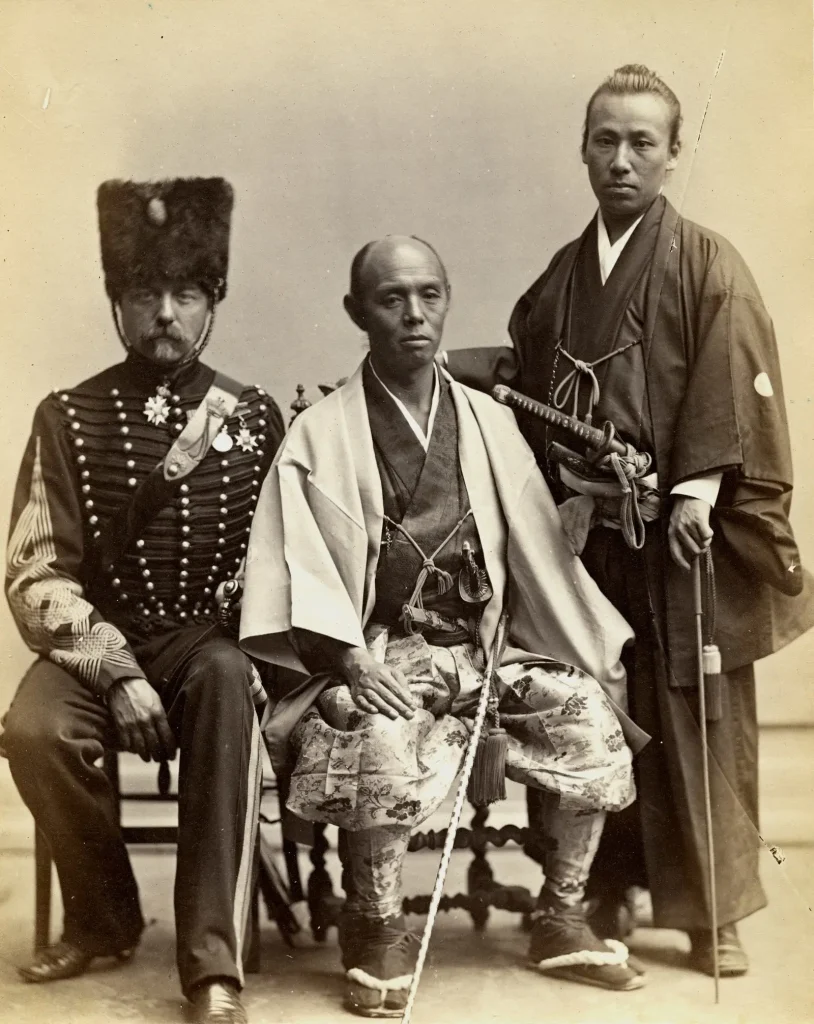
Samurai philosophy taught that “the way of the warrior is found in death”. Fearlessness in the face of death made warriors unbreakable, transforming ordinary soldiers into guardians of culture.
Shiite revolutionary culture shares a comparable narrative, anchored in the memory of the Battle of Karbala, where Husayn ibn Ali embraced martyrdom rather than submit to oppression. In Iran, this ethos informs the ideology of the Revolutionary Guards; sacrifice is sanctified, loyalty is absolute, and death in defence of the revolution is a moral and spiritual duty.
The celestial symbolism reinforces this worldview. The sun aligned the Samurai with a cosmic order of divine continuity; the moon guides the Revolutionary Guards through cycles of struggle, patience, and renewal. Both metaphors underscore that warrior loyalty is not just political, it is existential and cosmic.
The war of the present
The metaphor becomes reality with a dangerous immediacy. In 2026, tensions between Iran, the United States, and Israel erupted into open confrontation. Precision strikes targeted Iran’s leadership, and the long-time Supreme Leader, Ali Khamenei, was killed, shaking the foundations of the Islamic Republic.
The Revolutionary Guards, carrying the memory of Qassem Soleimani, Hossein Salami, and Mohammad Pakpour, reacted swiftly, launching retaliatory missile strikes that rippled across the region. The situation teeters on a knife-edge: every move, every signal, could further escalate the conflict.
This confrontation mirrors the same dynamic that once defined Japan: a warrior class confronting an overwhelming external power, not merely for territory, but for the soul of its civilisation. Just as Saigo Takamori and his Samurai rallied to protect the emperor, Iran’s revolutionary elite now framed every missile, every manoeuvre as a moral and cosmic obligation.
Warrior classes often share a worldview that places loyalty and honour above survival. The Samurai resisted the forces of Western modernisation to protect Japan’s sacred order. The Revolutionary Guards resist what they perceive as Western domination to protect the Islamic revolution.
In both cases, resistance is identity. Compromise is betrayal. Fear is dishonour. Sacrifice is sanctified. Such beliefs forge resilience, but harden confrontation. A warrior culture that sanctifies death cannot be intimidated or reasoned with easily. Every engagement risks escalation, every provocation carries existential weight.
When warrior states collide
Japan’s historical trajectory offers a stark warning. What began as resistance to foreign influence morphed into militarised nationalism, culminating in World War II. The atomic bombings of Hiroshima and Nagasaki opened a new era, one in which global power, deterrence, and survival were rewritten.
Iran now faces a parallel crossroads. The Revolutionary Guards occupy the same perilous position once held by the samurai; guardians of identity at the precipice of overwhelming global forces. History whispers a cautionary tale; when ideology fuses with the logic of war, escalation is almost inevitable.
Iran faces a choice. One path is gradual adaptation, reconciling revolutionary ideals with the realities of global power. The other is entrenched resistance, where conflict defines its identity and every engagement becomes existential.
The Revolutionary Guards, like Japan’s Samurai, are at the heart of that choice. Their loyalty and ideology can either allow Iran to evolve with history or lock it into cycles of confrontation that may escalate beyond intention. History rarely repeats itself. But sometimes, it whispers its patterns through those who stand at the edge of confrontation, sword or missile in hand, ready to die for whatever they believe is sacred.
The warning of history
The Samurai once believed they were defending the soul of Japan. Today, Iran’s Revolutionary Guards believe the same about the revolution. The sun and the moon, the emperor and the supreme leader, the sword and the uniform, all point to a single truth: civilisations defend themselves not only with armies but with the warriors who embody their ideals.
Just as the unleashing of the atomic bomb once opened a new era in global history, the current confrontation between revolutionary Iran and the West hints at the fragile possibility of another epoch, one that could redefine the rules of power, deterrence, and survival in the modern world.
The question is whether history will allow these warriors the chance to evolve, or whether the clash between revolution and global power will deliver a harsher lesson again.