An old American phrase carries an almost accidental political irony: Gone with the wind.
In the American imagination, it belongs to another age, another landscape, another South, and to a film that became part of the country's cultural memory. But the phrase can also describe something more political: promises once made, principles once taken seriously, and freedoms that can disappear so gradually that a people notices their absence only after the wind has carried them away.
By Rami Audi
One of those promises was that the American states would remain more than administrative provinces of Washington. They would be political communities with their own authority, character, institutions and ways of life.
The Constitution created a Union, but it did not create a country in which every community had to become politically identical. The Founders were wrestling with precisely that problem when they built the American system: how to create a government strong enough to hold a republic together without creating a government so strong that the republic would eventually belong to its centre rather than to its people.
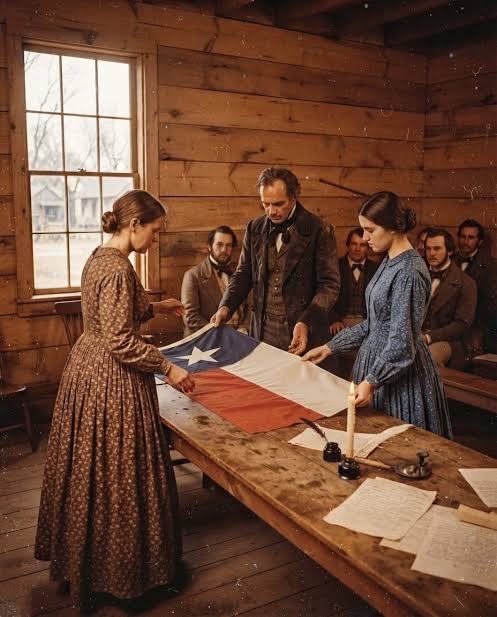
Texas gives that old question its most recognisable image. The Republic of Texas adopted the Lone Star Flag in 1839, and it remained its national flag until Texas entered the Union in 1845. The star survived the transition from republic to state. It therefore carries a peculiar memory: Texas entered America without becoming merely anonymous inside America.
That is why the Lone Star can mean more than Texas. A Virginian does not have to become a Texan to be an American. A Californian does not have to think like a Vermonter. Massachusetts does not need to resemble Montana, and New York does not need to become Florida.
The American Union was never built on the assumption that fifty political communities would possess one temperament. Its constitutional architecture emerged from disagreement over how much authority should belong to the national government and how much should remain closer to the states.
The Constitution strengthened the Union precisely because the earlier Articles of Confederation had proved too weak, but the settlement did not erase the states. The argument was fierce from the beginning. The Federalists believed that a stronger national government was necessary.
The Anti-Federalists feared that the new Constitution had created a centre powerful enough eventually to overwhelm the states. The ratification debates were therefore not a minor quarrel surrounding the American founding. They were part of the founding itself. The central question was already familiar: how much government is necessary for liberty, and when does government become a threat to the very liberty it was created to secure?
The American answer was neither pure decentralisation nor unlimited central authority. It was federalism. The Tenth Amendment made the principle explicit: powers not delegated to the United States, and not prohibited to the states, were reserved to the states or to the people. That sentence is easy to pass over today because it sits quietly near the end of the Bill of Rights.
Yet behind it stands one of the most enduring conservative instincts in American political thought: power should have limits, authority should have boundaries, and government should not automatically acquire jurisdiction over everything simply because it possesses the machinery to act. This is where the old frontier temperament comes in.
A cowboy understands boundaries without needing a constitutional law professor to explain them. He knows where his land ends. He knows that a fence is not an insult to the neighbouring ranch. It lets two neighbours remain neighbours. There is something similar in federalism.
A state does not need to become a separate nation to possess political dignity. Nor does belonging to a nation require a state to surrender every meaningful difference to the national government.
The American federalist instinct is therefore not necessarily hostility toward government. It is suspicion of government that has forgotten its limits. A national government has responsibilities that naturally belong to the nation: defence, foreign affairs, constitutional questions, and matters that genuinely cross state boundaries.
Those responsibilities do not mean every political question must ultimately be answered in Washington.
The constitutional question is not whether government should exist. It is where a particular power properly belongs. That question has followed America from Philadelphia to the present. Jefferson and Hamilton fought over the scale and character of national power.
Arguments over the national bank, tariffs, internal improvements, and the interpretation of federal authority repeatedly exposed the same fault line. Later, the Civil War transformed the constitutional meaning of the Union and the relationship between federal and state authority.
The Progressive Era expanded the national government's ambitions. The New Deal expanded them again, establishing a federal role in economic and social life that would have seemed extraordinary to many earlier Americans. Yet the older instinct never disappeared. It returned in different forms because centralisation has a peculiar quality: authority that travels upward rarely volunteers to travel back down.
Ronald Reagan gave that instinct a modern vocabulary. His 1987 executive order on federalism stated explicitly that political liberties were best assured by limiting the size and scope of the national government and that powers not delegated to the national government were reserved to the states or the people.
Reagan was not inventing a new philosophy. He was reopening an old American argument. The argument has now returned to the centre of American political life in another form.
Donald Trump's administration has explicitly described federal overreach and the administrative state as problems and has pursued deregulation and reduced federal regulatory reach.
A February 2025 executive order stated that ending federal overreach and restoring constitutional separation of powers were administration priorities. Whether one agrees with every element of that programme is a separate question.
The historical significance is easier to see. The language coming out of Washington belongs to an argument much older than Donald Trump. It belongs to the recurring American dispute over whether liberty is safer when authority is concentrated in the national government or dispersed among several levels of government.
This is also why the conservative case for federalism is more profound than nostalgia for an earlier America. It rests on a particular view of human freedom. A citizen is not merely an individual who votes every few years for a distant national government. He is also a neighbour, a taxpayer, a parent, a business owner, a member of a town, a county and a state.
Political life does not begin at the Potomac River. A government closer to the citizen can be wrong. States can be foolish. Local majorities can make bad decisions. Federalism does not make human beings wiser. What it does is distribute the consequences of political choices. One state experiments. Another refuses. A third adapts. A fourth watches carefully before deciding.
Sometimes the first state is right. Sometimes the fourth is.
Political diversity becomes a form of institutional memory. That possibility matters especially in a country as enormous as the United States. A rule conceived in Washington travels thousands of miles before it reaches a ranch in Texas, a fishing community in Maine, a farm in Iowa or a small town in Montana.
Geography cannot determine political truth, but geography can remind government of something bureaucracies easily forget: circumstances differ. The old frontier knew this instinctively. The federal capital may see a nation on a map. The people living inside that map experience a thousand different Americas. That is why the Lone Star should not be interpreted as Texas against America. It is Texas within America, and Texas retaining enough political substance to remain recognisably Texas.
The same principle applies to the other forty-nine. Virginia has Jamestown, Jefferson and the old Tidewater republic. Massachusetts carries Lexington, Concord and Boston Harbour.
Pennsylvania carries Philadelphia and the constitutional bargain. California became a Pacific power with a political and economic character almost unimaginable to the Atlantic colonies. Montana, Wyoming and the Dakotas developed political cultures shaped by distance, land and the frontier.
They are not interchangeable pieces of a national administrative machine. Nor should they be. A country can be united without being uniform. That may be one of the most neglected distinctions in modern political life. Uniformity is administratively convenient. Federalism is politically untidy. Uniform rules are easier to write. Fifty political cultures are harder to manage.
But a republic was never supposed to be a machine designed primarily for administrative convenience. An old conservative suspicion is that schemes promise to make complicated human life simple from the top down. It is the suspicion that knowledge is dispersed, that institutions grow out of particular places, that traditions matter, and that a distant authority should be reluctant to replace local judgement merely because it possesses superior machinery.
That instinct does not belong exclusively to Texas. It belongs to the idea of America as a federation. And here the old phrase returns: gone with the wind. What happens when a state retains its borders, its flag, its governor and its legislature, but loses much of its practical freedom because decisions once made locally are increasingly determined elsewhere?
The state still exists on the map. Its political substance becomes thinner. A state can keep its name while its authority is carried away in the wind of Washington. That is the deeper meaning of the Lone Star Principle. Not secession. Not the resurrection of the Confederacy. Not hostility toward the Union. The opposite, in a sense.
A Union strong enough to survive fifty different political temperaments does not need to make them identical. The American constitutional experiment was built around the difficult proposition that different communities could remain different while belonging to one country.
The stars on the American flag are therefore a useful image. They belong to one constellation, but each remains a star. They are joined without being fused. Texas has one star. Virginia has its history.
California has its character. Montana has its distance. Massachusetts has its memory. Somewhere between all of them lies the American idea: not one political personality imposed upon fifty places, but a constitutional framework capable of containing fifty political personalities. That framework requires a centre. It does not require everything to become the centre.
Perhaps this is why the Texas flag beside a photograph can say something larger than Texas. It can say that American identity has always had more than one scale. There is the nation, and there is the state. There is Washington, and there is the town. There is the Constitution, and the citizen is standing beneath it.
The danger begins when one level forgets that the others exist. Washington should remember that the states are not departments. The states should remember that they belong to a Union. And the citizen should remember that neither Washington nor his state government ultimately owns his liberty.
Government is supposed to serve the constitutional order, not consume it. That is why the question of federalism is not an antiquarian dispute between people who admire old maps and people who prefer modern government.
It is an argument about where political power should live, how much authority should be entrusted to distant institutions, and whether a free people can remain free when more and more decisions are removed from the places where their consequences are actually felt. The answer will never be perfectly settled. Perhaps it should not be.
America was born in argument. The Federalists and Anti-Federalists argued. Jefferson and Hamilton argued. Lincoln's generation fought over the meaning of Union. Reagan reopened the federalism question. And the Trump era has reopened it again. The names change. The machinery changes.
The question remains: where should power live? Perhaps the most American answer is also the most uncomfortable one: not everywhere, and not all at once.
Power should live where the Constitution places it. Authority should have an edge. The national government should perform national functions. The states should retain meaningful political life. And the citizen should never be told that centralisation is synonymous with unity.
Nothing weak about a Union that permits difference. There is something fragile about a Union that cannot. The Lone Star therefore belongs to Texas. But the principle of the Lone Star belongs to every American state that refuses to become merely a line on a federal spreadsheet.
A state should be able to say: I belong to America without ceasing to be myself. The Union should be strong enough to hold its states together and humble enough to let them remain themselves. Not everything has to go with the wind. Some things are worth keeping their ground.
A republic needs a centre. It should never become only a centre. And the cowboy, looking toward Washington from somewhere beyond the Potomac, might still offer the simplest advice of all: Look beyond the horizon, by all means. But do not forget the ground beneath your boots.