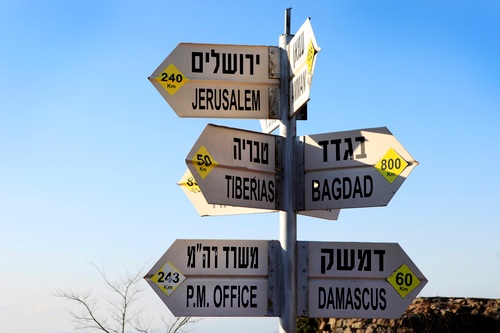
The struggle for Syria is entering a decisive phase. Israel has moved from intermittent intervention to a sustained military presence in the south, while Damascus is attempting to rebuild a national state from the ruins of the Bashar al-Assad era. Beneath these developments lies a far more consequential question: is the gradual transformation of southern Syria the opening stage of an Israeli operation whose ultimate objective is to establish control over the south and place Damascus itself under direct military pressure?
By Rafic Taleb
Israel has entered the operational-planning phase for controlling southern Syria and Damascus. The objective is not necessarily a conventional occupation of the entire country. A more plausible model would be a rapid campaign designed to seize strategically important positions, destroy or neutralise Syrian military capabilities, establish a new security reality around the capital, and force political concessions before the international community could organise an effective response.
The strategic context has already shifted dramatically. Since the fall of Bashar al-Assad in December 2024, Israel has expanded its military presence inside Syrian territory, conducted repeated strikes against Syrian military infrastructure, and carried out ground operations in the south. The result is a Syrian state whose southern frontier is increasingly shaped by Israeli military power rather than by Damascus.
The possibility of Israeli forces reaching Damascus is therefore no longer a question that can be examined solely through the lens of conventional invasion. A short, concentrated operation could achieve many of Israel's strategic objectives without requiring a prolonged occupation. The seizure of strategic terrain, destruction of military infrastructure, establishment of buffer zones and coercion of the Syrian leadership could fundamentally alter the balance of power without requiring Israeli forces to administer the whole country.
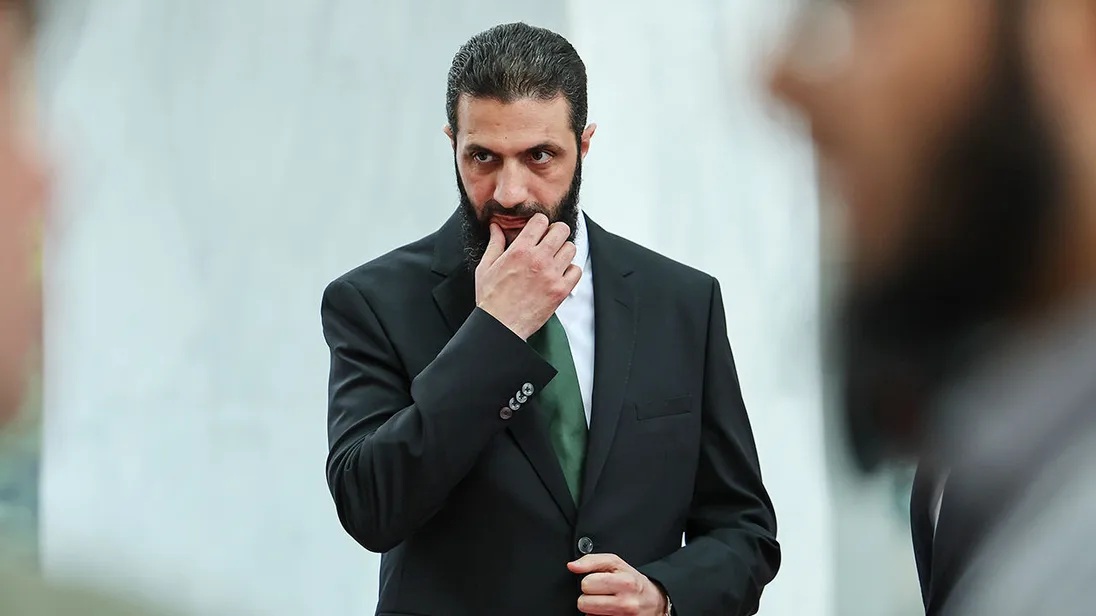
Syria's political transformation since Assad's fall is central to this process. Ahmad al-Sharaa and the forces surrounding him have inherited a country whose institutions were devastated by fourteen years of war. Instead of reconstructing the former military system, the new authorities have dismantled the old divisional structure and reorganised the armed forces into five corps and subordinate brigades.
The restructuring has placed Hay’at Tahrir al-Sham personnel at the centre of the new command system. Corps commanders, brigade commanders, battalion commanders and officials responsible for personnel, organisation, armaments, inspection, finance, supply and guidance have increasingly been drawn from the same former organisation.
Syria has therefore moved from an army dominated by the networks of the Assad state and, in particular, Alawite officers, to an army dominated by Hay’at Tahrir al-Sham. The justification for this transformation has been the elimination of regional, tribal and factional loyalties. But Syria's wartime military reality has always been deeply rooted in those loyalties. Regional and tribal bonds provided cohesion to formations that fought for years under extraordinary conditions.
Removing those networks without replacing them with a genuinely national military identity risks producing an army that is administratively centralised but socially fragmented. A soldier from Homs will not necessarily feel the same obligation to defend Hama or Deir ez-Zor as he would to defend his own region, just as a soldier from Hama cannot automatically be expected to fight with the same commitment for territory with which he has no social connection.
The consequences are already visible inside the armed forces. There is significant anger among personnel over the exclusion and marginalisation of commanders who do not belong to Hay’at Tahrir al-Sham. Personnel associated with the 40th Division in Daraa have circulated claims that the entire province is being treated as a reservoir of “remnants” and that officers from Daraa should therefore not receive command appointments. Recordings circulating in Daraa groups have included voices attributed to division personnel accusing the authorities of repression and abuse of power.
This is more than an internal personnel dispute. A state confronting the possibility of external military intervention requires an army capable of mobilising national loyalty. If significant parts of the military believe that the command structure belongs to a single faction, the state's ability to defend itself can be compromised before a war even begins.
The restructuring of the southern forces has been particularly consequential.
Israel now has eleven military bases inside Syria. Suwayda has been pushed toward Israel through a combination of political confrontation and disastrous mismanagement from Damascus, effectively reducing the military burden Israel would otherwise have faced in the area by as many as 35,000 troops.
Heavy weapons have been withdrawn from southern Syria while medium weapons remain. The Fourth Corps, commanded by Najib Abdul Rahman and composed largely of men from the Damascus countryside and the south, was transferred to Homs and replaced by forces belonging to the Central Region Corps.
The 40th Division, composed predominantly of men from Daraa, was subsequently broken up and reduced to roughly one and a half brigades. Hay’at Tahrir al-Sham brought in commanders from the north to take control of the remaining formations.
The 82nd Division, associated with Ansar al-Tawhid and unwilling to integrate into the new corps structure, was transferred to al-Tanf, exposing it to a potentially devastating confrontation involving the Popular Mobilisation Forces and ISIS.
Jaysh al-Islam was dismantled entirely, leaving its former members dispersed throughout Homs and Hama.
The Republican Guard around Damascus has also been targeted for restructuring. Britain pressed Damascus to remove Abu Hussein al-Urduni and his formation from the capital to reduce the possibility that Israel would strike them. Preparations began for their departure from the foothills of Mount Qasioun under the justification that investment companies would soon begin development work there.
The cumulative result is unmistakable: Damascus and its surrounding countryside have been progressively emptied of formations capable of providing a concentrated conventional defence.
This is precisely what makes the restructuring of the Syrian armed forces so strategically significant. The issue is not merely who commands the army. It is where Syria's experienced combat formations are located, what weapons they possess, which commanders they trust, and whether they can be mobilised rapidly to defend the capital.
The political motivation behind the restructuring is equally important.
Al-Sharaa fears two developments above all. The first is that commanders of Syria's divisions and brigades could align themselves with Brigadier General Manaf Tlass if he becomes defence minister. The second is that existing commanders might refuse an order to enter Lebanon if Damascus decides to intervene there.
The government's public justification is that it must eliminate regional and tribal loyalties. But Syria's military history shows these networks cannot be erased by administrative decree. In a country whose armed groups were built through years of regional, tribal and factional mobilisation, destroying those relationships without creating an alternative national bond risks weakening the state's military cohesion.
The political consequences are already becoming visible. The faction commanders who entered the Ministry of Defence after Assad's fall were warned not to grant al-Sharaa legitimacy without first securing a transitional governing council in which all major factions would have a meaningful role. At the time, the priority was the fall of the Assad regime and the establishment of a new state.
That decision has now left many former faction commanders with little influence over the military structure they helped create. The process resembles, in important respects, the methods through which Hafez al-Assad eliminated or marginalised former allies following the Baathist power struggles of 1966 and 1970.
The danger is no longer limited to the fate of individual commanders. Syria risks producing an army whose senior command is identified overwhelmingly with Hay’at Tahrir al-Sham and jihadist networks. Such a force may struggle to gain recognition as a genuinely national military, both domestically and internationally.
At the same time, Damascus is preparing for the possibility that the capital itself could become a battlefield. The government has acquired land in the Hama countryside to build an alternative Ministry of Defence facility. At the same time, the government has prepared emergency plans to transfer ministries from Damascus to Aleppo and Idlib.
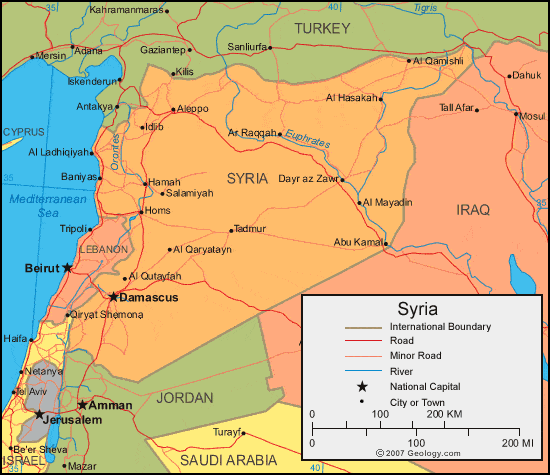
These preparations indicate how seriously the authorities are taking the possibility of a major disruption in the capital. The government is effectively preparing a continuity-of-state mechanism outside Damascus while simultaneously restructuring the military forces responsible for defending the capital.
Damascus's strategic vulnerability becomes even clearer when viewed alongside the situation in Suwayda.
The government's handling of Suwayda pushed the province toward Israel and provided Israel with a strategic advantage in southern Syria. Rather than requiring tens of thousands of troops to control the area directly, Israel has been able to cultivate a security relationship with a local community while maintaining military pressure on Damascus.
The result is a geographic corridor of instability extending from the Israeli frontier into Syria's internal political structure. Damascus faces a territory it claims as sovereign but does not fully control, while Israel presents its military presence as necessary to protect its own security and the Druze population.
This creates a dangerous feedback loop. The weaker Damascus becomes in the south, the stronger Israel's argument for maintaining a military presence becomes. The stronger Israel's presence becomes, the harder it becomes for Damascus to restore sovereignty without risking confrontation.
The American dimension adds another layer of strategic competition.
Washington has its own project for Syria following Assad's fall. That project has been linked to the possible emergence of Manaf Tlass as a future political and military figure, an outcome Israel does not favour. The question is therefore becoming one of timing: will Washington move first to reshape the Syrian leadership, or will Israel decide that waiting has become too costly and act independently?
The two possibilities lead to different forms of transformation, but both point toward a period of intense political change.
For al-Sharaa, the strategic choice is narrowing. If Syria places its interests above preserving personal political power, accelerating a broader political transition could reduce the pressure building around Damascus and continuing to resist such a transition risks leaving the country vulnerable to a rapid Israeli operation.
The danger is not limited to Israel.
Syria's relationship with Hezbollah has also become increasingly complicated.
Hezbollah was one of the principal military pillars supporting Bashar al-Assad during the Syrian civil war. Yet the networks built during that period did not disappear with the Assad government's fall.
Anas Khattab has maintained contacts with Hezbollah through Iraqi intermediary Akram al-Kaabi. Relations between Hezbollah and the authorities in Damascus have continued despite the political transformation of Syria.
From the beginning of the post-Assad period, Syrian authorities have sold multiple-launch rocket systems to Hezbollah, later attributing the transactions to corruption among individual factions and personnel.
The 56th Division in Tartus has been involved in the trafficking of weapons and ammunition through smuggling routes, while technological equipment unavailable in Syria has been purchased from Lebanon. The profits have gone to corrupt commanders.
Anas Khattab has also maintained periodic contact with former regime commanders based in Lebanon. These networks have coordinated several joint operations. In one operation, former regime elements abducted a Syrian-American Christian man in Hisyah, after which Syrian authorities released him and presented the operation to Washington as a successful rescue before returning the man to the United States.
These relationships demonstrate that the fall of Assad did not eliminate the security networks created during the civil war. Former enemies can remain connected through money, intelligence, smuggling and shared interests even after their political circumstances change completely.
The relationship with Hezbollah is particularly significant because al-Sharaa himself has a long history of engagement with the organisation's political model. In 2013, he said that the Syrian movement wanted to become like Hezbollah, referring to the organisation's ability to function as a state within a state.
After the liberation, al-Sharaa said that he did not want to reopen old wounds and that he had forgiven former adversaries. He also described Hezbollah fighters killed by Israel as martyrs. A delegation from the Ministry of Religious Endowments subsequently denied that he had made the statement, but the remarks were made publicly in front of witnesses.
The financial relationship is even more significant. Every $100 million Hezbollah received from Iran through Syria generated a 40 per cent payment to al-Sharaa for facilitating the transfer.
When pressure increased on Damascus to enter Lebanon, meetings took place between representatives of the Syrian authorities and Hezbollah. The arrangement discussed was that, if sufficient pressure were applied, Damascus would enter Lebanon and stage a largely symbolic confrontation with Hezbollah.
A Syrian military intervention in Lebanon would be catastrophic for Syria. It could destroy the current government while simultaneously triggering a new war and drawing Syria deeper into the regional conflict.
Opposition to such an intervention does not absolve Hezbollah. Hezbollah played a central role in preserving the Assad regime, and its intervention prolonged a conflict that caused enormous suffering across Syria. The record of abuses committed during the Assad era, including sexual violence and torture, remains central to the question of accountability.
Qassem Soleimani himself acknowledged Hezbollah's role in supporting Assad. Any political reconciliation that ignores the experiences of Syrians who suffered under the former regime risks deepening rather than resolving the country's internal divisions.
The Hezbollah question therefore presents Damascus with a fundamental dilemma. Confronting Hezbollah could expose Syria to renewed conflict. Accommodating Hezbollah could alienate Syrians who expect accountability for the organisation's role in the civil war.
The same dilemma applies to Lebanon. Syria cannot afford another war, but neither can it allow the security networks of the previous era to become permanent instruments of foreign influence.
The regional picture extends beyond Syria and Lebanon.
The Gulf states face their own vulnerabilities in a broader confrontation involving Iran. The possibility of Iranian operations against Bahrain, Kuwait and Qatar, as well as attacks on Dubai's critical infrastructure, has to be considered alongside the vulnerability of modern Gulf economies to attacks on electricity, desalination, communications and transport infrastructure.
The strategic response should therefore extend beyond conventional military forces. Shelters, alternative desalination systems, underground public facilities, continuity plans for prolonged power outages, cybersecurity capabilities and unmanned aviation expertise would all become critical in a major regional war.
Food security would also become a strategic issue. Vertical agriculture and domestic production of fruit, vegetables and grain could reduce dependence on vulnerable supply chains during a prolonged conflict.
Professional security companies capable of protecting critical infrastructure during wartime could add another layer of resilience, while government spending would need to prioritise national survival over discretionary sectors.
These measures are relevant not only to the Gulf. They illustrate a wider transformation in modern warfare, where civilian infrastructure can be as strategically important as military bases.
For Syria, however, the immediate issue remains the south and the road to Damascus.
Israel has established military positions inside Syria. Its military presence in the south is becoming increasingly entrenched. Suwayda remains outside effective central government control. Syrian military formations have been reorganised, dispersed and in several cases dismantled. The new army remains heavily dependent on personnel associated with the faction that controls the central government.
At the same time, the United States is seeking to shape Syria's political future while Israel is establishing its own security architecture on the ground.
These developments create a strategic environment in which a confrontation around Damascus could emerge without either side initially seeking a full-scale war.
Israel could launch a limited operation aimed at destroying military infrastructure, seizing key positions and forcing political concessions. Damascus could resist without the military depth required for a prolonged confrontation. Washington could then be forced to choose between protecting its emerging relationship with Damascus and accommodating Israel's security calculations.
The resulting crisis could transform Syria within weeks.
The decisive question is therefore not simply whether Israeli forces will physically enter Damascus. It is whether Syria can rebuild a genuinely national political and military structure before the strategic environment makes such a confrontation unavoidable.
A sovereign state requires more than a government in the capital. It requires control of its territory, a military whose loyalties extend beyond one faction, institutions that can survive political transitions, and sufficient economic and civil resilience to withstand external pressure.
Syria currently faces challenges on all four fronts.
The coming struggle over Damascus may therefore be decided before any Israeli soldier reaches the capital. It will depend on whether Syria can rebuild the institutions, military cohesion, and national political legitimacy needed to make an intervention prohibitively costly.
If that reconstruction fails, the danger is not merely a sudden Israeli advance. The greater danger is the gradual erosion of Syrian sovereignty until the country's military map has changed so fundamentally that Damascus faces a new strategic reality before it has the capacity to reverse it.